



that USA and australia Designed to accelerate certification of new weapons for fifth-generation fighters, the world’s first F-35A flight test was completed, marking a significant milestone in the development of Allied air combat capabilities. The test, conducted in late April and announced by the Royal Australian Air Force (RAAF) on June 19, included the first Joint Weapon Charge Measurement Vehicle (WFMV) test flight of the F-35A Lightning II. This effort brought together Australian and U.S. military organizations to gather critical engineering data needed for future weapons integration programs.
Defense Department officials said the achievement could significantly reduce the time it takes to certify weapons for use by the U.S. Navy. F-35. Rather than repeating extensive flight characterization work for each new weapon, future certification programs can leverage data generated during testing to streamline what has traditionally been a complex, costly and time-consuming process. The United States and Australia have a long history of cooperation and military alliance.
Certification, not manufacturing, is the real bottleneck

The challenge in fielding new air-launched weapons is often not producing the ammunition itself, but demonstrating that it can be safely transported, released, and used over the entire operational range of the aircraft. Before operating a weapon, engineers must understand the aerodynamic forces, vibration levels, and environmental conditions the weapon experiences while mounted on an aircraft. The WFMV test is specifically designed to collect that information. The F-35A was flown using a specialized instrumentation test repository that measured the physical environment encountered during flight. The resulting dataset provides a detailed characterization of how external and internal storage performs in an aircraft under various flight conditions. According to the RAAF, this information is essential for weapons certification and future integration efforts.
By establishing this baseline, future programs can avoid recreating significant portions of the engineering analysis from scratch. Instead, developers can reference existing flight environment data, potentially shortening certification timelines and reducing duplication of test requirements. Captain Jae Yu, ASC PA (Aircraft Store Compatibility Project Arrangement) project manager, highlighted the benefits of this collaboration for both countries.
“The important thing for me was how valuable the Australian-US alliance is. It’s not that we can’t do this work ourselves, it’s that working together we can achieve better, faster and lasting benefits.”
Joint efforts demonstrate coalition unity

The test involved a broad coalition of Australian and US organizations. Australian participants included no. It included 75 Squadron, Air Warfare Engineering Squadron, Aircraft Research and Development Unit and Air Combat Systems Program Office. U.S. involvement was through the Air Force Seek Eagle Office and the 96 Range Support Squadron. This activity was conducted under the Aircraft Store Compatibility Project Agreement, a long-standing bilateral framework that allows the two countries to share weapons integration data and coordinate test programs.
F-35A Lightning II Armament Summary | ||
|---|---|---|
count | payload capacity | |
Internal hardpoint station | 4 | 2,600 kg (5,700 pounds) |
External hardpoint station | 6 | 6,800 kg (15,000 pounds) |
Total weapon payload | 8,200 kg (18,000 pounds) | |
Australian officials described the trial as an example of how alliance cooperation can provide capabilities more efficiently than the two countries working independently. This agreement allows the two Air Forces to share technical research results, reduce duplicative testing, and reduce the overall cost and duration of certification activities. The test also reflects Australia’s growing role in advanced F-35 development and sustainment activities. The RAAF is increasingly engaging in sophisticated integration and evaluation programs as the F-35A fleet matures and expands its operational capabilities.
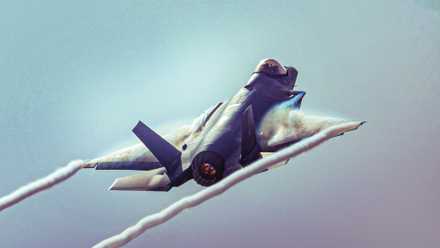
Why Some of the Most Advanced Stealth Fighters Don’t Have Guns
A next-generation weapon that replaces machine guns.
Strategic Importance of Future Arms Integration

The importance of WFMV flights extends beyond a single test event. Modern fighter aircraft are expected to incorporate an expanding range of missiles, precision-guided munitions, and future weapons as threats evolve. All new features require authentication before they can be used safely and effectively.
For the F-35 community, which includes numerous coalition operators around the world, shortening the certification timeline will allow new warfighting capabilities to be deployed more quickly. Engineering data collected during joint testing can support future integration efforts by providing a validated understanding of the aircraft’s weapons delivery environment. This is becoming increasingly important as F-35 operators pursue advanced weapons and software upgrades to expand the platform’s mission set.
In a rapidly changing security environment, the ability to field new weapons more quickly can provide real operational advantages. Although largely unnoticed outside defense circles, the world’s first U.S.-Australian WFMV test represents a fundamental step toward faster, more efficient weapons certification for one of the world’s most important fighter aircraft programs.







