



USDA’s Food Safety and Inspection Service released a report on outbreaks it investigated during fiscal year 2025, showing that Listeria monocytogenes was the most frequent cause of outbreaks.
The Ministry of Food and Drug Safety defines a group outbreak as a case where two or more people experience a similar disease after consuming a common food, and as a result of epidemiological analysis, the food is presumed to be the cause of the disease.
In fiscal year 2025, the Food Safety and Inspection Service (FSIS) investigated seven foodborne illness outbreaks. The agency has authority over meat, poultry and processed egg products.
The outbreak investigated by FSIS included approximately 250 illnesses and 140 hospitalizations. The Centers for Disease Control and Prevention notified FSIS of five outbreaks. All seven outbreaks were linked to illnesses in more than one state.
Of the seven outbreaks investigated by FSIS in FY 2025, one was caused by Salmonella Enteritidis, two were caused by E. coli O157:H7, and four were caused by Listeria monocytogenes. Multiple products were investigated in two outbreaks in beef, one outbreak in ready-to-eat (RTE) meat and poultry products, two outbreaks in multi-ingredient foods, and two outbreaks in fiscal year 2025.

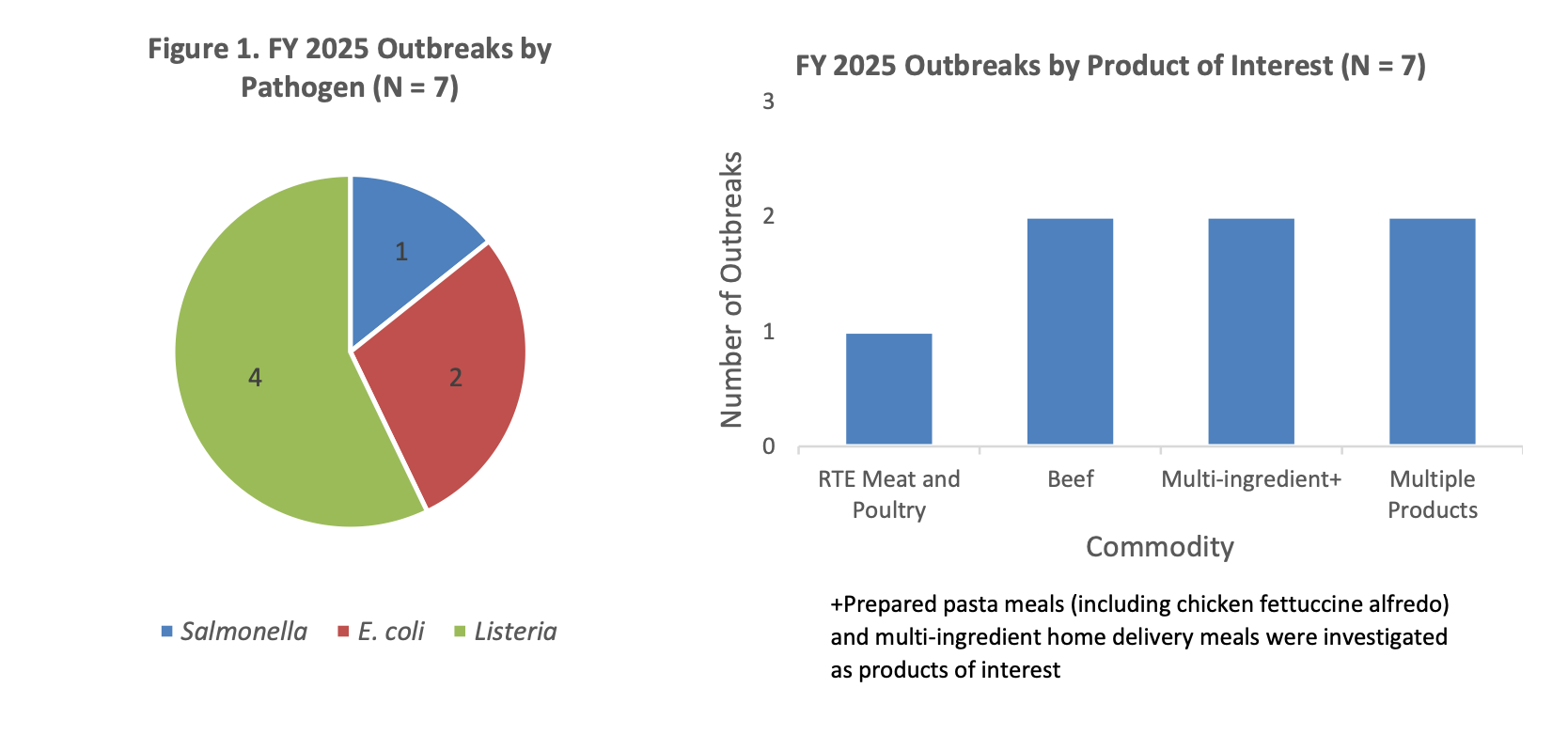

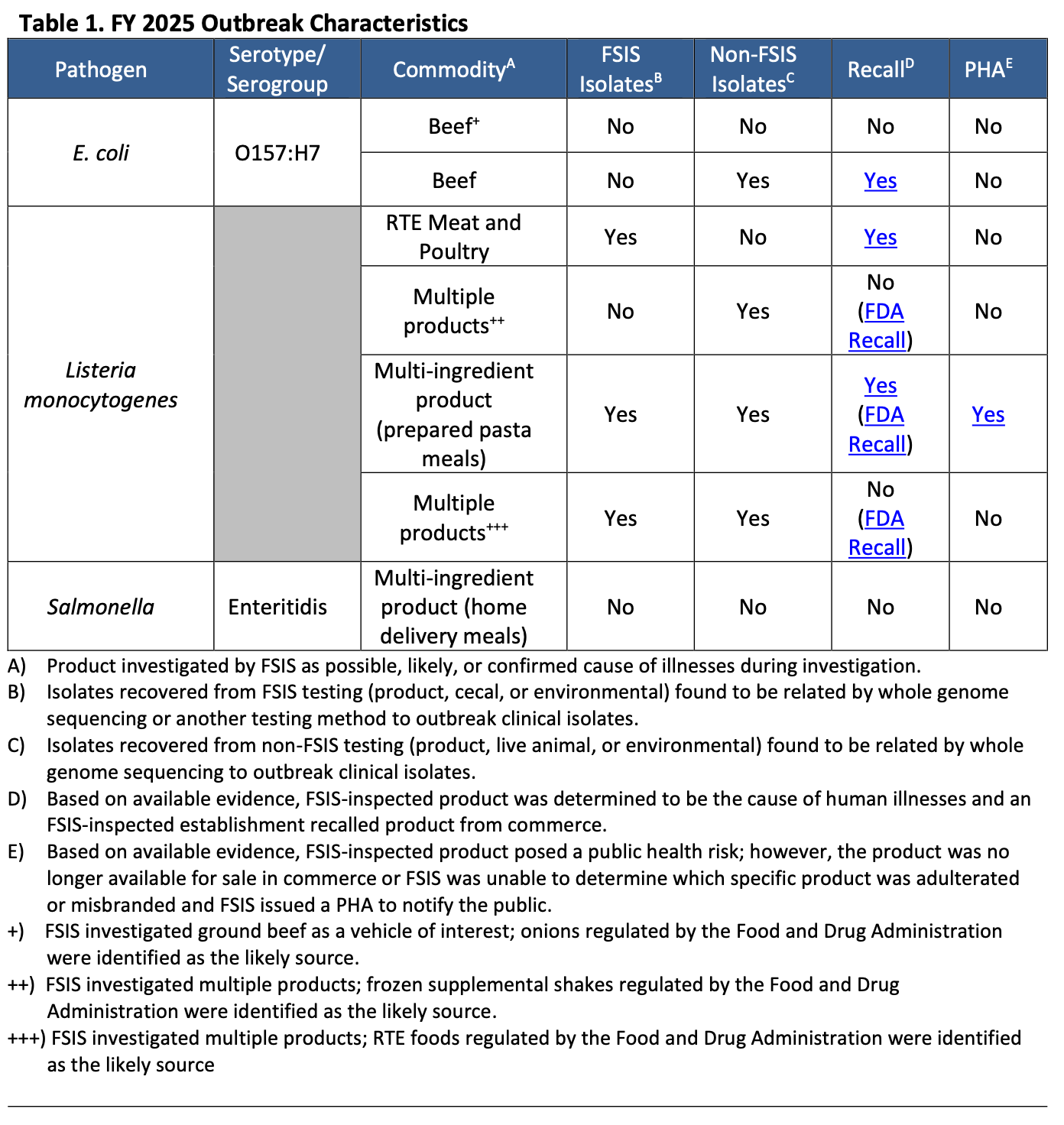
Of the seven outbreak investigations conducted in fiscal year 2025, three were recovered by FSIS investigation facilities. One Listeria monocytogenes outbreak led to an initial recall and public health alert.
According to the FSIS report, “While investigating outbreaks is important to protect public health, it is important to remember that outbreak-related illnesses only account for a very small portion of all foodborne illnesses. Consumers who contract foodborne illness may not seek medical care or be tested for foodborne pathogens. Those who are tested may not be associated with other similar illnesses to initiate an outbreak investigation.”
“During FY 2025, FSIS investigated two outbreaks associated with products containing multiple ingredients (e.g., pasta, sauce, cooked pasta meals containing chicken and other ingredients). These investigations can be very complex and require a multi-agency investigation to determine whether the source of contamination was an individual ingredient or a problem with the end product producer.”
Depending on the evidence collected during the investigation, FSIS may have sufficient detailed exposure and product information to take one or more actions to prevent further illness. These actions may include asking a company to remove a product from commerce, FSIS issuing a press release notifying the company that it is recalling a product linked to a human illness, or FSIS issuing a public health alert to alert the public to a potential food safety issue.
FSIS conducts an after-action review at the end of a foodborne outbreak investigation to identify lessons learned that can help improve the response and prevent future illnesses.


