



Tottenham face a final-day battle to stay in the Premier League but even if they stay up, this will go down as probably their worst season in modern history.
Not only on the pitch have they struggled. Off the pitch, it has been a tumultuous year across the entire club, with fundamental changes from top to bottom.
No one at Spurs would deny that this inner turmoil has affected things on the pitch, but what has happened this season is the result of long-term decline beneath the gloss of their state-of-the-art stadium and training ground.
Decisions at football clubs rarely have immediate impact, and so those that have been made – or not made – over several years have resulted in where they are now; fighting relegation, financial difficulty, a severe disconnect with fans, and a poor reputation in the game.
However, likewise, the opposite is also true; while there have been obvious blunders this season (Igor Tudor being one), any positive shoots from the seeds of change sown by the hierarchy are unlikely to appear straight away.
What will not be obvious yet is that an internal transformation has begun at the behest of club owners the Lewis family and chief executive Vinai Venkatesham, and they intend to see it through for the betterment of Tottenham’s long-term future.
Changes are happening regardless of which league they are in next season and Sky Sports News has been given some insight into what’s been going on. What seems clear is that there will be total focus on successful football.
Ownership and finances
Since 2022, when Joe Lewis put his stake in ENIC into a family trust, it has been two of his children – Vivienne and Charles Lewis – as well as his grandson-in-law Nick Beucher, who have been overseeing Tottenham Hotspur.
As the first team increasingly underperformed in relation to increased revenue in recent seasons, and as fan protests intensified against their ownership and now former chairman Daniel Levy, the Lewises took an ever-keener eye on the management of the club.
Increasingly they did not like what they found, and it was ultimately decided that Levy should leave in September last year, just a few games into the season and days after a troubled transfer window in which they missed out on top targets like Morgan Gibbs-White and Eberechi Eze.
There was some deep soul-searching going on by this point and chief executive Venkatesham was tasked with conducting a considerable internal review into how the club had ended up at this juncture; rising revenue but rising debt, an uncompetitive team and bad internal morale.
What he found really was a shell of a football club; “strong progress in areas such as the stadium, training facilities, commercial growth and stadium operations”, as he would later tell a Supporters Trust meeting, but other areas “falling short of what is required to compete at the highest level”.
In terms of the finances, and as the 2024-25 accounts would later reveal, Venkatesham found a swing from profit in 2018 to £450m-worth of losses from 2020 to the end of last season, driven by unsustainable spending, a lack of revenue from player sales, coupled with higher operational costs.
It means Tottenham are heading for a difficult summer to stay in line with Premier League financial rules. A month after Levy’s departure, the Lewis family poured £100m of capital into the club and more cash injections are expected to follow this summer – not for transfer spending but to facilitate that debt.
Relegation to the Championship would add another £200m-plus hit to revenue simply through loss of Premier League and the Champions League earnings from this season. The Lewises are committed to getting Tottenham back into a healthy financial footing regardless of which league they are in, but it will be made easier if they stay up. What all of it reveals is even rich clubs can suffer real financial consequences for prolonged poor results.
Executive hierarchy
For many years under Levy, Spurs had a close-knit family of executives who ran things, many of whom were supporters and cared deeply about the club, whether people liked them or not.
However, good people across the club have been lost over time, with standards and morale suffering as a result. So the owners deemed that on-field success was no longer at the centre of decision-making and changes among the executive leadership were necessary.
Sunday 24th May 3:00pm
Kick off 4:00pm


The last year has seen prominent people such as Scott Munn, Donna-Maria Cullen and Rebecca Caplehorn leave the club, while Venkatesham was brought in as chief executive and tasked with installing a new football structure and leadership group in their place.
Venkatesham is believed to be of the view that Spurs is a sleeping giant capable of great success – but significant changes need to be made to staff, culture and practices in order to get there. That is now his primary focus and he has been recruiting various newcomers in key positions this season.
Sitting alongside him in the new leadership team are two people from the City Football Group; Rafi Moersen, who arrived as director of football operations, with Dan Lewindon as director of performance. Johan Lange remains sporting director having been at the club since 2023, but they are also recruiting another to work alongside him, with ex-Borussia Dortmund official Sebastien Kehl the current frontrunner.
Lewindon has been tasked with tackling the significant fitness and injury issues that have dogged the squad for a number of seasons, which will be discussed in more depth below, Moersen will oversee the structure and culture among staff across the technical side of the club. They are still new to their roles and the club, so it will take time for them to settle and the positive effects of their appointments to be more visible.
First team failings – and a captain problem
Venkatesham’s review of first team matters has revealed several critical issues that are now in the process of being transformed. The first is shortcomings in the recruitment of the current squad, which we will come to in a subsequent section.
The other major issue that was identified was a lack of leadership, especially following the departures of Hugo Lloris, Harry Kane and Heung-Min Son – the previous captains – and a lack of attention towards signing players with the utmost personality and professionalism.
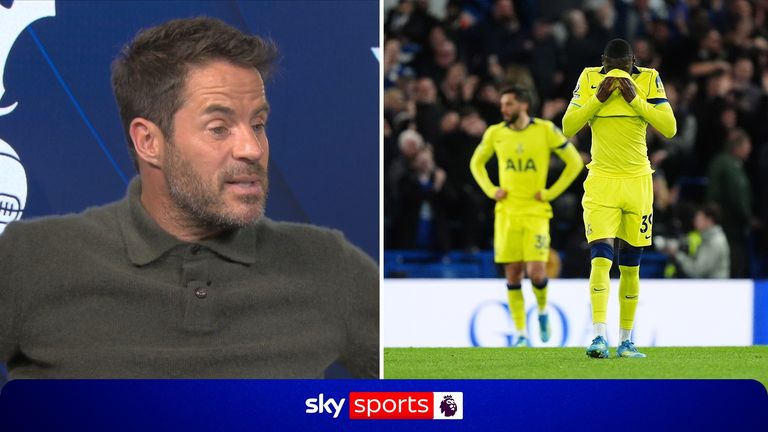
Jamie Redknapp criticised Spurs for their performances this season as they still remain in danger of being relegated from the Premier League
Spurs’ hierarchy have been looking at the other top clubs in the Premier League and Europe and how distinguishable their leaders are, and how they embody the club; when you think of Liverpool you immediately think of Virgil van Dijk, for example, or when you think about Man City you think of Bernardo Silva, or Rodri.
That is why Spurs have targeted signing Andy Robertson, first in January and now as a free transfer. He has been known for his leadership and influence in the Liverpool dressing room, while they have won Premier League titles and the Champions League. How much he plays in the final years of his career is in line with, if not secondary, to the impact he will have in the dressing room, having agreed terms to sign for Tottenham if survival is confirmed.
It is also why Conor Gallagher was identified in January; partly for his leadership qualities, which have begun to show through as an example on and off the field under Roberto De Zerbi. The club also thinks highly of James Maddison and Archie Gray – these are the kinds of players Spurs want to keep and build around, and they have been thinking about how they are seen and communicate with the supporters too.
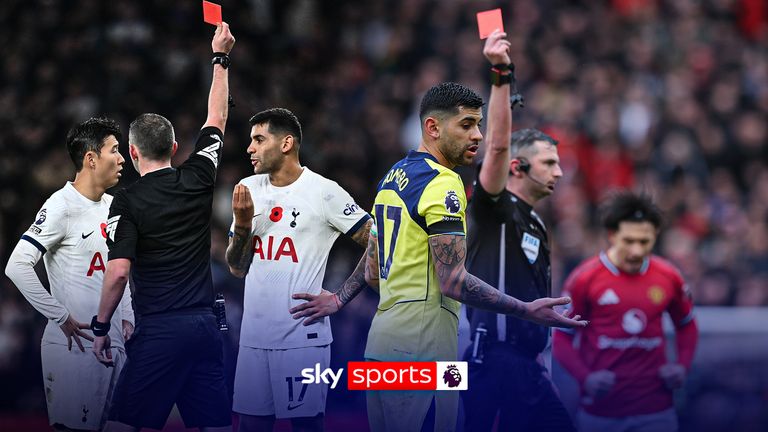
Cristian Romero’s red card against Man Utd was his fourth in the Premier League since he joined Tottenham Hotspur in 2021, the most of any player during this period
In their current captain, Cristian Romero, they have unfortunately found someone who comes up short. While he might be a World Cup winner with Argentina, his capacity to lose focus in games, get sent off, or go missing in difficult times, has not gone unnoticed – nor has the reverberating effect of this behaviour around the rest of the squad. As good as he might be on his day, if Tottenham want to move on from this, then they need to move on from him for good.
Moreover, the Spurs’ hierarchy have known that none of this is possible without the right head coach and staff. Aside from his obvious tactical nous and coaching ability, De Zerbi is known throughout the game for suffering no fools, and having no qualms about making his demands very clear. If you buy into him, you love him and he loves you. If you do not, there will no ambiguity about the rest.
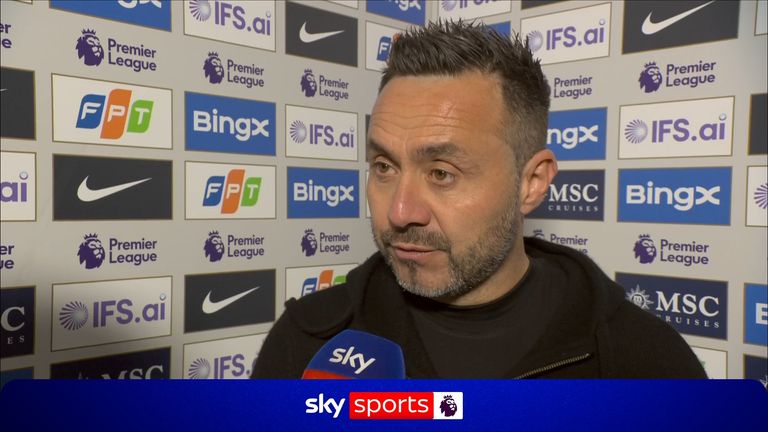
Tottenham head coach Roberto De Zerbi is confident his side will avoid relegation
Recruitment errors and style shifts
A review of recruitment over recent seasons has highlighted too strong a lean towards players’ physical attributes – pace, power, strength – rather than technical quality, and an imbalance in the squad, both in terms of profiles as well as experience versus development talent.
They clearly have too many defensive midfield players, for example, and a lack of creative ones that has resulted in a team that struggles to progress the ball up the field. After Destiny Udogie, who has been prone to injury, they have not had another out-and-out left-back until they signed Souza.
It does not help that Tottenham have chopped and changed coaches frequently, flip-flopping between styles, since sacking Mauricio Pochettino in 2019. Jose Mourinho and Antonio Conte wanted to win immediately and recruit accordingly but did not play the same formation. Ange Postecoglou and Thomas Frank were more willing to take on development talent but then Frank’s pragmatic style of football was not a continuation of Postecoglou’s all-out basketball attack.
Recruitment will now be focused on the need for players of more technical quality that align with the head coach, which is why De Zerbi will play an integral role in target identification and squad management. This subject is also forming an important part of conversations with Lange and prospective new sporting director Kehl, who is also expected to join if safety is confirmed. But equally as important will be personality.
What will help in their favour has been a recent lifting of a stringent wage structure that was previously in place under Levy. Spurs are now more willing to pay players north of £200,000 per week and make themselves more competitive with top-six rivals.
They lost out on Bryan Mbeumo to Manchester United last summer in part because they could not compete on the wages front. They were far more in line when it came to trying to sign Antoine Semenyo in January but he had already made up his mind to move to Man City.
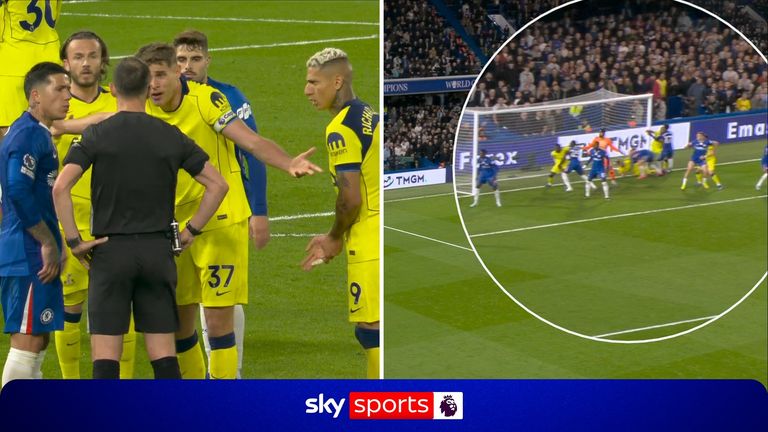
Michael Dawson and Daniel Sturridge debate whether Tottenham should have been awarded a penalty against Chelsea
Injury issues and a medical department overhaul
Tottenham’s injury crisis across the past three seasons has been unprecedented, and has been a major factor in their slide down the table and inability to compete at the top level.
This season, Tottenham’s 1,377 days missed to injury are the most of any Premier League club and 214 more than Newcastle, the second worst. Since January, they have had anywhere between seven and 11 first-team players unavailable. These have included all their key players too; Dominic Solanke, Mohamed Kudus, James Maddison, Dejan Kulusevski, Xavi Simons, Cristian Romero, Micky van de Ven and the goalkeeper Guglielmo Vicario.
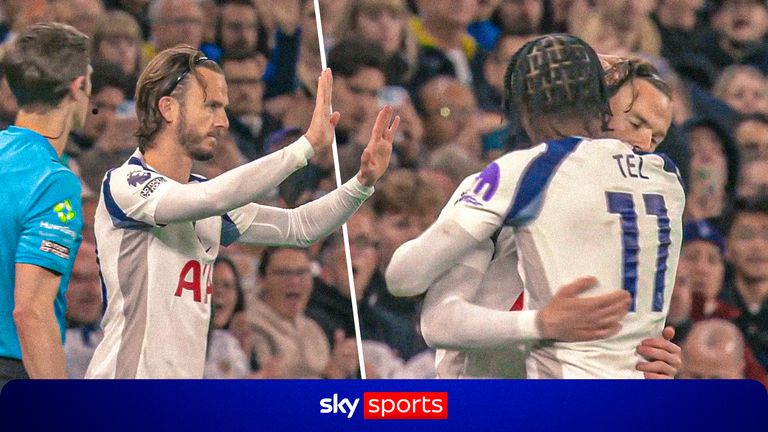
James Maddison makes his return to the pitch for the first time this Premier League season
Maddison’s story hints at exemplifying the problem. After his recent return he said the initial diagnosis is that he would not need surgery, only for that to be the case further down the line when he did not recover as planned.
“In my head, it goes back to the Europa League semi-final here when I got injured here because I did a partial ACL tear against Bodo/Glimt,” he said. “I was told by the specialist it wouldn’t need surgery and rehab. Then obviously it wasn’t strong, it didn’t recover properly, and I needed the full surgery, which is what happened in South Korea.”
While more players have been dropping like flies, though, it would be wrong to think the club are not fighting to do something about it once and for all. They conducted two independent reviews of the medical department earlier this season, which resulted in the appointment of Lewindon in October, but he has only been able to get into the work recently after serving out a notice period with the City Group.
As head of performance, Lewindon will oversee the reshaping and future performance of the medical department, which will report directly to him. But as mentioned, any positive effects from these changes will take time to reveal themselves. It will start with the plethora of injured players returning over the next weeks and months, then seeing how strong their comebacks are, and if there are any recurrences.
Academy pathways and young talent
The Spurs academy was considered somewhat successful during the Pochettino era and one of the best in the country, mainly due to the graduations of Harry Kane and Harry Winks, and the academy direction under widely respected coach John McDermott.
However, the ownership have found that, since McDermott left for the FA in 2020, it has been going somewhat downhill with a lack of investment, lack of attention, and lack of direct path into first team football.
Tottenham are currently 16th in the Premier League table for minutes played by academy graduates (just 26) this season, and at least two have been shining elsewhere. Luka Vuskovic tops that list, having captured the Bundesliga by storm. He is nominated for player of the season in the Bundesliga at just 18, after being awarded the accolade by fans midway through the season. Mikey Moore is another promising talent who has won SPFL Young Player of the Year at Rangers, instead of playing for Tottenham.
It has also become somewhat of a running joke in recruitment circles and among agents that it is easy to get youth players out of Tottenham, and several have gone on to success elsewhere – most notably Arsenal’s Noni Madueke.
The owners have already turned on considerable investment in the academy to try to restore it to an elite level, and work has already been going on to give it renewed vigour under Simon Davies, who joined in 2023. The U16s won the Premier League Cup this year and there will be further investment and hiring in academy staff and recruitment roles going forward.
Culture and fans
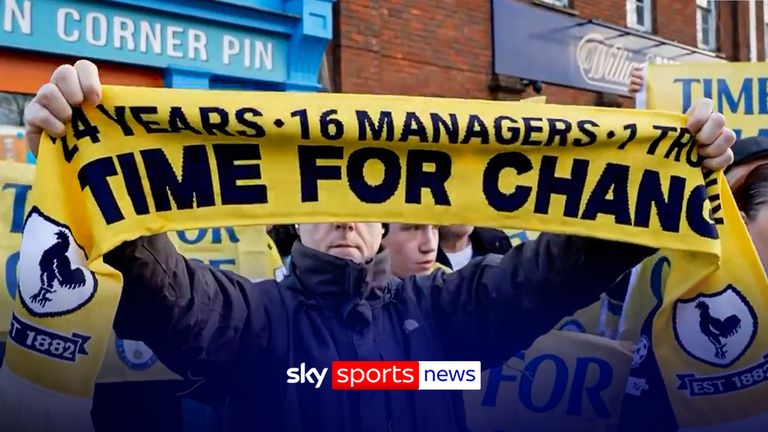
Tottenham Hotspur fans protested ahead of their Premier League fixture against West Ham, with frustrations at the board growing
Something is always wrong at a football club when the supporters are protesting outside. Fan discontent on social media is normal but organised mobilisation is not, and there have been anti-ENIC (English National Investment Company – the club’s ownership group) and anti-Levy protests going on for several years.
While the team was playing well, they tended to go unnoticed and never seemed to bleed fully into the stadium on a matchday, especially last season during the Europa League run. But there were warning signs; clashes between Ange Postecoglou and supporters above the tunnel area at home, and some notable examples away at Bournemouth and Fulham, that also included players.
The Europa League trophy celebrations outside the Tottenham Hotspur stadium last June seemed like a reconnection with the fans and the start of a new chapter in the relationship. But like the trophy success itself, it was a red herring. It only papered over the cracks.
So it should have come as no surprise really when the atmosphere at the stadium turned outright toxic and hostile this season, especially in the home defeats to West Ham and Newcastle under Thomas Frank.
Among the many issues in need of paramount attention at Tottenham, the owners and new hierarchy know the relationship with the supporters is staring at them, glibly. Trust needs to be rebuilt, and it is not going to happen quickly.
The starting point for that is an intention from the leadership to be more visible and communicative, more of the time. While one or two in-house interviews from ex-sporting director Fabio Paratici and more recently Lange have not gone down well with the fans, the owners and hierarchy know they need to reach out more, and in more places.
They also know there is considerable work to do on the staff culture inside Lilywhite House and Hotspur Way. Put simply Tottenham had become not a very nice place to work. Departments had been allowed to drift apart, and the spirit needed across the board, ultimately in support of on-pitch success, has been hard to find.
The hierarchy know it is their job to put smiles back on employees’ faces and make Spurs an enjoyable and modern corporate atmosphere. Moersen, the new director of football operations, will be central to installing the new culture, as well as people like Kate Miller, the new communications chief, who joined from the ECB last year.
While head coach, Thomas Frank described Tottenham as “trying to turn around a super-tanker”, and on that point he remains totally accurate. That is exactly what the owners and new leadership are trying to do but it will take considerable time and effort over a long period of time. What Spurs supporters can be assured of is their commitment to it. The club is not for sale, and the Lewis family are going nowhere soon.







