



The U.S. Army has officially named the MV-75 Future Long-Range Attack Aircraft the Cheyenne II in honor of the Cheyenne tribe, known for their mobility, resilience and disciplined strength.
The U.S. Army has officially announced that the MV-75 Future Long-Range Attack Aircraft (FLRAA) will be named Cheyenne II. The new popular name for the MV-75 continues the U.S. Army’s tradition of honoring Native American tribes in the names of its aircraft.
Cheyenne II
The service refers to the name for the heritage of the Cheyenne tribe, represented today by the Northern Cheyenne tribe in Montana and the Cheyenne and Arapaho tribes in Oklahoma. “The spirit of mobility, resilience and disciplined strength is what the name Cheyenne II represents,” the service explains in a statement.
The Army said it went through a careful process of evaluating more than 500 Native American tribes before making a final choice. The statement explains that the MV-75’s speed, range and adaptability reflect the historical characteristics of the Cheyenne tribe.

The name of the MV-75 Cheyenne II “reflects more than heritage. It reflects identity,” said Brent G. Ingraham, undersecretary of the Army for Acquisition, Logistics and Technology. “The Cheyenne people represent a resilient warrior culture and embody the core characteristics of the MV-75: speed, reach, lethality and adaptability.”
This is not the first time the Army has adopted the Cheyenne name, as it was already used on the AH-56 in the 1960s. The AH-56 Cheyenne, developed as a high-speed attack helicopter equipped with a pusher propeller, ultimately failed to advance.

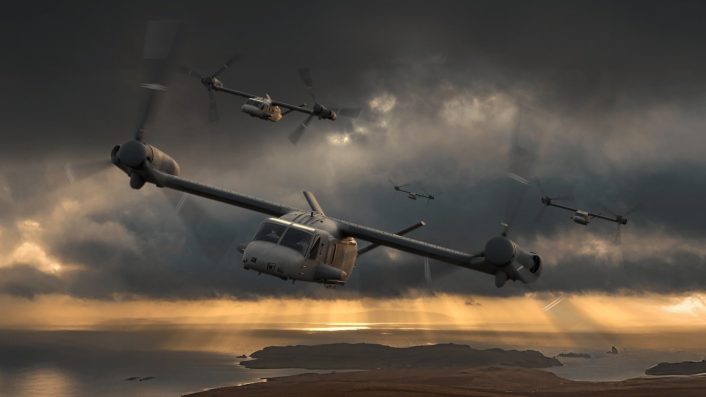
MV-75
The Army acknowledged that the MV-75 Cheyenne II is the first completely new platform introduced to the inventory since the 1980s. The tiltrotor can complement currently operational helicopters and extend the reach of Army aviation units.
Bell is pleased to introduce the MV-75 Cheyenne II. @US ArmyOfficial name for the FLRAA weapon system.
In keeping with the Army’s tradition of naming aircraft after Native American tribes, the MV-75 was named after the Cheyenne tribe, two federally recognized nations. pic.twitter.com/j7KR6Fbe7J
— Bell (@BellFlight) April 15, 2026
“The MV-75 Cheyenne II represents a new era in Army aviation with capabilities that far exceed the current fleet,” the U.S. Army said. The published range is approximately 2,440 nautical miles, and the MV-75 is said to be able to fly twice as fast and twice as far as the existing UH-60M Black Hawk.
This “allows for full squad deployment at extended ranges, extends medical support coverage well beyond today’s golden hour, and enables large-scale, long-range air strike operations that can reshape the battlefield,” Ingraham added.
The Army launched the FLRAA program in 2019 as part of its Future Vertical Lift Initiative to replace a portion of its attack and utility helicopter fleet. The Bell V-280 Valor won the Army’s new helicopter competition in late 2022, making FLRAA the only Future Vertical Lift (FVL) platform to transition to the EMD phase.
Improved resilience. Defined by courage. Cheyenne heritage represents the speed, power and endurance the MV-75 will bring to future combat. We honor their legacy with the next evolution of aerial mobility.
Meet Cheyenne II: https://t.co/yrnEqSy0h2#MV75 #FLRAA… pic.twitter.com/d9gAiNiYAE
— Bell (@BellFlight) April 15, 2026
The U.S. Army officially designated the MV-75 as the Mission Design Series (MDS) for the new aircraft in May 2025. He explained that the number ’75’ commemorates the year of the Army’s founding in 1775, while the ‘M’ in MDS stands for Multi Mission and the ‘V’ stands for Vertical Takeoff.
The first virtual prototype was accepted by the U.S. Army at Redstone Arsenal, Alabama, on June 24, 2025, and the second prototype was delivered to the Aviation Center of Excellence at Fort Rucker later that month. These virtual prototypes are advanced simulators based on the digital twin of the FLRAA weapon system, the service explained.
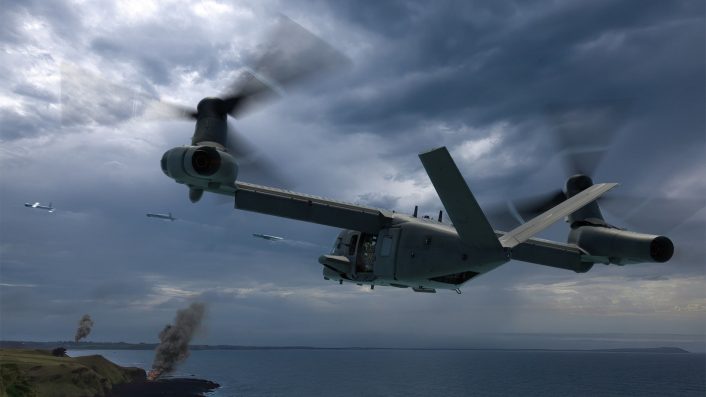
In January 2026, then-US Army Chief of Staff Gen. Randy A. George said the MV-75 could be flying as early as this year. The general motivated this by noting the urgent need to rapidly integrate advanced capabilities in response to global technological change and battlefield demands.
At the time, we reached out to the US Army to clarify this aspect and a spokesperson said in an emailed statement: “The MV-75 prototype is expected to be delivered later this year and begin testing in early 2027.”
The service is closely monitoring its timeline, so it’s unclear when the first flight will actually take place. “When this happens, it will happen, so we’re moving as quickly as possible,” said Rear Admiral Clair Gill, Maneuver Air’s director of program acquisition. ‘Destroy defense’report.
According to the current schedule, the MV-75 will be delivered to the troops in the period 2031-2032. The U.S. Army has already designated the 101st Airborne Division as the first unit to field the MV-75, and says special operations-specific requirements have been incorporated into the FLRAA’s design to expedite adoption by the elite 160th Special Operations Aviation Regiment (SOAR).


