



In the 11th joint strategic patrol announced by Russia and China, Tu-95, Tu-142, and H-6 flew over the Sea of Japan and East China Sea for six hours, escorted by Su-30SM, Su-35, and J-16.
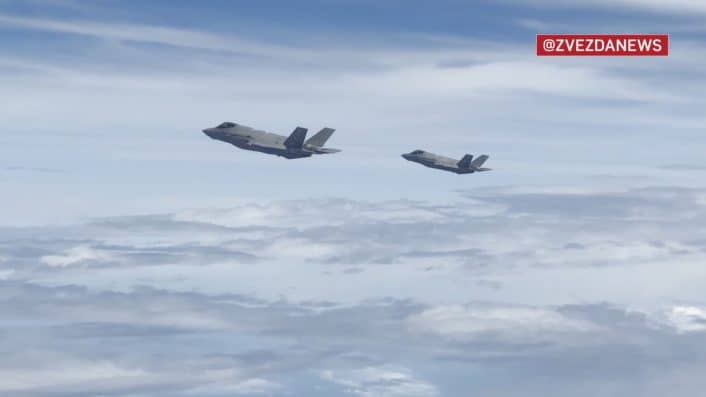
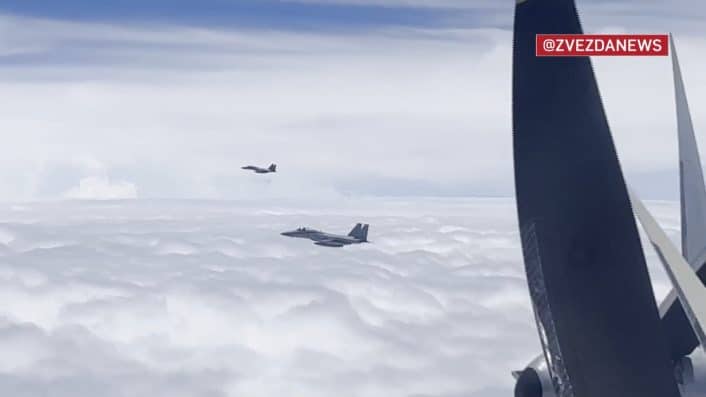
China and Russia conducted the 11th strategic joint patrol consisting of at least 15 aircraft in the East Sea and East China Sea (ECS) on June 27, 2026. According to a video released by the Russian Ministry of Defense, the aircraft was intercepted and escorted by the US Air Force F-35A Lightning II and the Japan Air Self-Defense Force (JASDF) F-15J Eagle.
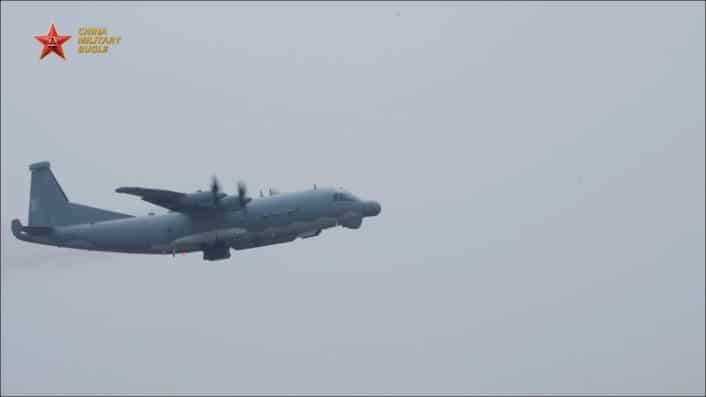
An official video released by the Chinese military showed that the aircraft included YY-20A/YU-20A tankers. KJ-500 AEW&C (airborne early warning and control) aircraft; Y-9Z and Y-9G signals intelligence (SIGINT) aircraft; Three J-11 fighters and two J-10C fighters. However, the J-11, J-10C, KJ-500, and Y-9 were not visible in the flight videos released by both countries or the trajectories and images released by the Japanese Ministry of Defense, and were only seen taking off and landing.
— China MilBugle (@ChinaMilBugle) June 27, 2026
However, Chinese in-flight footage shows the Y-20A refueling two J-16s simultaneously. Aircraft shown in in-flight footage of Russian and Chinese aircraft and images of Japan next to J-16s and Y-20s also include H-6K and Tu-95MS strategic bombers. Il-78M refueling tanker; Tu-142 maritime patrol aircraft; Su-30SM; And Su-35.
The Chinese and Russian air forces conducted the 11th joint strategic air patrol in the East Sea, East China Sea and Western Pacific on Saturday, the Chinese Ministry of National Defense said in an online announcement. #China #Russia https://t.co/d1kSGwWLrN pic.twitter.com/QvN6H5j2hN
— China Daily (@ChinaDaily) June 27, 2026
Military statements from Japan and South Korea
The Japanese Ministry of Defense deployed a total of 15 aircraft to the squadron, including four H-6s, six J-16s, two Tu-95s, two Tu-142s, and one Su-30. The statement described how various Chinese and Russian aircraft joined the squadron on June 27.
“We confirmed that two Chinese bombers (H-6) advanced from the East China Sea to the Sea of Japan from the morning to the afternoon of June 27 (Saturday), joined with two Russian bombers (Tu-95) and two Russian patrol aircraft (Tu-142) in the Sea of Japan and conducted joint flight operations all the way to the East China Sea. A fighter jet (Su-30) was also flying,” he said.
From the morning to the afternoon of Saturday, June 27, two Chinese bombers (H-6) advanced from the East China Sea to the Sea of Japan, joined two Russian bombers (Tu-95) and two Russian patrol aircraft (Tu-142) in the Sea of Japan, and then flew into the East China Sea… pic.twitter.com/tgDIkApgHg
— Ministry of Defense Joint Staff Pa (@jointstaffpa) June 27, 2026
He continued, “Also, on the afternoon of the same day, it was confirmed that two Chinese bombers (H-6), newly arrived from the continental direction, joined two Russian bombers (Tu-95) and performed a long-distance joint flight from the East China Sea to the Pacific Ocean off the coast of Shikoku. It was confirmed that two Russian patrol aircraft (Tu-142) and four Chinese fighter jets (J-16) flew together in this joint flight of the bombers.” flight.
In response, we dispatched fighter planes from the Air Self-Defense Force’s Western Air Defense Force and other units to intercept it,” he said.
On June 27, the Chinese Air Force 🇨🇳 and the Russian Air Force 🇷🇺 conducted the 11th Combined Air Force Strategic Cruise over the Sea of Japan, East China Sea, and Western Pacific.
On the Chinese side, in addition to the H-6K bomber, YY-20A aerial refueling tanker, KJ-500 early warning and control aircraft, Y-9G electronic warfare aircraft, and J-10, J-11, and J-16 fighter aircraft are confirmed. pic.twitter.com/I3fmngStdm— miki@Yokojin/C108 Day 2 Higashino-40b (@09120309) June 27, 2026
The trajectory released by the Ministry of Defense shows the Chinese and Russian aircraft joining in the waters between Japan and South Korea, moving south toward Japan’s southern Okinawa Prefecture and turning east toward the western Pacific. The formation then turned north, staying west of Miyazaki Prefecture, then retraced its steps and the bombers returned to their respective bases in Russia and China.
South Korea’s Joint Chiefs of Staff (JCS) similarly announced that it had detected a Russian-Chinese formation “over the eastern and southern waters of North Korea” after briefly entering the Seoul Air Defense Identification Zone (ADIZ) before leaving. Korea Times. The Joint Chiefs of Staff estimated it to be 10 aircraft and added, “Air Force fighter jets were dispatched to prepare for an emergency.”
Chinese and Russian Ministry of Defense releases
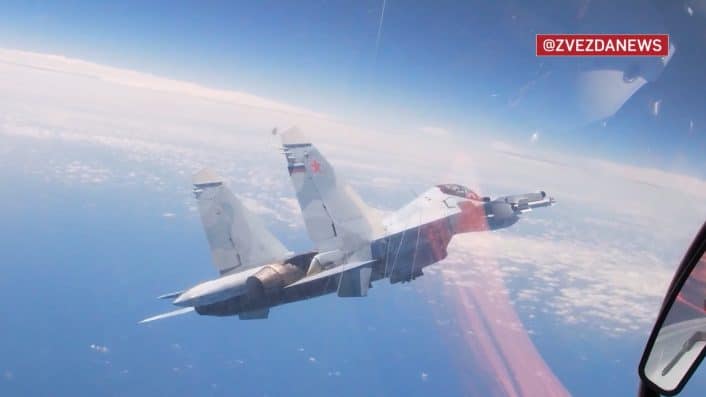
According to one Chinese military air tracker account, two of the PLA Air Force H-6s are the H-6KG (Tail 10193) of the Southern Theater Command (STC) and the H-6J (20815) of the Eastern Theater Command (ETC). The Russian Defense Ministry identified its own aircraft as Su-30SM, Su-35S and Tu-95MS and the Chinese aircraft as H-6K and J-16, adding that the Sukhois and J-16 “provided fighter cover along the route” and that their patrol duration was six hours.
https://t.co/i3E2akz8Ae
— Massimo Frantarelli (@MrFrantarelli) June 27, 2026
Russian Defense Ministry footage shows a Su-30SM taking off with two R-73 short-range AAMs, as well as rear-seat cockpit footage showing both Su-30SMs. Footage from the cockpit of a Tu-142 and/or Tu-95 shows a Su-35, aerial refueling and an H-6 bomber on the starboard (left) side with each Tupolev.
Two US Air Force F-35As also appeared in the video, but their sortie was not mentioned in the statements from Japan and South Korea. The aircraft had Hill AFB’s ‘HL’ tail flashes, identifying it as part of an F-35 recently transferred to the 35th Fighter Group at Misawa, Japan. The video also features two Japan Air Self-Defense Force (JASDF) F-15Js.
“The strategic bombers were escorted by foreign fighter jets at certain points of their route,” the Russian Defense Ministry added, citing the Sea of Japan, East China Sea (ECS) and Western Pacific as areas of operation. In addition, he added, “This event was held as part of the 2026 military cooperation plan,” reflecting continued cooperation with China.
Russia and China have been conducting joint strategic patrols since 2019, and exercises are held no more than twice a year. Russian military aviation analyst Guy Plopsky recorded two such incidents, in 2022, 2023 and 2024.
The latest patrol, the 11th, came amid ongoing Valiant Shield exercises in the western Pacific with the United States, Japan, Australia and the Philippines, which China has warned could lead to unintended escalation. China’s Ministry of National Defense said the patrol “demonstrated the resolve and ability to jointly safeguard regional peace and stability.”
While it is common for Russian aircraft to attack NATO and NORAD airspace, it should be noted that the RuAF and PLAAF also independently send provocative flights around Japan.







