



May is Healthy Vision Month.
If you’re holding your smartphone at arm’s length to read the screen rather than take a selfie, you may have presbyopia.
Presbyopia is when the eyes lose the ability to focus on nearby objects. It may sound scary, but presbyopia is a natural part of aging and happens to everyone.
Over time, the eye’s lens becomes hard and less flexible, making it more difficult for it to change shape to focus on nearby objects. Think about reading a book or looking at your watch.
In a recent survey, we asked women and people assigned female at birth (AFAB) about their eye health and experiences with presbyopia. Overall, prescription glasses helped relieve presbyopia symptoms (65%).
Here are some creative ways participants said they adapted to their presbyopia symptoms:
- holding an object at arm’s length
- magnifying glass rental
- Make the font bigger
- Use a magnifying glass
- enlarge photo
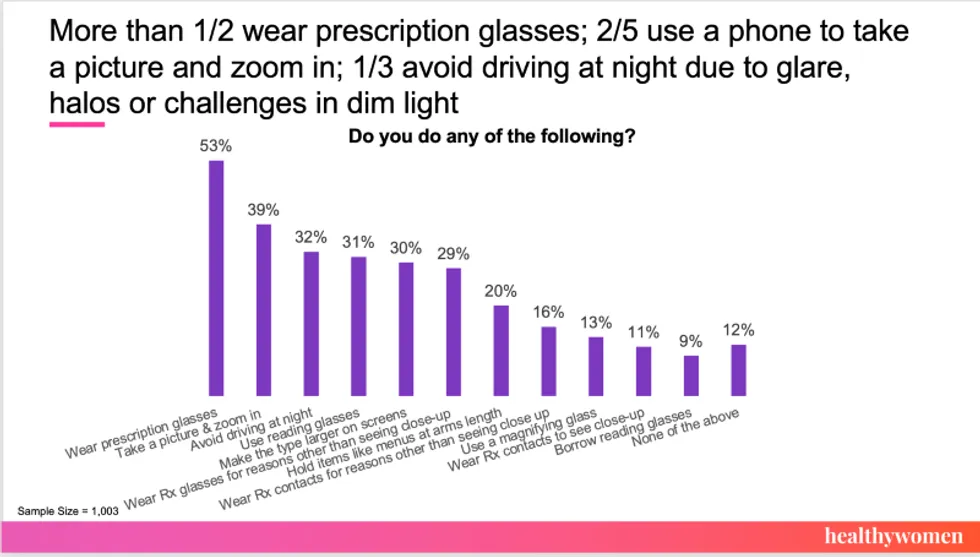

Here’s more information about presbyopia, presbyopia treatment, and survey results:
Read: Women’s Eye Health 101 >>
Risk factors for presbyopia
Age is the biggest risk factor for presbyopia. Most people begin to experience symptoms in their 40s, including blurred vision, headaches, eye strain, and the inability to read close-ups.
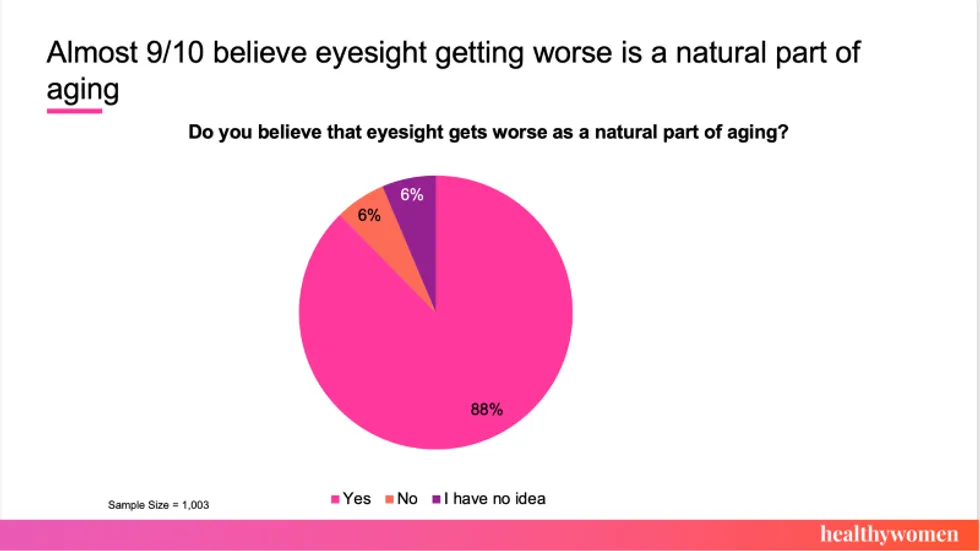
In the survey, almost nine in 10 people knew that age has a negative impact on vision. However, participants diagnosed with presbyopia were significantly more likely to believe that their vision worsens with age compared to participants without a diagnosis of presbyopia.

Presbyopia affects almost everyone, but risk factors for premature presbyopia include:
- Farsightedness (not being able to see things close to the eye)
- If you have certain health conditions, such as diabetes, cardiovascular disease, or multiple sclerosis
- Taking certain medications, such as antidepressants, diuretics, and antihistamines
How to Diagnose Presbyopia
Presbyopia is diagnosed through regular eye exams.
Your health care provider (HCP) may give you several different tests to check your vision.
- Eye exam to determine vision (large letters on wall chart)
- Refraction test for prescription lenses
- Slit lamp examination to check the structure of the eye
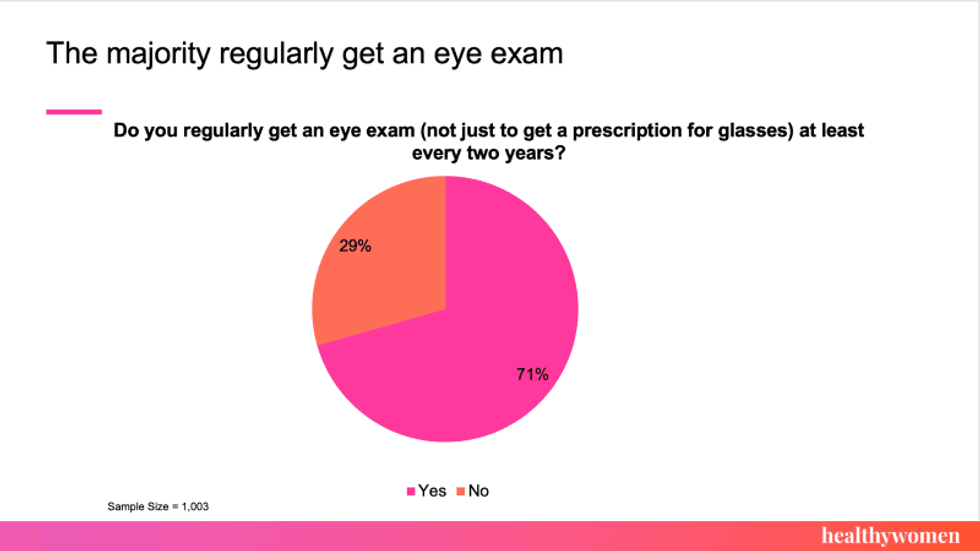
According to the survey, most participants (7 out of 10) get regular eye exams.
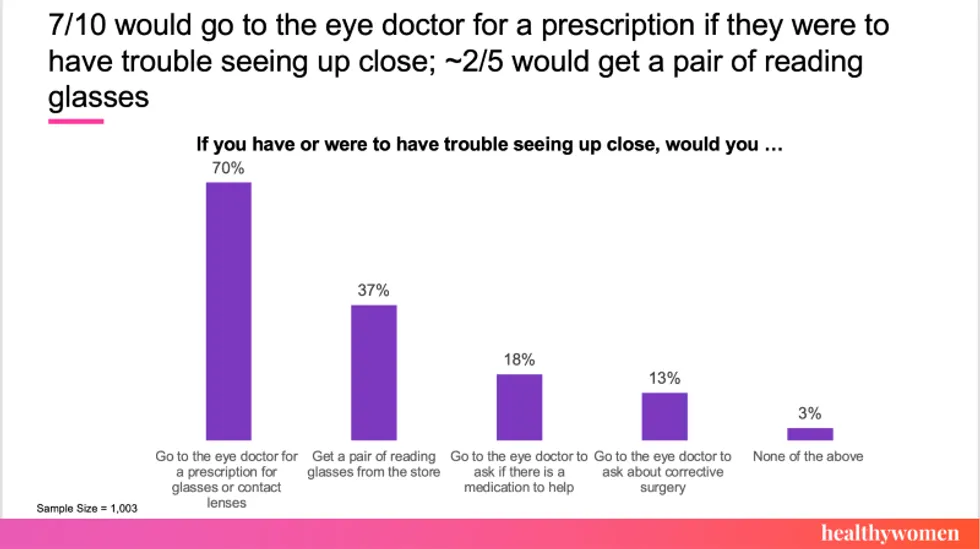
And most people (seven out of 10) visit their health care provider if they have symptoms of presbyopia, which is important in identifying changes in eye health.

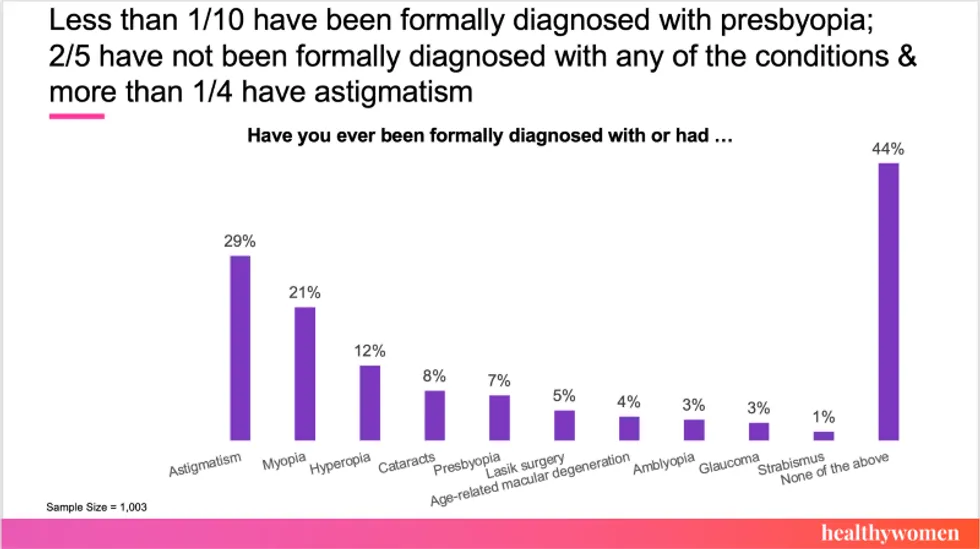
Although only a small number of people surveyed had been diagnosed with presbyopia, it is important to notify your healthcare provider if you notice changes in your vision, no matter how small, and to get regular eye exams so the problem can be detected early when it is easier to treat.
presbyopia treatment
Presbyopia occurs with age, so you can’t put the genie back in the bottle. However, there are treatment options that can help you see clearly.
Presbyopia treatments include:
- Glasses (with or without prescription)
- contact lenses
- surgery
- prescription eye drops
Survey participants with presbyopia were more likely to receive prescribed reading glasses (62%) than those without a presbyopia diagnosis (34%).
Vision testing is a clear winner
If left untreated, presbyopia can cause headaches, eye strain, and a reduced overall quality of life. So, if you’re in your 40s, get your eyes checked, get new glasses, and save your arm extensions for selfies.
This training material was created with support from Viatris, a member of the HealthyWomen Corporate Advisory Board.
From your site article
Related articles on the web


