



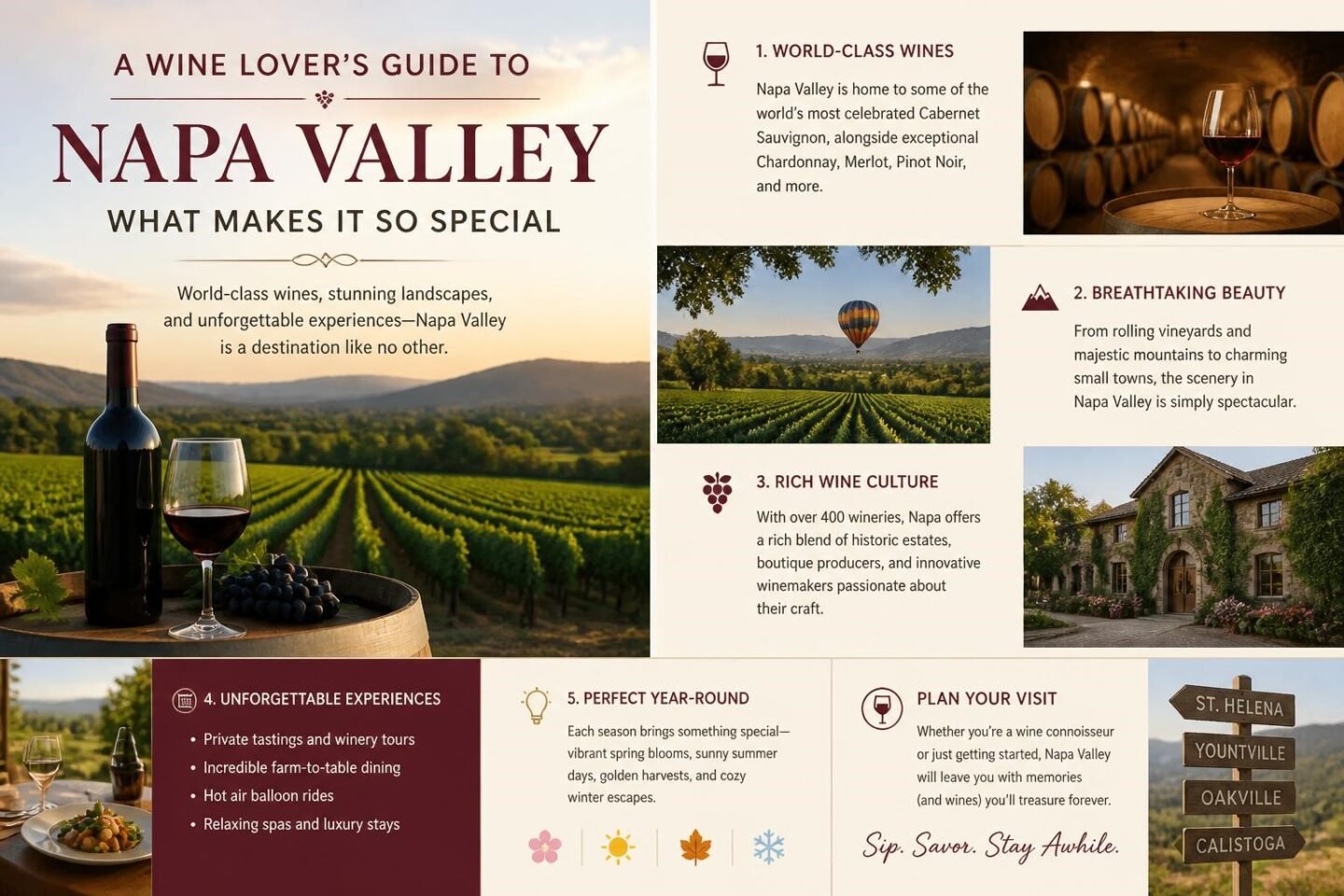
There’s wine country and then there’s Napa Valley. This legendary destination, nestled in a small swath of Northern California, has established itself as one of the world’s premier wine-producing regions, not only in the United States but internationally. Whether you’re a seasoned sommelier or simply enjoy a good glass on a Friday night, Napa Valley has a way of captivating you. The rolling hills covered in vineyards, warm golden afternoons and the depth of pure flavor that pours into every bottle make this region truly special.
So what makes Napa Valley so special? The answer lies in a combination of geography, climate, passionate winemakers and a rich history spanning more than a century.
A Brief History of Napa Valley Wines
Napa Valley’s winemaking story began in the mid-1800s when European immigrants recognized that the soil and climate closely mirrored the great wine regions of France and Italy. By the late 19th century, the valley already had dozens of wineries operating at peak capacity. But Prohibition in the 1920s brought production to a near halt, and the region spent decades rebuilding its identity.
The real turning point came in 1976 at the famous Judgment of Paris, a blind tasting competition pitting Napa Valley wines against famous French wines. To the wine world’s surprise, Napa took first place in both the red and white categories. Overnight, the valley gained global respect and the rest is history. Since then, Napa has never looked back and has consistently produced world-class wines that rival the finest bottles of Bordeaux and Burgundy.
Geography makes all the difference
Although Napa Valley is a relatively small region, measuring approximately 30 miles long and 5 miles wide at its widest point, it has a surprising variety of microclimates and soil types. These changes are one of the main reasons why the wines produced here have such complexity and character.
The valley runs from south to north, with San Pablo Bay at the southern end providing a natural cooling effect. Cool ocean air and morning fog come in from the bay, keeping temperatures at moderate levels during the critical growing period. As you travel further north toward Calistoga, the climate gets warmer and drier, resulting in a richer, more concentrated fruit flavor.
Soils across the valley are equally diverse. Volcanic, alluvial, and sedimentary layers all impart unique mineral characteristics to the grapes grown on them. This is why Cabernet Sauvignon from the Stags Leap District tastes noticeably different from that grown in Rutherford. Even though both vineyards are located in the same valley.
Signature Grape: Cabernet Sauvignon
If Napa Valley has a crowning jewel, it is undoubtedly Cabernet Sauvignon. This bold red grape thrives in the valley’s warm days and cool nights and exudes rich aromas of blackcurrant, dark cherry, cedar and tobacco. Affectionately known as Napa Cabs, they are renowned for their full body, firm tannins, and outstanding aging potential.
Some bottles from top producers can age gracefully for 20 to 30 years, evolving in complexity with each passing year. This is one of the reasons why Napa Cabernet is so highly regarded by collectors and enthusiasts alike. The wine you drink tonight is not just an investment in future enjoyment.
In other words, Napa is far from Grape Valley. Merlot, Chardonnay, Pinot Noir, Sauvignon Blanc and Zinfandel all find a happy home here, each expressing the unique character of the sub-region where they grow.
Understanding Napa Valley Sub-Appellations
One of the most fascinating aspects of Napa Valley is its sub-appellation system, officially known as American Viticultural Areas (AVAs). Napa Valley has 16 AVAs, each with its own unique terroir and personality.
Rutherford is famous for what locals call “Rutherford Dust.” This is the distinctive earthy, almost chalky quality of Cabernet Sauvignon. Oakville is home to some of the country’s most popular vineyards, producing wines of exceptional balance and elegance. Mount Veeder and Howell Mountain are located at higher elevations and produce concentrated, structured wines with firm acidity. Meanwhile, Carneros, located at the cooler southern end of the valley, is famous for its delicate Pinot Noir and refreshing Chardonnay.
Understanding these sub-appellations can help wine lovers understand why Napa wines have such incredible diversity despite being produced in a relatively small area.
Napa Valley Price Guide: What to Expect When Buying
Napa Valley wines span a wide range of prices, and understanding what determines these prices can help you make smarter, more satisfying purchases. Entry-level Napa wines from reputable producers typically start around $20 to $40 and routinely offer excellent drinking quality. Typically priced between $50 and $100, mid-range bottles represent the valley’s best value, offering true Napa character without the premium price tag of cult wines.
At higher levels, prices can rise steeply, especially for wines from famous single vineyards or well-known producers with limited production volumes. Cult Napa Cabernets from farms like Screaming Eagle and Harlan have been known to fetch hundreds or even thousands of dollars a bottle on the secondary market. For a more detailed breakdown of what to expect for different producers, regions, and vintages, this Napa Valley Price Guide is a great resource to help you explore your options with confidence.
Giving the Gift of Napa Valley Wine: Thoughtful and Timeless Choices
There’s no gift more compelling than a beautifully curated selection of Napa Valley wines. Whether you’re celebrating a birthday, celebrating an anniversary, or simply want to show off a loved one, Napa wines have a sense of occasion and thoughtfulness that’s hard to match. The good news is you don’t have to be a wine expert to give an impressive gift. Well-constructed Napa Valley wine gift baskets often come with complementary bottles paired with gourmet accompaniments like artisan cheeses, chocolates and charcuterie to create a complete and memorable experience for the recipient. It’s a gift that feels personal, generous, and truly special every time.
Napa Valley Experience Beyond the Bottle
Napa Valley isn’t just a place to buy wine, it’s a place to buy wine. The valley is home to hundreds of tasting rooms, many of which are architectural masterpieces set against breathtaking vineyard backdrops. From intimate family-run estates where the winemaker pours your own glass to mansion-style estates offering cave tours and chef-driven dining experiences, there are endless ways to immerse yourself in all that the valley has to offer.
Napa’s food culture is equally exceptional. The region has developed a farm-to-table philosophy that feels organic and authentic, with world-renowned restaurants that attract food lovers from around the world to complement their wine experiences.
final thoughts
Napa Valley is more than a wine region. It’s a celebration of what happens when nature, passion and craftsmanship come together in perfect harmony. Whether you’re exploring wine through a well-chosen bottle, planning a visit for a walk among the vineyards yourself, or looking for the perfect gift for someone who appreciates the finer things, Napa never disappoints. This legendary status is earned not through hype, but through quiet, consistent excellence poured into every glass.






