



that 

The transition from nuclear weapons to conventional strike missions occurred during the Vietnam War. Since then, the United States Air Force (USAF) has continued to maintain and modernize its B-52 fleet to remain structurally and technically mission capable.
In addition to preserving nuclear capability, the primary driver behind Stratofortress’ continued improvements is its ability to deliver large, destructive payloads that can saturate and reduce target areas to piles of charred rubble and twisted metal. These conventional capabilities are capabilities that no other aircraft in the U.S. Air Force arsenal possesses and is why this bomber will likely continue to fly for decades to come.
From Strategic to Tactical Bombing: The Evolution of B-52 Mission Focus

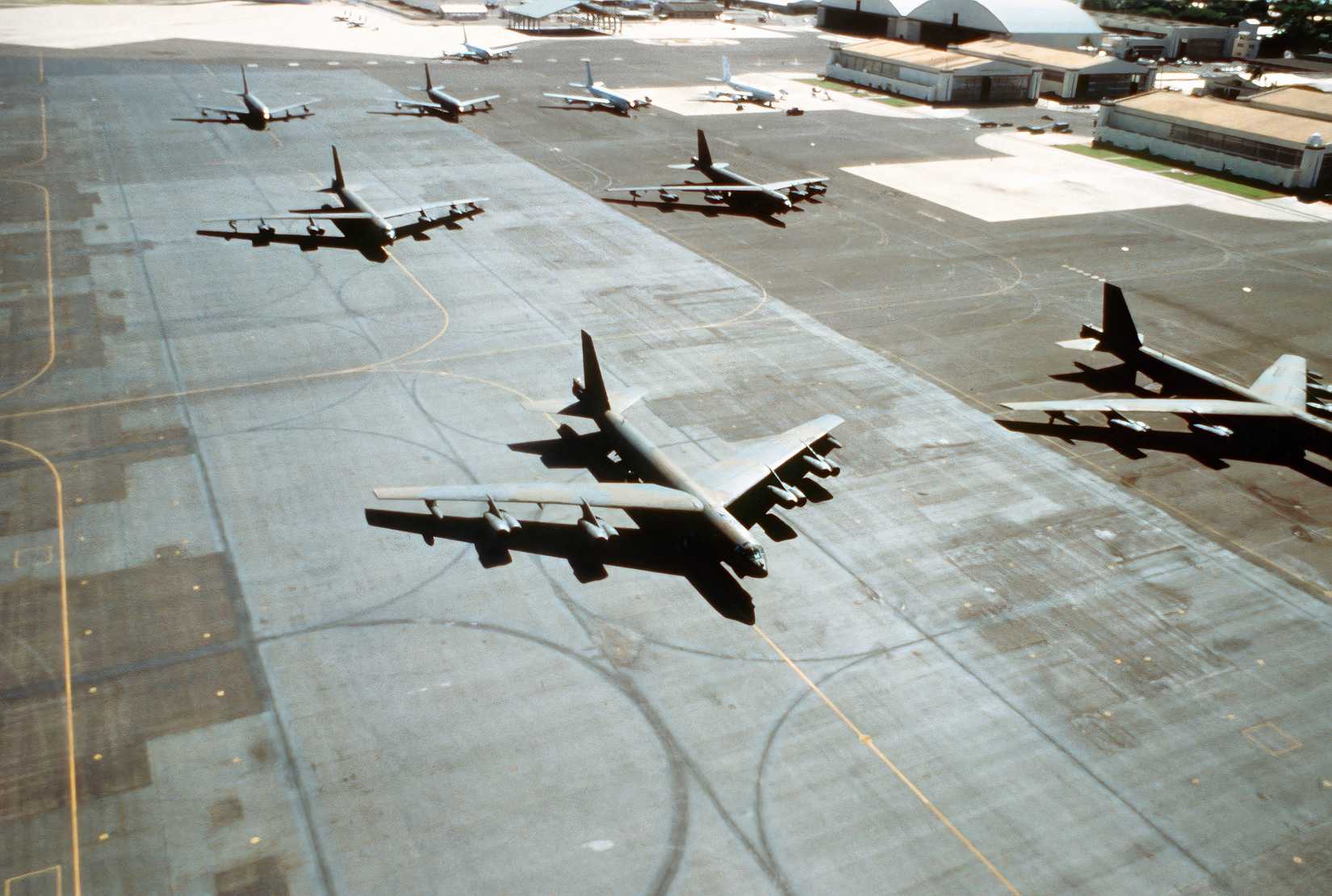
Towards the end of World War II, American military planners focused their gaze firmly on the Soviet Union as mutual distrust grew between the former allies. The Soviet Union’s development of nuclear weapons and its increasingly capable and expanding strategic bomber fleet placed increasing emphasis on nuclear counterattack capabilities.
The B-52A’s first flight on August 5, 1954 brought the aircraft and its subsequent fleet squarely into line with U.S. nuclear doctrine. The Stratofortress fleet will focus on strategic strike missions aimed at eliminating Soviet nuclear missile sites, nuclear weapons production and storage sites, strategic bomber bases, air defense infrastructure, etc.
To meet the needs of a strategic nuclear attack, General Curtis LeMay, commander of the Strategic Air Command (SAC), began rapidly building up the command’s bomber force in 1947. By 1955, SAC had a high-performance fleet of more than 2,000 Boeing B-47 Stratojets and approximately 750 Boeing B-52s. In terms of manpower, the organization grew rapidly from 262,609 in 1959 to 282,723 in 1962.
The transition from pure nuclear readiness to conventional tactical bombing occurred early in the Vietnam War. The Commander of Ground Operations (General William C. Westmoreland) requested that the Joint Chiefs of Staff allow B-52s to be used in attacks against North Vietnamese and Viet Cong bases. The logic was that the aircraft could effectively deliver a broad, uniform bombardment to the enemy’s operational area.
As Operation Arc Light Raid began, the general’s request was approved, much to the chagrin of U.S. Air Force planners. The B-52 will operate from Guam, Thailand and, in some cases, Kadena Air Force Base in Okinawa, Japan. This operation, which ran from June 18, 1965, to August 15, 1973, would support U.S. and Allied ground forces or missions to block the infiltration of North Vietnamese soldiers and supplies heading south.
According to the USAF, SAC flew 126,615 sorties during Arc Light, and overall, U.S. aircraft dropped 8 million tons of bombs during airstrikes in Southeast Asia. This effort alone cost about $200 billion, roughly half of the money spent on the war.
The USAF maintains the Stratofortress because it is its flying arsenal.

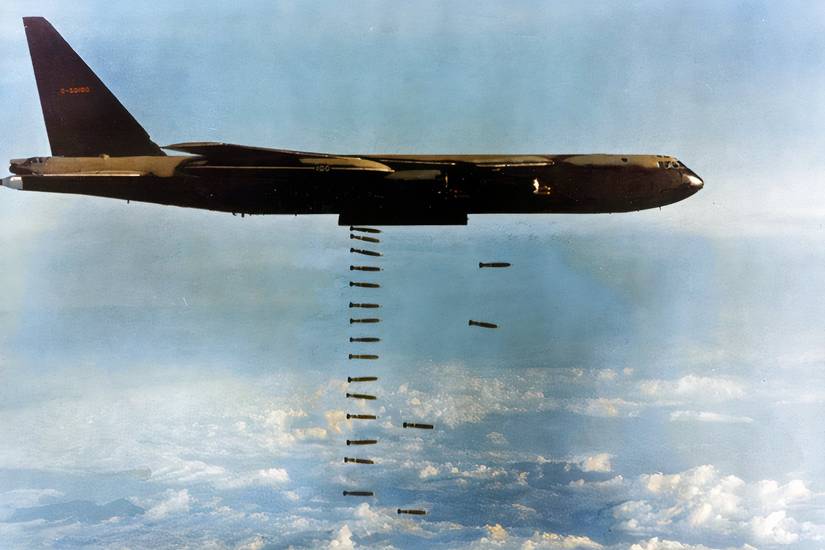
As was abundantly revealed in Vietnam, the B-52 had an incredibly variable payload, later increased to 70,000 lb (31,751 kg). To accommodate this massive ordnance load, the Stratofortress has a weapons bay approximately 28 feet long and 6 feet wide (8.5 m × 1.8 m). Between the internal storage and wing-mounted pylons, the B-52 can carry virtually any tactical missile or gravity bomb in the U.S. arsenal.
In the conventional bombing role, the B-52 can launch cruise missiles such as the AGM-158 JASSM, the AGM-86C conventional air-launched cruise missile (CALCM) (capable of nuclear capability in other variants), and the AGM-158C long-range anti-ship missile (LRASM) for attacking naval vessels. For conventional bombs, the aircraft’s large bomb bay can carry twenty 2,000 lb (907 kg) JDAMs or thirty 1,000 lb (453 kg) JDAMs in addition to naval mines.
The most recent reported use of the Stratofortress was during Operation Epic Fury against Iran. According to the Center for Strategic and International Studies, U.S. aircraft struck 1,000 targets within the first 24 hours. By day 10, the daily rate of attacks against Iranian military targets and critical infrastructure increased to 300 to 500 per day. An aspect of these early attacks was the use of B-52s in a standoff role. At this stage, the B-52 was utilized as a platform for standoff munitions, such as the 2,250-pound (1,020 kg) AGM-158 JASSM, which could be deployed at a range of 200 nautical miles (370.4 km).
This versatility gives U.S. military planners the ability to not only saturate target areas directly overhead, but also use standoff weapons to maintain critical infrastructure at risk well beyond visual range. This dual-use capability allows the aircraft to perform missions such as suppressing enemy air defenses and then expand operations through saturation bombing once airspace is significantly open.
Modularity: a key feature of the B-52’s long service life

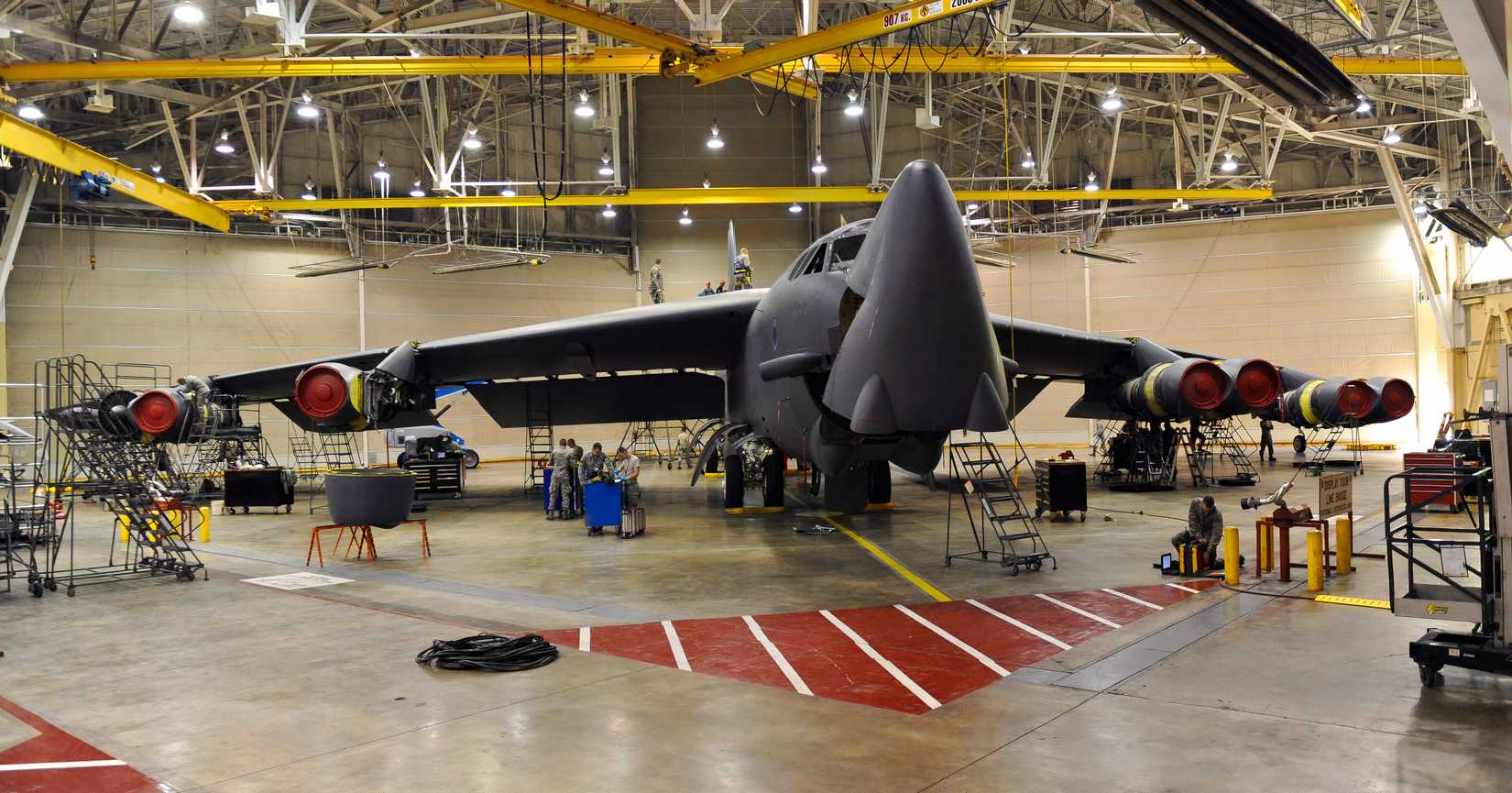
The Stratofortress’ massive fuselage can accommodate a wide variety of guns, while also allowing the bomber to be equipped with new equipment as it becomes available. Over the past 70 years, the B-52 aircraft has evolved from an aircraft that relied heavily on analog systems to one with modern digital alternatives, including updated communications infrastructure, mission computers, and improved networking and data link hardware. Boeing also received a $2 billion contract from the U.S. Air Force to continue the B-52 commercial engine replacement program.
These life extension efforts include the installation of new Rolls-Royce F-130 commercial engines along with other significant subsystem upgrades. Mission-critical work will be performed at Boeing’s San Antonio modification facility in Texas. The new powerplant will improve the B-52’s efficiency, range and overall operational life, helping the aircraft remain airworthy beyond 2050.
In addition to being equipped with F-130 engines, the B-52 fleet will be provided with the latest Active Electronically Scanned Array (AESA) radar system developed by Raytheon Technologies. Once operational, this new system will provide the Stratofortress fleet with improved all-weather navigation and targeting capabilities. Last year, a B-52 successfully completed a ferry flight from Boeing’s San Antonio facility to Edwards Air Force Base in California to test a new radar. Fleet-wide deployment of this system is expected to occur between 2028 and the early 2030s.
The new engines and radar are key elements of the B-52 modernization program. Once completed, the remaining 76 B-52 aircraft will receive the new designation B-52J. In addition to the new engines and AESA radar, the USAF revealed that these enhanced bombers will be equipped with new “crew compartments, conventional and nuclear communications systems, avionics, weapons and other capabilities that will enhance the B-52’s ability to perform the full spectrum of missions directed by combatant command and USSTRATCOM.”
It is very likely that the B-52 will continue to fly until 2060.


The B-52’s shift from a nuclear strategy to primarily utilizing conventional strikes reflects a greatly reduced likelihood of large-scale nuclear war. Although nuclear missions were largely over, the aircraft found great utility in supporting ground operations, which continues to this day, as evidenced by its effective use on the Epic Fury.
When combined with its ability to carry every type of conventional weapon in the U.S. arsenal and its wide range, especially with aerial refueling tankers, the Stratofortress is capable of conducting saturation or precision strikes from any point on the planet. This capability is precisely why U.S. military planners and lawmakers have worked so hard to keep it in flight-ready condition. And with modernization underway, the aircraft will likely continue to fly over combat zones for another 30 years.


