



Mozambique is starting to establish itself as a top destination for marine tourism, with new initiatives and luxury products set to become very popular in the coming years. Leading travel agency Pelorus recently announced its Marine Marvels expedition to the East African country in 2025.
Priced from $22,800 per person, the seven-night adventure aims to combine luxury with a marine conservation experience. The expedition takes place on the Macangulo Peninsula, about 30 miles south of the capital Maputo, where travelers will join scientists from IndoCet (Indian Ocean Network for Cetacean Research) on the first comprehensive study of maritime migration patterns in Mozambique. We will proceed.
Travelers can arrive from Maputo by light plane, helicopter or boat transfer. Alternatively, you can travel by private charter from a safari lodge in a neighboring country. Upon landing, you will be welcomed by the team at Colina Verde, a luxurious private villa that will be your home for the week. The private villa features 7 bedrooms, a heated pool, spa, gym and private boat.
The journey of exploration is full of unique experiences. Participants will meet marine researchers, conservationists, wildlife photographers and filmmakers who will document their experiences. After a briefing, travelers will board a high-speed inflatable boat, known as a RIB, for the first day of conservation work.
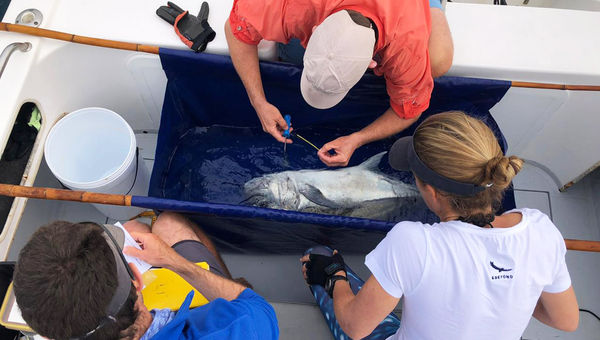
Participants will observe marine mammals and assist Indocet’s scientists in data collection, such as sizing and DNA sampling. Photo credit: Pelorus
Two boats allow travelers the flexibility to engage in a variety of activities. Mornings are spent on dives to replace acoustic receivers, deploy new receivers for up to five apex reef predators, and assist with other data collection, such as sizing and DNA sampling. Participants also observe marine mammals, photograph flukes, and study the behavior and movements of humpback whales and whales.
These activities are part of IndoCet’s groundbreaking research into migration patterns in Mozambique and offer guests the opportunity to leave a lasting legacy, including the rare opportunity to name a whale.
The Macangulo Peninsula itself is famous for its beautiful beaches and marine reserves. Travelers can snorkel and dive around centuries-old shipwrecks, kayak through mangrove forests, and picnic on secluded sandbanks. A highlight of a trip to Pelorus is a helicopter flight over the Maputo Special Reserve, about 50 miles south of Maputo, offering the opportunity to spot both elephants and whales.
many tourist opportunities
Pelorus’ new offering is just one of Mozambique’s growing appeal as a maritime destination. Bazaruto Archipelago National Park, accessible from the town of Vilanculos in the province of Inhambane, about 435 miles northeast of Maputo, is also fast becoming a hotspot for marine sustainability.
The park consists of five subtropical islands: Bazaruto, Benguerra, Magaruque, Santa Carolina (also known as Paradise Island), and Bangue. The waters here are home to some of the most pristine coral reefs and diverse marine life in East Africa. Divers and snorkelers can encounter whale sharks, manta rays, dolphins and various shark species. The park is also known to be home to the last viable dugong population on the East African coast.
To ensure that the Bazaruto Archipelago remains a sustainability hotspot, TUI recently launched the “Sea the Change” initiative. In partnership with African Parks, the program is working to protect the Bazaruto Archipelago and engage local communities in conservation efforts.
The goal of the plan is to protect 371,000 acres of marine reserves while engaging 7,000 residents in conservation awareness and sustainable fishing practices. This focus on sustainability is critical to Mozambique’s long-term tourism prospects. The Bazaruto Archipelago, like other coastal regions, faces threats from climate change, unregulated development and overfishing. By promoting responsible tourism and involving local communities, initiatives like Sea the Change aim to protect fragile ecosystems while allowing visitors to experience their beauty.
Diving and Dow
Mozambique offers a variety of maritime experiences beyond its headline-grabbing expeditions and archipelagos. The Quirimbas archipelago in Mozambique’s northern Cabo Delgado province is made up of 32 coral islands popular for diving sites and traditional dhow sailing.
Inhaca Island, about 25 miles east of Maputo, offers excellent snorkeling and the opportunity to see nesting turtles (seasonally). The nearby Santa Maria Peninsula is a haven for birdwatchers, with a variety of species ranging from flamingos to rare seabirds.
Logically, Mozambique is becoming increasingly accessible to American travelers. Major airlines often provide connections to Maputo Airport via Johannesburg. From Maputo, domestic flights connect to major tourist hubs such as Vilanculos (for Bazaruto) and Pemba (for Quirimbas).
U.S. citizens need a visa to enter Mozambique, which can be obtained online or upon arrival. The official language is Portuguese, but English is widely spoken in tourist areas.
However, potential visitors should be aware that Mozambique is still a developing country with some infrastructure problems. Outside of major cities and tourist centers, roads can be poor and medical facilities may be limited.
Despite these challenges, the rewards for visitors are significant. As awareness of America’s appeal grows, it is likely to become an increasingly popular choice for those seeking off-the-beaten-path adventures and meaningful travel experiences, something that U.S. travel advisors should take note of.







