



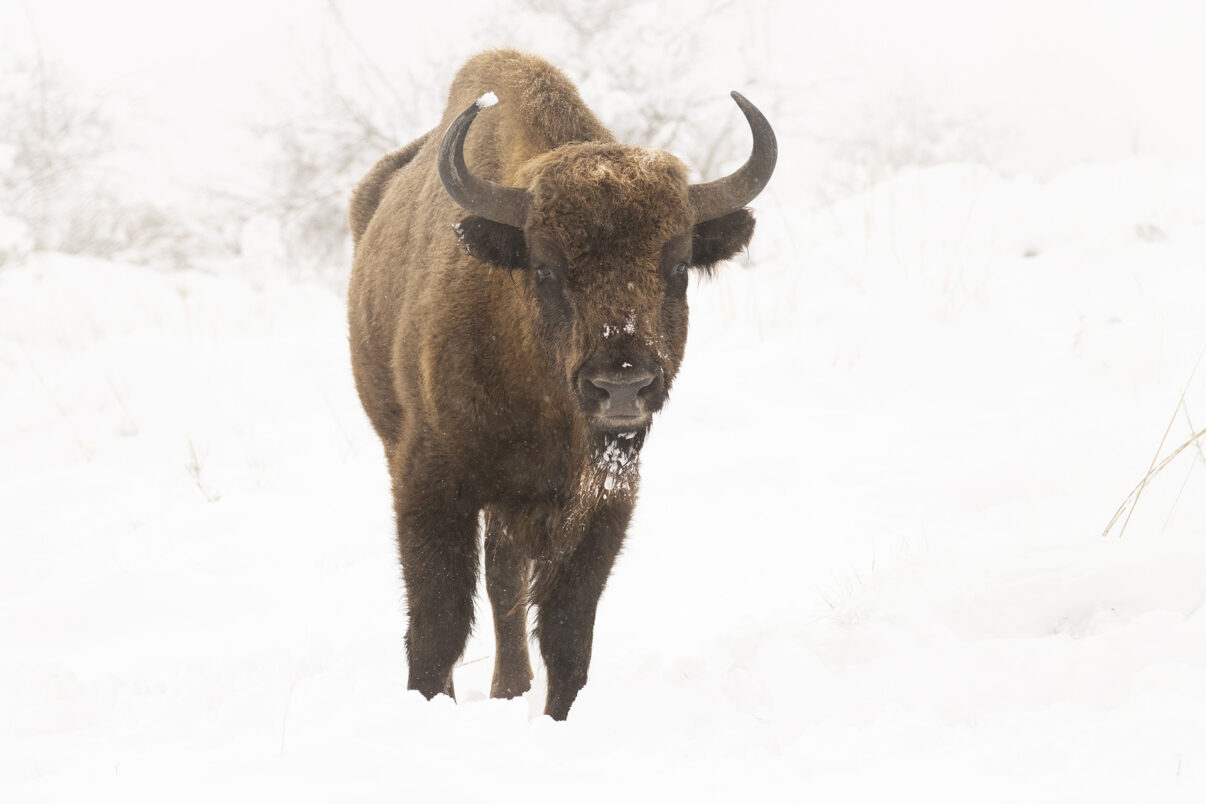
Nine European bison have been released for the first time into the Iberian Plateau in a historic step toward rewilding Spain. As part of their international research, they will help gain important insights into how bison can help restore ecosystems across Europe, while providing new hope and opportunity for the El Recuenco community.
Ruben Domingo
groundbreaking arrival

In a historic milestone for the rewilding of Spain’s Iberian Plateau, nine European bison have arrived in the village of El Recuenco in the province of Guadalajara. Their presence, produced on private land northwest of Madrid, will support pioneering research efforts led by Rewilding Spain to explore how bison, Europe’s last wild cattle and largest land mammals, can help restore and revitalize ecosystems in the Mediterranean and beyond.
Understanding how the European bison adapts to the landscapes of the Iberian Peninsula and other European environments is important to exploit the benefits this species can provide to nature, climate and humans. It will also guide and strengthen efforts to accelerate the return of European bison across the continent. Over the past decade, European bison numbers have grown from just over 2,500 individuals to about 9,000. Considering that in 1927 there were fewer than 60 individuals alive in zoos and private parks, this represents a remarkable recovery.
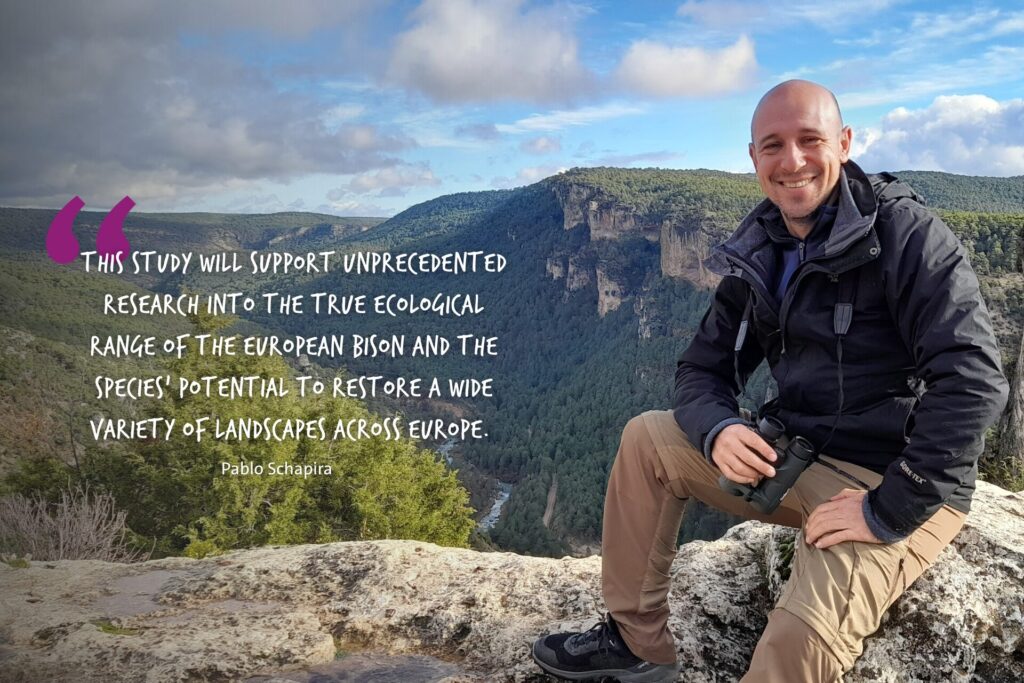
“This study will underpin unprecedented research into the true ecological range of the European bison and the species’ potential to restore diverse landscapes across Europe,” said Pablo Schapira, team leader at Rewilding Spain. “It will also demonstrate how rewilding can provide new development pathways for rural areas with meaningful participation and strong public support.”
Breathing new life into local communities through natural cultivation
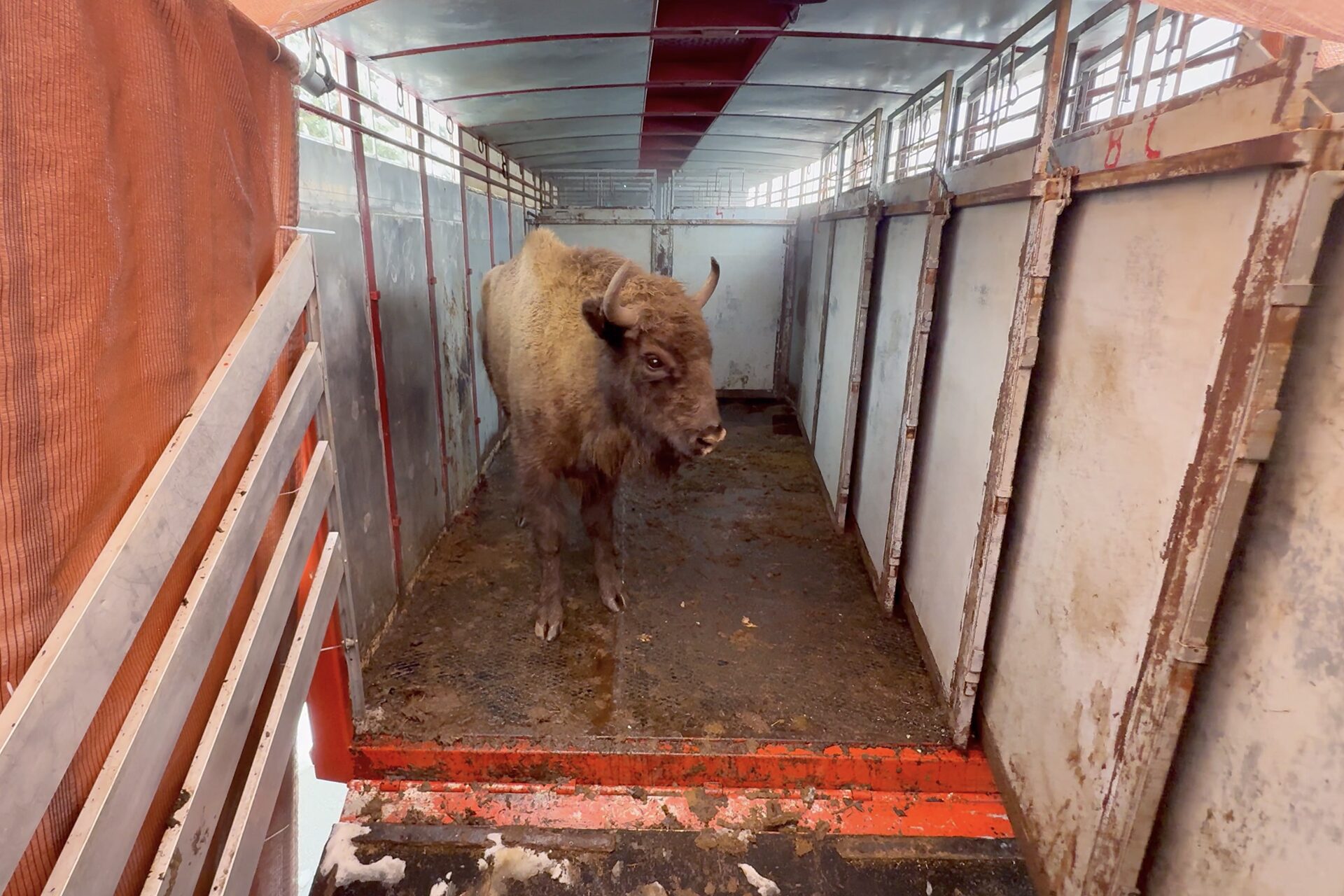
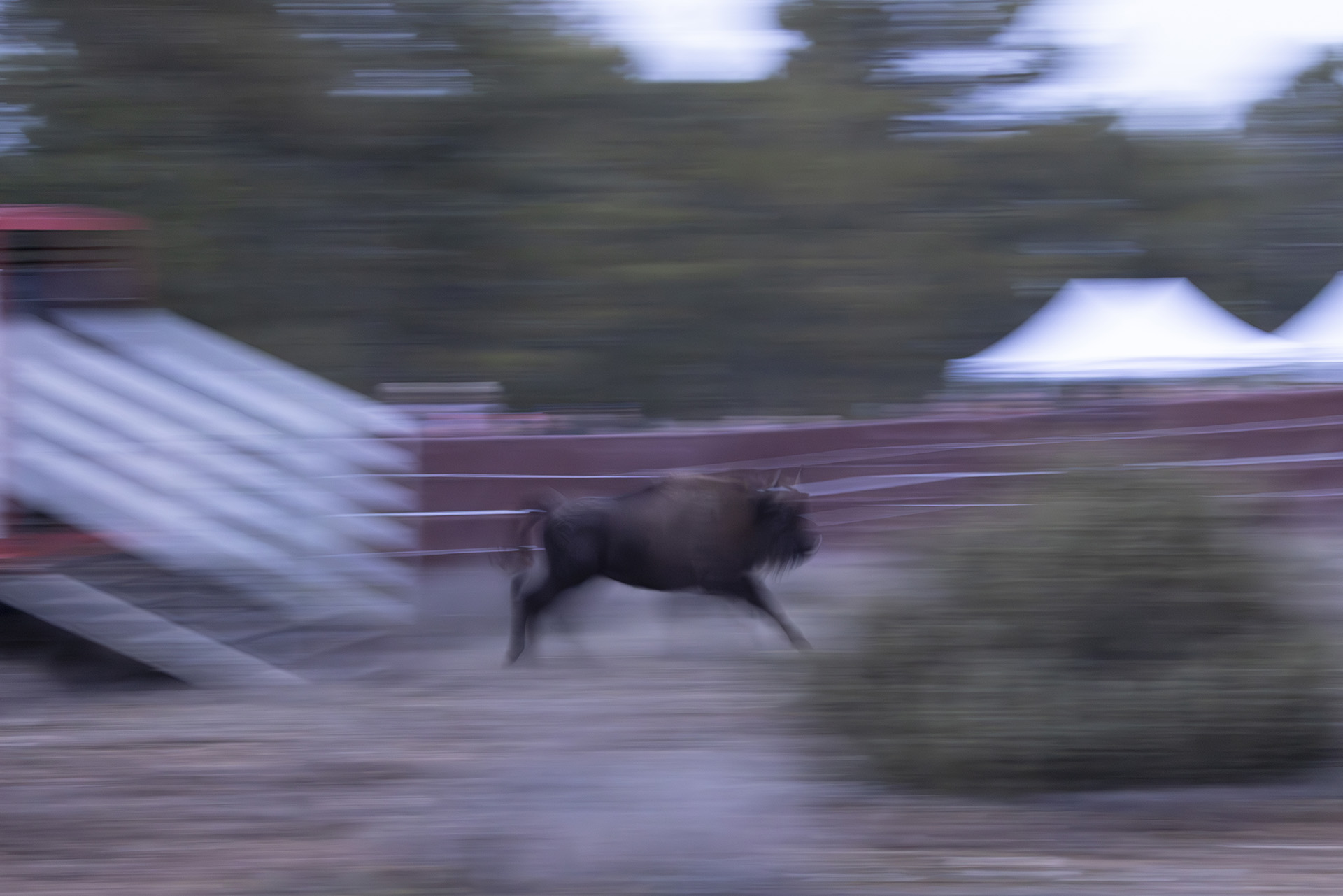
The nine bison will spend several weeks in an acclimatization enclosure where their health and behavior will be closely monitored. They will then be released into a 400-hectare fenced, publicly owned forest area. As the animals begin to roam the site, they are expected to provide a range of benefits to the El Recuenco community of more than 80 people. The local council, an important partner in the initiative, has asked to host the herd given the expected positive impact on the town, which, like many rural settlements across Spain, has faced severe socio-economic decline in recent decades.
“We anticipate that bison will help reduce the risk of catastrophic wildfires by grazing and exploring our forested areas,” said El Recuenco Mayor Enrique Collada. “We are also hoping that this unique and iconic species will attract more visitors to our town, creating new opportunities, jobs and income for the people who live here.”
Ruben Domingo
Ruben Domingo
strong landscape engineer
The European bison is a keystone species with enormous potential to shape and restore landscapes. Developing a deeper understanding of its ability to thrive in ecosystems such as the Southern Iberian System (Sistema Ibérico) and its impact on vegetation will help us make more informed decisions about the role the species may play in rewilding across Europe. This knowledge is also important for finding the best ways to manage forests to ensure they are healthy and resilient to wildfires and the increasing pressures of climate change.
The story of the bison of the Iberian Peninsula is more complicated than you might think. Bison from the Cantabria region of northwestern Spain support the hypothesis that European bison existed in the region in the past, but further research is needed to clarify their historical record. bison genus from this part of Europe. Despite this ongoing debate, the release of bison in Spain and Portugal is fully justified. These animals can fulfill an ecological role similar to that of large herbivores, such as wild horses and wild horses, which have disappeared from natural landscapes due to human activities.
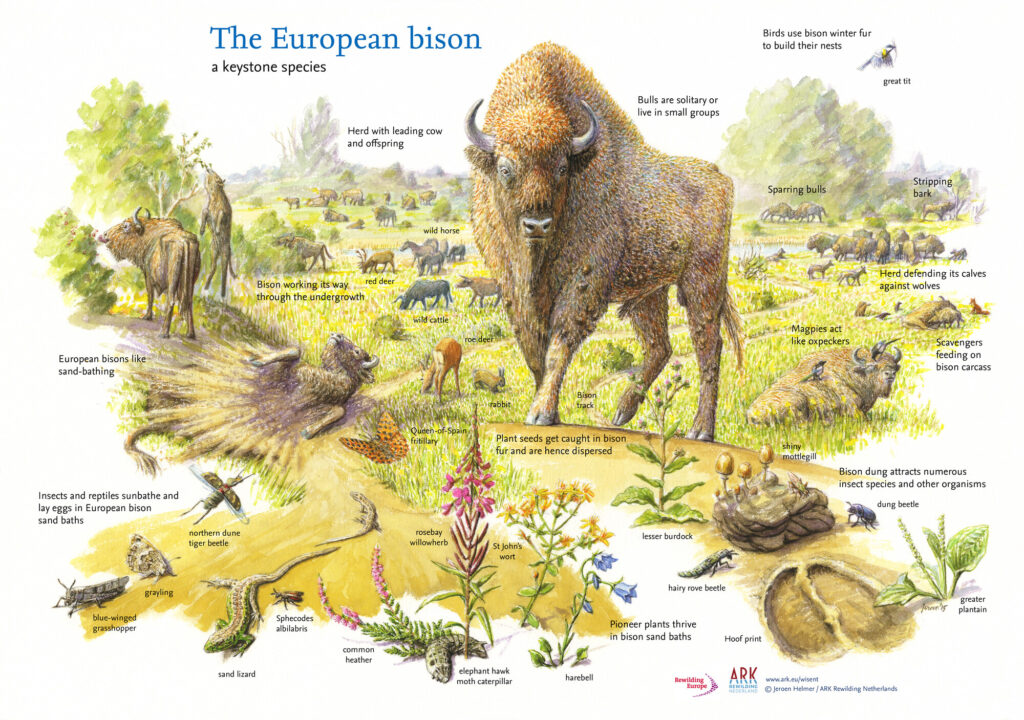
Zeroen Helmer
The bison herd released in El Recuenco, consisting of five females and four males of various ages, arrived from a private property in El Espinar, about 65 km from Madrid. The adult animals have lived on the property since arriving from Poland and the Netherlands three years ago, and the young animals were born there. As a result, the herd is already socially cohesive and well adapted to the environmental conditions of the Spanish interior. After being released from their cages, members of the Rewilding Spain team track the bison’s movements and behavior in the field using GPS collars attached to the animals.
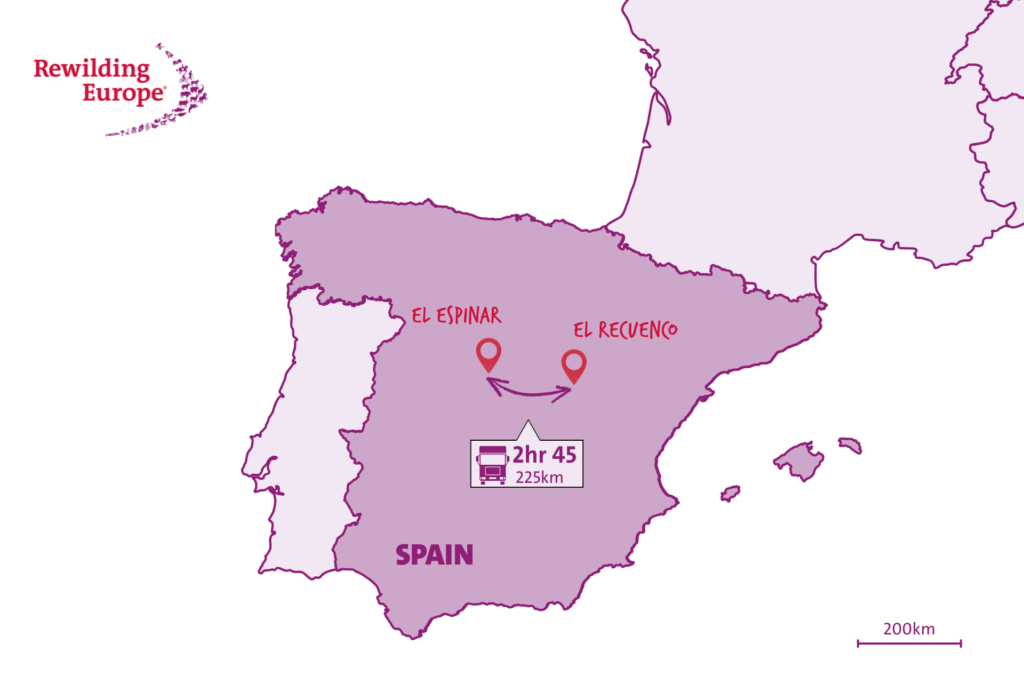
Deeper Insights Through Science
The bison research initiated by Rewilding Spain also involved the University of the Basque Country, the University of Manchester, and ECONOVO, a research center affiliated with Aarhus University in Denmark. Extensive scientific analysis will assess the stress levels of El Recuenco herds throughout the year. We will also examine the composition of the animal’s diet, which is completely natural.
Collaboration with international organizations, including other members of the Rewilding Europe network, will see this research replicated in other bison populations across Europe, from Spain through Azerbaijan, Scandinavia, the Netherlands, Poland and Romania. This will allow the research team and the wider rewilding community to gain deeper insight into how European bison adapt to different geographical landscapes and environmental conditions. A parallel study will also examine the effects of bison on woody plants.
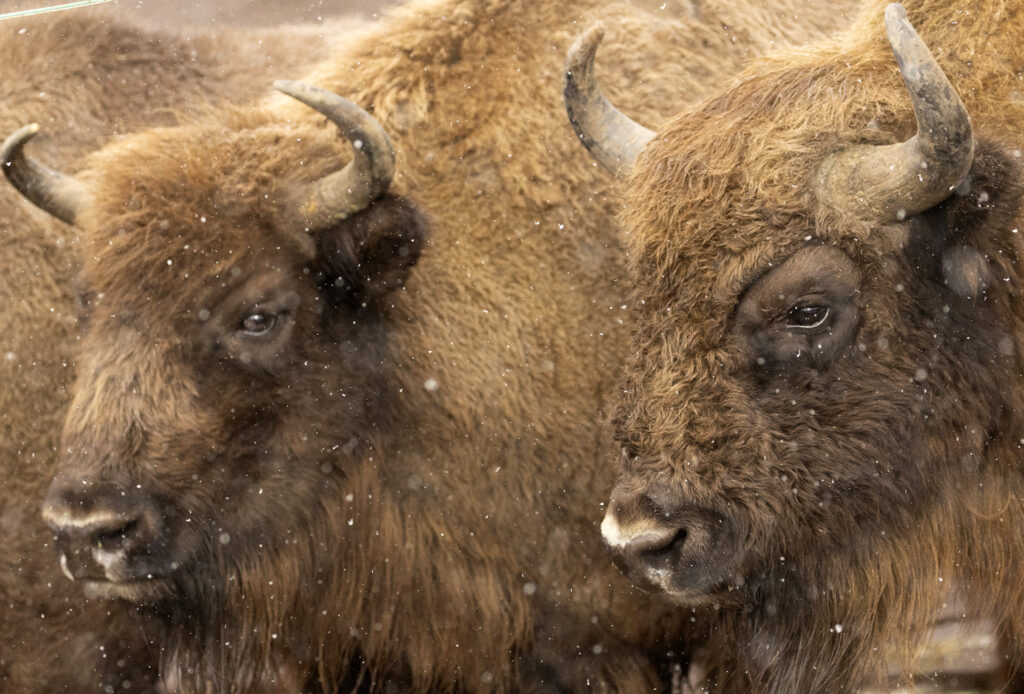
Ruben Domingo
Grassroots action plays an important role
The start of bison research was made possible by the dedication and proactive mindset of El Recuenco City Council and residents who recognize the importance of keystones such as the European bison in the restoration of wild bison. They have also seen the growing benefits of the release of large herbivores, including Tauros and Przewalski’s horses, in other rewilding areas across the Iberian Plateau, where the Rewilding Spain team currently manages over 20,000 hectares of natural rangeland.
The El Recuenco City Council, which created woodlands for bison to graze, also led an extensive dialogue process with residents, organizing dialogues, meetings and site visits to build broad social consensus on the initiative. The woodlands will continue to be used for recreational activities and wildlife viewing by local residents and nature lovers, as well as other activities such as timber extraction, hunting and mushroom picking.
Rewilding efforts in the Iberian Plateau are supported by the Endangered Landscapes & Seascapes Program and Cartier for Nature.
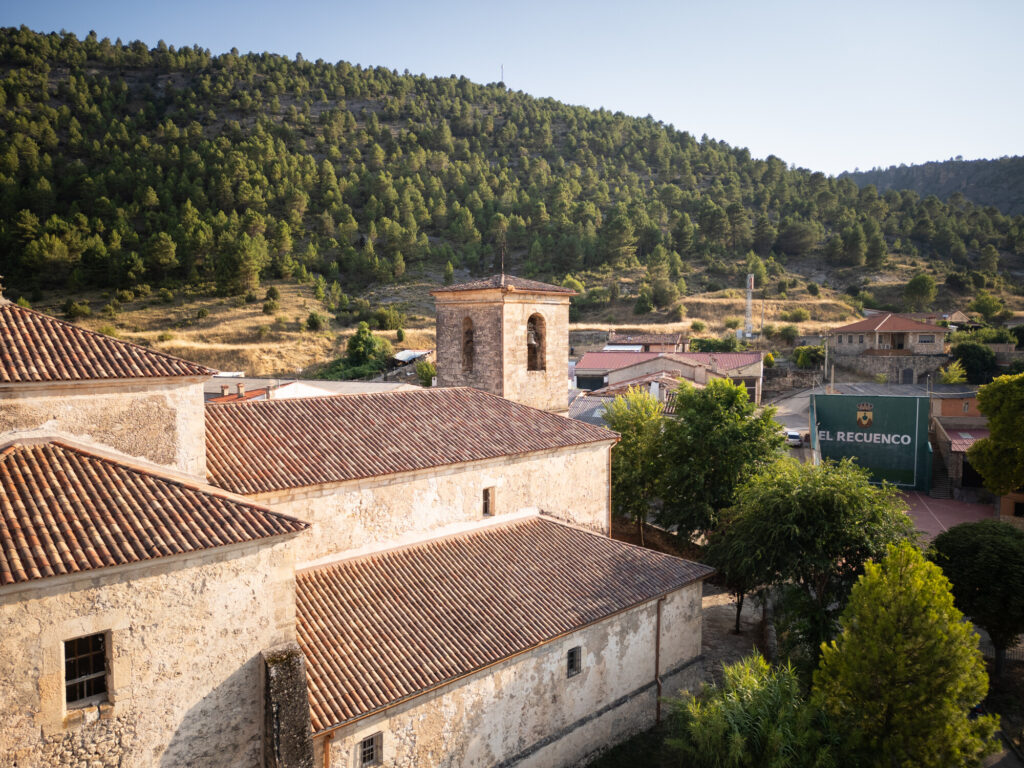
James Shooter / Reviving Europe







