



The U.S. Air Force plans to begin a heavy bomber analysis of alternatives next year that could determine requirements for future B-52 upgrades or an entirely new heavy bomber.
The U.S. Air Force plans to begin a study in 2027 to determine requirements for future upgrades to the B-52 Stratofortress, or an entirely new heavy bomber. First reported development aviation weekIt is addressed in Volume IV of the Air Force Research, Development, Test, and Evaluation of the Fiscal Year 2027 budget request.
Heavy bomber alternative analysis
The study is part of the B-52 System Improvement Project, which the Department of Defense describes as “a comprehensive project to promote future capabilities and ensure the survivability of the B-52 in current and future wartime missions.” The broader project includes Advanced Wing Weapon Pylon (AWWP), Long Range Anti-Ship Missile/Joint Air-to-Surface Missile (LRASM/JASSM) integration, Advanced Weapons Integration, and Analysis of Heavy Bomber Alternatives.
The latter is where a possible replacement for the Stratofortress was first mentioned. “An analysis of alternative heavy bombers will begin in FY27 to analyze future long-range attack requirements to determine future B-52 requirements and costs and/or new heavy bomber aircraft configurations and costs.”
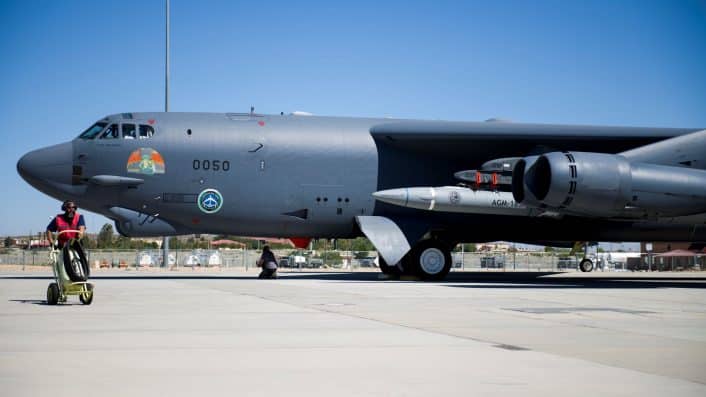
This study supports a classified proof-of-concept demonstration for the B-52 and is reiterated while detailing the advanced concept demonstration effort, which ended in fiscal year 2025. No information was provided about the scope of the demonstration.
The document then provides another explanation of the study.
“A new heavy bomber analysis of alternatives will initiate initial planning activities to develop key performance parameters, key system attributes, and additional performance attributes for the USAF’s successor heavy bomber. The FY27 scope of work includes key planning activities for future fieldable programmatic approaches, requirements, capabilities, and vendor options.”
The service is requesting $1 million for research in fiscal 2027, with $3.872 million in fiscal 2025 for broader advanced concept demonstrations. No funding was requested for FY 2026 after the demonstration was completed, and the new increase was dedicated entirely to the analysis of new heavy bomber alternatives.
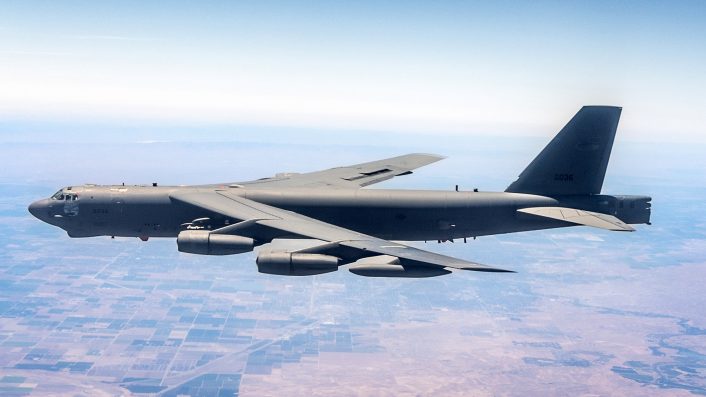
The relationship between classified demonstrations and analysis is unclear. The fact that this has been described as a proof of concept may point to a determination of future B-52 requirements mentioned in the first description of the project, rather than an immediate search for a successor.
The future of the B-52
As mentioned in previous reports, the U.S. Air Force expects to keep the B-52 Stratofortress heavy bomber flying until at least 2050. The bombers, most recently delivered in 1962, will outlive the newer B-1B Lancer and B-2A Spirit bombers.
In fact, the U.S. Air Force is considering a mixed fleet of 76 upgraded B-52Js and more than 100 new B-21 Raider stealth bombers. The new bomber configuration allowed Stratofortress to focus solely on ranged attacks.
To suit this role, the bomber will undergo a major upgrade, upgrading from the B-52H configuration to the new B-52J configuration. Despite some delays in upgrade development, the modernization program reflects the Air Force’s long-term commitment to the B-52.
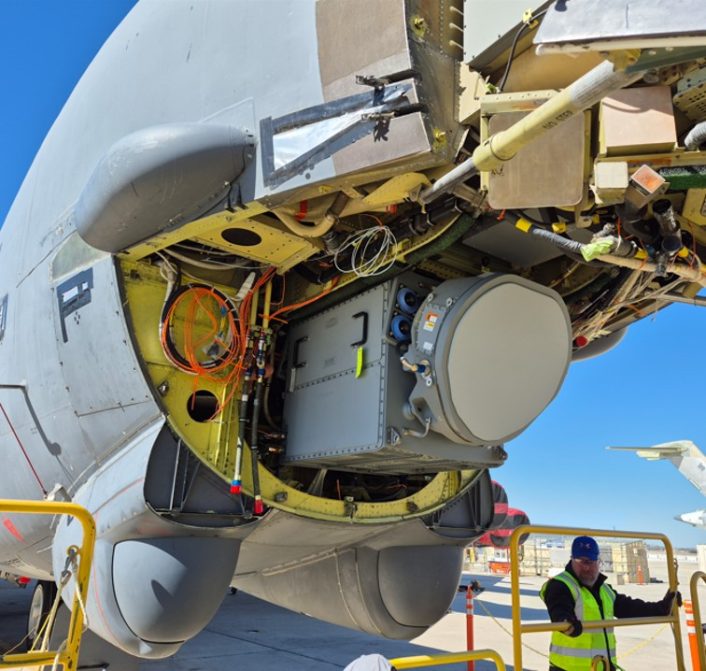
Two important components of the B-52J upgrade are the Radar Modernization Program and the Commercial Engine Replacement Program (CERP). The former has already produced its first modified aircraft and is currently conducting flight tests, while the latter is scheduled to begin conversion work on its first aircraft later this year.
The new radar, Raytheon’s AN/APQ-188 (also known as the Bomber Modernization Radar System), is intended to replace the outdated mechanically scanned AN/APQ-166 that has been in use since the Cold War. The AN/APQ-188 is an active electronically scanned array (AESA) radar primarily derived from the AN/APG-79 found on the US Navy’s F/A-18E/F Super Hornet and EA-18G Growler, with additional elements from the AN/APG-82 on the US Air Force’s F-15E and F-15EX.
The Air Force aimed to reduce costs by leveraging existing, proven designs while providing the B-52 with access to the latest multi-mode AESA capabilities. But this approach also meant reassessing what capabilities the B-52 actually needed for its mission.
For the B-52, the new radar is expected to improve target acquisition, potentially through ground moving target marking and synthetic aperture radar capabilities. Additionally, the new radar is optimized for the air-to-ground role but can still retain air-to-air capabilities to help bombers defend against air-to-air threats.
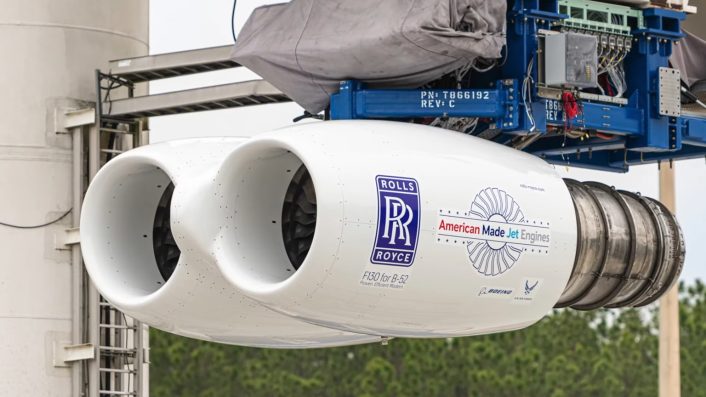
The new engine, the Rolls Royce F130, is a military version of the BR725 engine that powers the Gulfstream G650 business jet and already powers both the C-37 and E-11 BACN and will replace the bomber’s current Pratt & Whitney TF33-PW-103. The latter has been around since the 1960s and went out of production in the 1980s, so it will no longer be supported after 2030.
The new engine will increase the bomber’s fuel efficiency, increase its range, reduce emissions of unburned hydrocarbons and significantly reduce maintenance costs. Although the overall shape is still the same, the new nacelles on the F130 engines are larger than those on the original engines, and the new struts are shorter, bringing the nacelles closer to the wings.
The Air Force plans to finalize integration activities and deliver the first lot of B-52Js in 2026-2027, with initial operational capability initially expected in 2030 but later delayed to 2033. A full aircraft redesign may not be completed until 2036, and no timeline has been released for the new radar.







