


A growing number of pregnant women — around 6% in the U.S. — are being prescribed selective serotonin reuptake inhibitors (SSRIs) to help manage their depression.1 SSRIs are antidepressants that work by altering your serotonin levels, and while this class of drugs was previously touted to be “safe for pregnancy,” research is showing an entirely different story. In particular, pregnant women who took these drugs were found to give birth to infants with a high risk of congenital heart defects.
If you’re pregnant or are planning to get pregnant, this isn’t something to overlook. Keep in mind that during this delicate stage, everything — what you eat, your mental state, and even your gut health — affects fetal development. Given this mounting evidence, it’s no longer acceptable to brush off antidepressant use during pregnancy as low-risk.
SSRIs Show Toxic Effects on Developing Heart Tissue in Lab Models
The most commonly prescribed antidepressants today for pregnant women,2 SSRIs work by increasing serotonin levels in the brain, to alleviate symptoms of depression. However, serotonin isn’t limited to mood regulation. It plays a central role in fetal development, especially in shaping the heart, nervous system, and organ formation.
A study published in Communications Biology tested three SSRIs on human heart cells in the laboratory. The researchers noted that epidemiological studies have associated first-trimester use of some SSRIs with congenital heart defects, and set out to examine a possible cellular mechanism. These structural problems in the heart develop in the womb and can lead to lifelong complications or require corrective surgery soon after birth.3
• SSRIs penetrate the placenta and fetal blood — According to the researchers, SSRIs and their byproducts can cross the placental barrier, moving through maternal blood and into fetal circulation. This raises the risk of heart toxicity during key developmental stages.
• To investigate further, they used human pluripotent stem cell models — These are a gold standard for studying human tissue development in the lab. They used two systems — 2D cardiomyocytes (heart muscle cells grown in a dish) and 3D cardiac organoids (miniature heart-like structures that better mimic early heart formation).
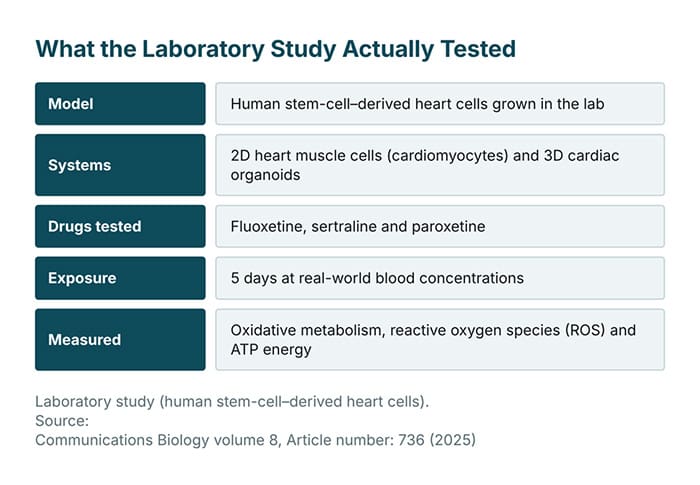
Figure 1. The Communications Biology study tested three SSRIs on lab-grown human heart cells and organoids, not on pregnant women or fetuses.
Compared to animal testing, these models may better reflect human cell behavior by reducing errors caused by species differences.
• The aim was to assess the effects of three widely used SSRIs — These include fluoxetine, sertraline, and paroxetine. Aside from evaluating the short-term effects, the researchers also studied long-term disruptions by exposing cells during the heart’s earliest formation stages, a method designed to mimic real-world fetal exposure during the first trimester.
• Sertraline was the most toxic of the three drugs tested — Its estimated lethal concentration 50 (LC50) was around 7.5 to 7.8 μM — much lower than paroxetine and fluoxetine, which were closer to 33 μM. This means sertraline was more damaging to developing heart cells at lower doses.
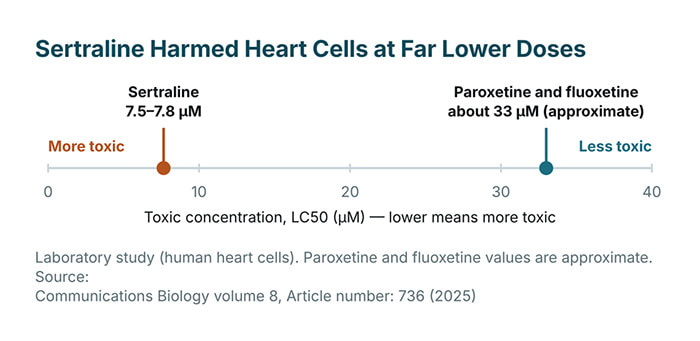
Figure 2. Sertraline reached a toxic level (LC50) at roughly 7.5 to 7.8 micromolar, far below the about 33 micromolar for paroxetine and fluoxetine, so it harmed heart cells at much lower doses.
• At the core of their findings was a consistent pattern — All three SSRIs impaired oxidative metabolism, the process by which cells convert oxygen into energy. After just five days of exposure to real-world concentrations — levels known to circulate in the blood of pregnant women taking these medications — heart cells showed elevated levels of reactive oxygen species (ROS).
Excessive ROS is a hallmark of oxidative stress and signals that the cells are being pushed beyond their metabolic limits, damaging proteins, DNA, and cellular membranes in the process.
• Adenosine triphosphate (ATP) production dropped significantly as well — ATP provides the energy that cells need to function — it powers the contraction of heart muscle cells, electrical signaling, and cellular repair. In SSRI-treated cardiomyocytes, ATP levels dropped sharply after several days of exposure, suggesting that the mitochondria — which are responsible for ATP production — were failing to perform under the strain of these drugs.
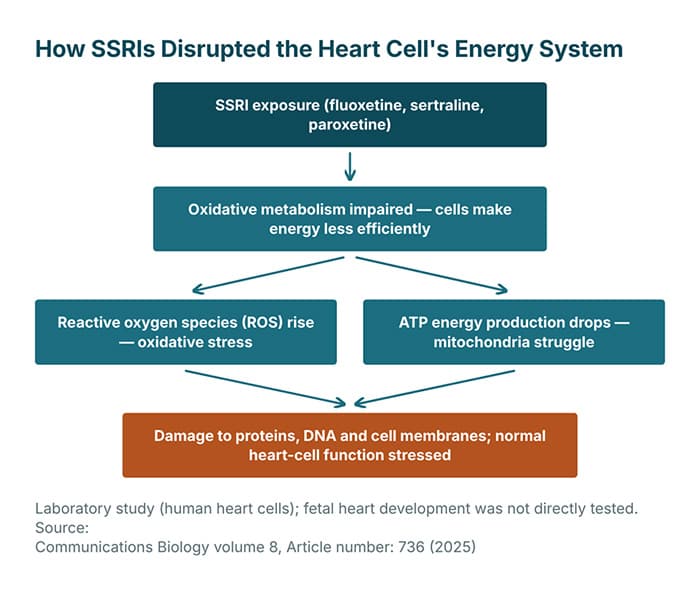
Figure 3. In the laboratory, SSRI exposure impaired the heart cells’ oxidative metabolism, raising reactive oxygen species and lowering ATP energy, which stressed normal cell function.
Although these effects didn’t show up right away, they became clear over time, indicating that long-term exposure, even at therapeutic levels, stresses the heart cells.
This laboratory research suggests that these drugs can disrupt the energy systems of heart cells grown in culture. The authors propose that this kind of metabolic disruption could have implications for the biological processes involved in normal heart formation, though fetal heart development was not directly tested.
According to bioenergetic researcher Georgi Dinkov, serotonin is one of the key regulators of oxidative phosphorylation (the metabolic pathway that generates ATP), so it makes sense to see the negative metabolic effects on the heart that the study discovered.
“If SSRI/serotonin can have such profound negative effects on the heart — an organ that is quite resilient to damage due to the high concentrations of protective steroids (e.g. testosterone, DHT and pregnenolone, etc) in it — imagine what SSRI/serotonin can do to the organ that is the most sensitive to energetic disturbances — the brain,”4 Dinkov said.
SSRIs Affect Your Body in Different Ways, and These Effects Increase Your Risk of Heart Problems
Researchers have proposed several mechanisms by which SSRIs might affect cardiovascular risk, though the overall evidence is mixed. For example, one study notes that some antidepressants are associated with weight gain and metabolic disturbances. According to the researchers:5
“SSRIs act by blocking the serotonin transporter and therefore reuptake of serotonin into the neuron, resulting in an increase in serotonin in the synapse. Serotonin is released by activated platelets, causing enhanced platelet aggregation, and is implicated in modulation of vascular tone. A functional polymorphism of the serotonin transporter was also associated with a higher risk of premature MI (myocardial infarction).”
It is worth noting that the study this passage is drawn from (the ARIC analysis) concluded that SSRI use was not associated with an increased risk of cardiovascular events compared with other antidepressants. The quoted passage describes proposed biological mechanisms rather than the study’s own outcome.
And while the featured study specifically focuses on maternal and fetal health, antidepressants may carry cardiovascular risks across age groups. For example, a 2019 review published in the journal Frontiers in Genetics investigated the cardiovascular effects of SSRIs among the elderly. The researchers explored how age-related changes affect how SSRIs move through the body and how these changes influence blood vessel function and cardiovascular health in older adults.
• Major depression affects up to 3% of seniors — The study also notes that 8% to 16% experience significant depressive symptoms even if they don’t meet the full criteria for major depression.6 Late-life depression is frequently dismissed as a natural part of aging, when in reality it carries major risks — including cognitive decline, difficulty recovering from illness, increased health care costs, and a higher likelihood of premature death.
• Older patients often end up with much higher blood levels of SSRIs — This happens even when taking the same dose as younger people. For example, steady-state plasma levels of paroxetine and citalopram in seniors were reported to be about two to four times higher than in younger individuals. This is because liver metabolism and kidney excretion — key steps in drug clearance — slow down with age.
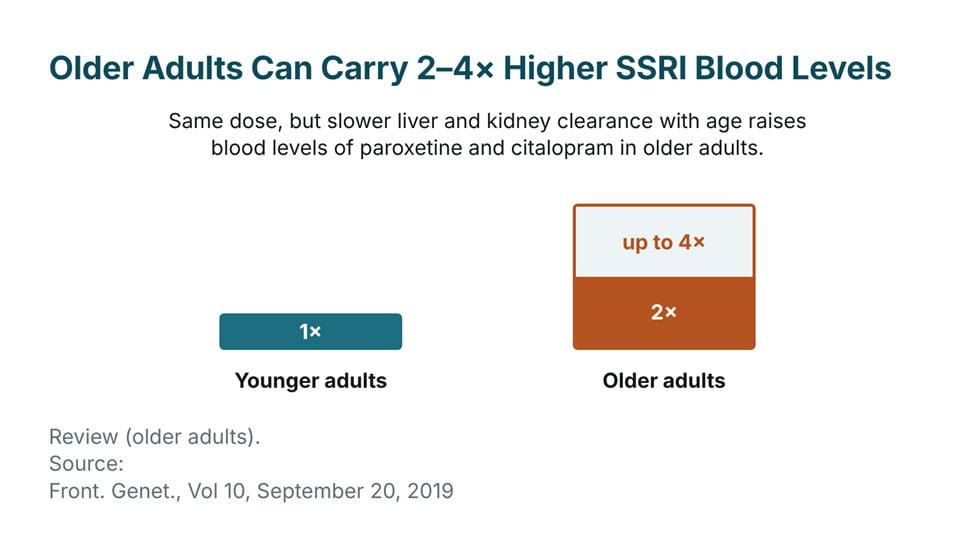
Figure 4. Because the aging body clears drugs more slowly, older adults taking the same dose can carry roughly 2 to 4 times higher SSRI blood levels than younger adults.
• SSRIs also have direct effects on the blood vessels — SSRIs interfere with calcium channels in blood vessel walls, impairing a key defense mechanism in the circulatory system known as myogenic constriction. Normally, this mechanism helps arteries tighten in response to pressure, ensuring stable blood flow. But in older adults, experimental studies suggest SSRIs may interfere with this response; whether this effect occurs in older adults remains to be confirmed.
• SSRIs may also contribute to artery-clogging processes like atherosclerosis — The review cites mainly animal studies in which these drugs activated the inner lining of the blood vessels (endothelium) and encouraged white blood cells to stick to it — early steps in plaque buildup.
Platelet function — important for blood clotting — also changes under the influence of SSRIs. Since serotonin plays a role in platelet activity, and SSRIs alter serotonin levels, they affect how platelets behave.
• SSRIs affect the heart itself — Laboratory studies show that one SSRI, fluoxetine, can block sodium and calcium channels, and case reports have described arrhythmias such as atrial fibrillation or slow heart rates. In addition, animal research suggests the risk may be greater in those with existing heart failure.
The Damage Caused by Antidepressants During Pregnancy Goes Deeper Than You Think
As Dinkov mentions, the effects of serotonin and SSRIs on the brain are just as severe as the effects on your cardiovascular health; in fact, there are studies linking SSRI use during pregnancy to a higher risk of neurodevelopmental disorders.
• In an animal study, SSRIs combined with maternal inflammation were associated with brain changes resembling features of autism — An animal study published in the journal Brain, Behavior, and Immunity found that SSRIs interact with inflammation in the mother’s body, producing a reaction that affects the maternal-fetal interface (MFI), which includes the decidua (a mucous membrane lining the uterus) and placenta, and ultimately the fetus’ developing brain.7,8
• Offspring of mice exposed to SSRIs alongside maternal inflammation showed sex-specific behavioral changes in adulthood — The adult offsprings exhibited behavioral changes like lessened communication and low interest in social interactions — similar to the behavior of people with autism.
• The use of SSRIs during pregnancy has been tied to other significant health effects — A systematic review and meta-analysis found women who received SSRIs during pregnancy had a significantly higher risk of developing preterm birth than women in the control group.9
They’ve also been linked with an increased risk of neonatal seizures in newborns,10 — though the authors of that review cautioned that the available studies have significant methodological limitations — as well as a higher risk of postpartum hemorrhage in women.11
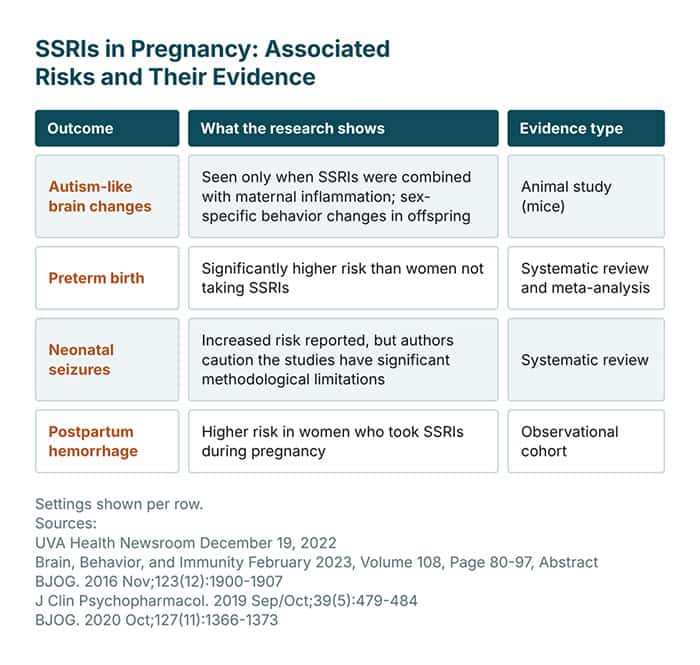
Figure 5. Beyond heart defects, SSRI use in pregnancy has been associated with several outcomes, each resting on a different, and in places limited, type of evidence.
My article “The Dangers of Antidepressants During Pregnancy” provides more eye-opening information on the damaging effects of SSRIs. For pregnant women or those who are planning to get pregnant, this research underscores the importance of considering alternative treatments to help mitigate depression.
There Are Safer Strategies to Help Manage Depression
Knowing all these dangers associated with antidepressant drugs, it makes sense to consider safer options to help uplift your mental health during this sensitive period. While depression is a debilitating illness, the risks associated with it — especially during pregnancy — could lead to far worse outcomes. I recommend these strategies to help you manage your mental health.
• Feed your cells with the energy they need — If your cells aren’t making enough energy, everything else starts falling apart, including your brain function. Your diet has a significant role not just in your physical but also your emotional well-being. That’s why I always recommend increasing your intake of easy-to-digest carbohydrates like ripe fruit. You need around 250 grams of carbs per day if you’re an adult, more if you’re active.
In addition, minimize or eliminate seed oils high in linoleic acid (LA), processed foods, and snacks like nuts and seeds that are rich in polyunsaturated fats (PUFs). These block mitochondrial function and create toxic byproducts that worsen fatigue and brain fog. Choose healthy saturated fats that help your cells make energy, such as grass fed butter, ghee, or tallow.
• Address your nutrient deficiencies — Magnesium is one example — in fact, depressed individuals are found to have lower magnesium levels in the blood, brain, and cerebral spinal fluid.12,13 B vitamins also play an important role in brain health and cognition, and being deficient in some of these vitamins has been linked to mental health symptoms.
For example, B3 deficiency is associated with anxiety, aggression, and paranoia, while B1 deficiency has been associated with irritability, confusion, and disturbed sleep.14
• Get enough exercise — Being physically active works as a natural antidepressant and may help prevent prenatal depression.15 If you’re pregnant, consider doing gentle, low-intensity exercises, like yoga or walking outdoors.
• Spend time outdoors — Spending time under the sun helps uplift your mood. Sun exposure allows you to reap the benefits of vitamin D, and having optimal amounts of this nutrient has been associated with a lower risk of depression.16 I recommend a range between 60 and 80 ng/mL; make sure to get tested regularly to know that you’re optimizing your levels. That said, talk to your health care provider about whether this testing is appropriate for you.
There are also some precautions to take before you expose yourself to sunlight. For example, if you’ve been on a high-LA diet, avoid peak sun exposure until you’ve removed seed oils and other processed foods from your diet for at least four to six months. LA embeds into your skin and oxidizes with UV exposure, increasing your risk of sunburn and DNA damage.
Instead, go outside in the early morning or late afternoon, when the sun’s rays aren’t as intense. I recommend reading “The Fast-Track Path to Clearing Vegetable Oils from Your Skin” for more strategies to help speed up this process.
• Get enough high-quality sleep — Optimizing your circadian clock helps trigger brain chemicals that stabilize your mood and energy. Spend time outside every morning for at least 15 minutes of natural sunlight within 30 minutes of waking, then sleep in total darkness at night. In the evening, avoid all blue light sources, and maintain a bedtime routine that helps you get seven to nine hours of sleep nightly.
• Reduce chronic stress — Finding ways to lower your stress daily. Some effective methods include deep breathing exercises, meditation, or even spending time in nature. I also recommend the Emotional Freedom Techniques (EFT), a form of psychological acupressure that takes inspiration from the same energy meridians used in acupuncture. Below is a video from EFT practitioner Julie Schiffman on how to ease depression using this helpful tool.
If you are feeling desperate or have any thoughts of suicide and reside in the U.S., please call the National Suicide Prevention Lifeline by dialing 988, or call 911, or simply go to your nearest hospital emergency department.
You cannot make long-term plans for lifestyle changes when you are in the middle of a crisis. U.K. and Irish helpline numbers can be found on TherapyRoute.com. For other countries, do an online search for “suicide hotline” and the name of your country.
Frequently Asked Questions (FAQs) About Using SSRIs During Pregnancy
Q: Why are SSRIs prescribed during pregnancy, and what are the concerns?
A: Selective serotonin reuptake inhibitors (SSRIs) are prescribed to help manage depression in pregnant women. However, research shows these drugs can cross the placenta and may harm fetal development, particularly increasing the risk of congenital heart defects.
Q: How do SSRIs affect a developing baby’s heart?
A: In laboratory models, SSRIs disrupted oxidative metabolism in heart cells, with increased oxidative stress and decreased ATP production — both important for heart cell function. The researchers reported that longer exposure, even at therapeutic concentrations, reduced mitochondrial function in these cells.
Q: Which antidepressants pose the highest risk during pregnancy?
A: Among the SSRIs tested — fluoxetine, paroxetine, and sertraline — sertraline was found to be the most toxic. It caused significant damage to heart cells at much lower concentrations compared to the other two drugs.
Q: Do SSRIs pose health risks beyond pregnancy and fetal development?
A: Yes. SSRIs have been studied for possible cardiovascular effects, particularly in older adults. Laboratory and animal research points to possible effects on vascular function, serotonin-related platelet activity, heart rhythm, and atherosclerosis, though findings in people are mixed.
Q: Are there safer alternatives to manage depression during pregnancy?
A: Yes. Natural strategies such as improving diet (eliminating seed oils, increasing carbs and saturated fats), correcting nutrient deficiencies (like magnesium and B vitamins), getting regular sun exposure, exercising, and practicing stress-reduction techniques like EFT will help support mental health during pregnancy.
Editor’s Note: Several of the findings described above — including the heart-cell toxicity results and the vascular and neurodevelopmental effects — come from laboratory or animal research and may not directly apply to human health.
This article is for informational purposes only and does not constitute medical advice. Consult a qualified health care provider before making changes to your health regimen.