This audio is generated automatically. Please let me know if you have any comments.
Blue raspberry ice made with natural dye? It’s possible, but don’t count on it, says the CEO of J&J Snack Foods, maker of the iconic fizzy slush.
Snack companies have reformulated their products to lower sugar and eliminate artificial ingredients in response to expanded use of GLP-1 and pressure from the Trump administration’s “Make America Healthy Again” movement. But J&J, the maker of occasional indulgent snacks, has so far managed to fend off these threats that have weighed heavily on its competitors.
J&J was founded on the motto “Here to Bring Fun.” The brand is available in virtually every retail channel, from movie theaters and amusement parks to supermarkets, convenience stores and restaurants.
For consumers who buy SuperPretzel at the ballpark, Dippin’ Dots at the amusement park or Icee at the movie theater, J&J said the snacks are part of the experience. So far, the GLP-1 and MAHA movements have had a “negligible” impact on J&J’s foodservice business, which accounts for nearly two-thirds of J&J’s sales, according to J&J CEO Dan Fachner.
“For the most part, our products are really experiential, so we’re a little bit removed from the fear of GLP-1 or the fear of MAHA that has scared a lot of traditional snack companies,” Fachner said.
That helped at least partially protect J&J’s sales, which have been under pressure from the broader decline in consumer spending impacting the economy and the snack maker’s decision to eliminate low-margin SKUs and implement other plans to boost productivity.
The New Jersey company previously said: The first quarter ended December 27. Sales amounted to $343.8 million, down 5.2% compared to the same period last year.
Despite its experience-driven focus, J&J hasn’t lost sight of the fact that consumer tastes are changing, or that state and local governments may one day pass laws that change the food ingredient landscape, forcing the company to respond.
There’s a big reason why J&J strives to make its portfolio ‘better’ for consumers, launch new and trendy products, and prepare for a few worst-case scenarios without compromising taste.
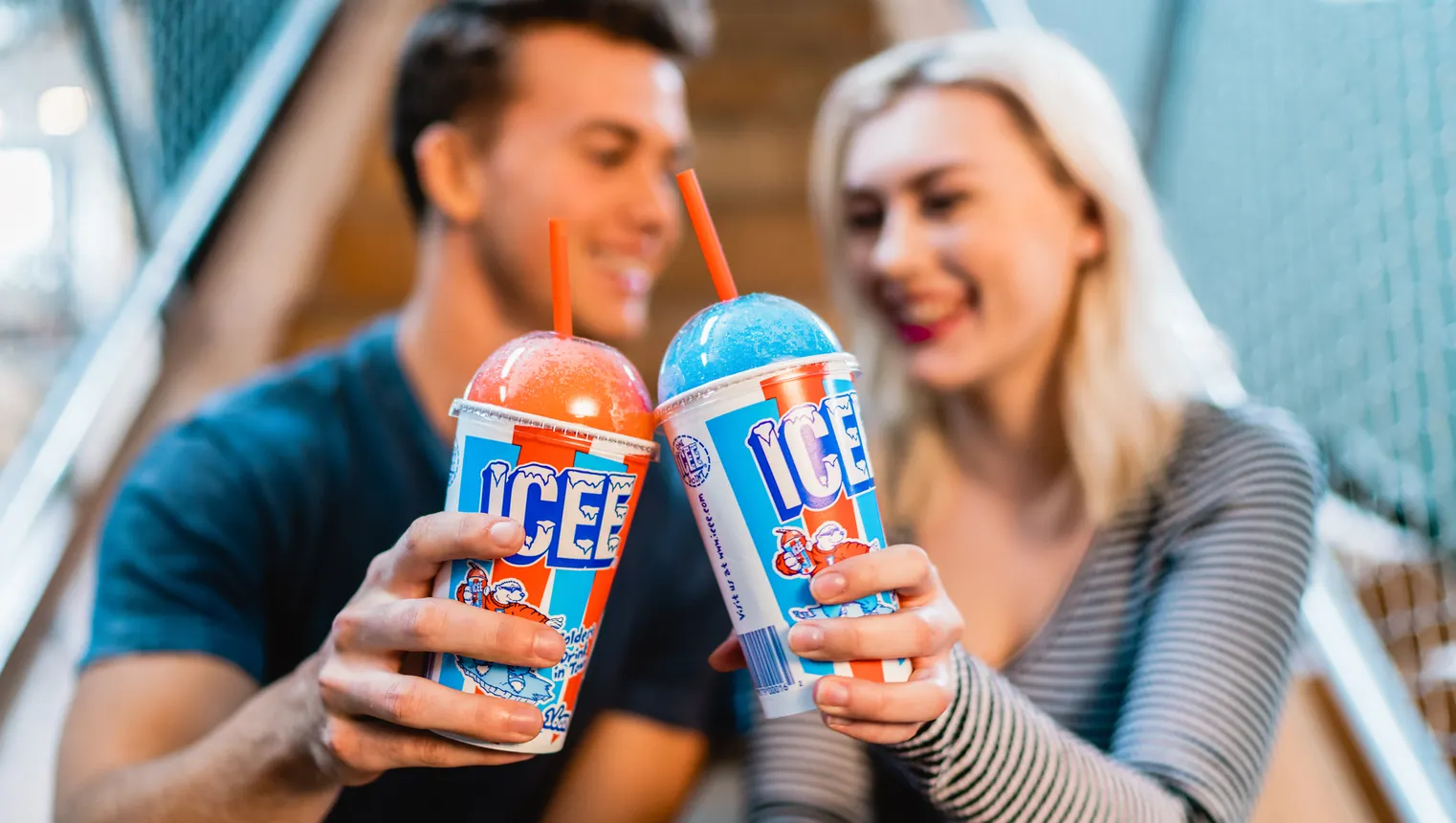
For example, in a room near Fachner’s Nashville office, J&J is testing Icee’s natural dyes, including blue for its popular blue raspberry flavor, in case state or federal governments someday decide to limit the use of synthetic dyes.
However, it is unlikely that J&J will switch to natural dyes on its own any time soon. Fachner cited higher costs for color replacement, customer expectations of Icee products and other obstacles.
“If someone called me tomorrow and said, ‘You can’t sell anything with artificial dyes,’ I want to be ready to act immediately,” he said.

optional captions
Licensed by J&J Snack Foods.
Feel-good snacks adopt a healthier halo in retail stores.
J&J is also paying attention to health trends in its retail lineup sold in thousands of U.S. stores.
A few years ago, Fachner directed his team to look at the company’s broad portfolio of snacks to find ways to make them more appealing to health-conscious consumers, including those taking GLP-1 drugs. This year is when J&J prepares to launch smaller pretzels and options that include protein or whole grains.
Changes are also coming to the Luigi Real Italian Ice line to better position today’s consumers. J&J, which was mainly sold in cups, is adding Mini Pop, which helps supply moisture and strengthen immunity, to its lineup starting in the second quarter.
“The world is always changing, so as an organization we have to learn to change with it and not put our feet in the sand and say, ‘We have these great products. They’re all experiential. We don’t have to do anything,’” Fachner said. “That’s not true.”
But even as J&J makes changes to meet the needs of today’s health-conscious consumers, it is careful not to tout all of its accomplishments. The same goes for the achievements that competitors do not hesitate to disclose. CPG companies have been removing dyes from some of their products for years to comply with government requirements, including the banned Red No.3. Early 2025. J&J also reduced calories in Icee.
“I’m not advertising any of that. We’re doing the right thing as an organization to make sure we’re aligned with government guidelines and what’s healthy for consumers,” he said. “But we have to be careful not to go too far so far as to diverge from what consumers actually want.”