



Italy’s oldest and most famous legend

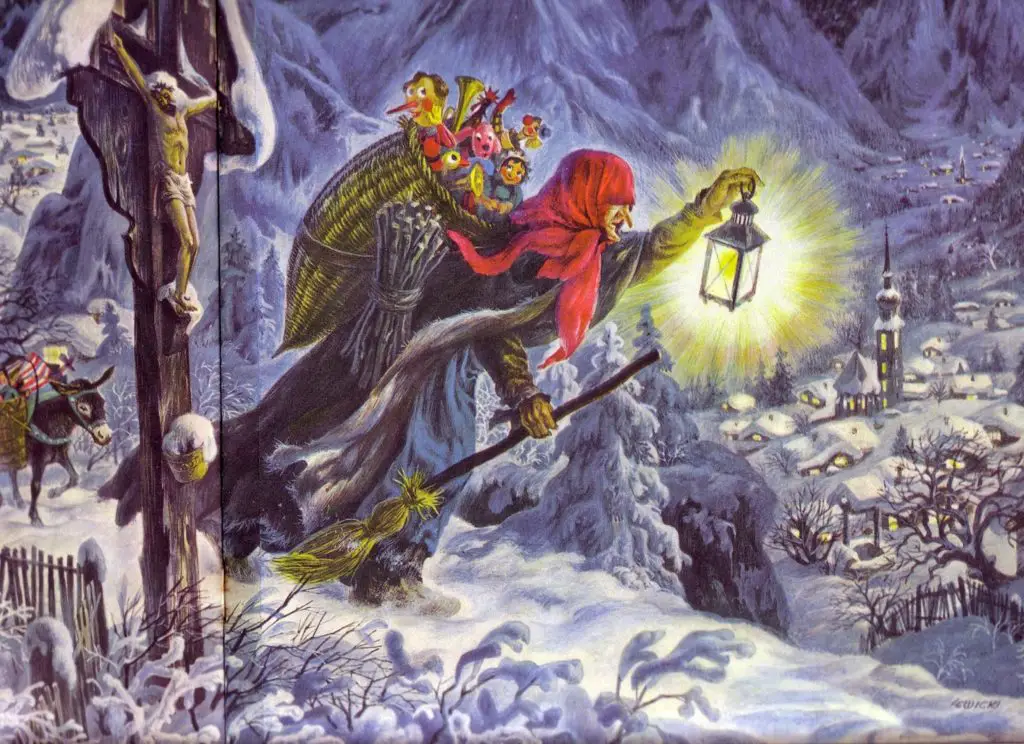
In the Church’s full calendar, the date of Epiphany is January 6, but in the United States and some other countries it is celebrated on the Sunday following January 1. Therefore, the Feast of Epiphany in 2026 will be on Sunday, January 4th.
Epiphany is Italy’s national holiday and the tradition of La Befana is a big part of Italian Christmas celebrations. Epiphany commemorates the 12th day of Christmas when the three wise men arrived at the manger with gifts for baby Jesus. The traditional Christmas holiday period in Italy lasts until Epiphany.
Like children around the world, children in Italy look forward to the arrival of Babbo Natale in red on Christmas Eve. But this relatively modern tradition pales in comparison to the excitement generated by the appearance of the Old Witch in early January. For Italians, La Festa dell’Epifania, January 6, is a holiday as important as Christmas. Especially for Italian kids!
According to Italian legend, La Befana, a witch-like woman riding a broom, refused to join the wise men on their way to see the baby Jesus. Regretting her decision, she set out to bring the child a gift, but was unable to find him. Instead, she leaves gifts for other children. Italian children took off their shoes or put on stockings for Befana to fill on January 5, the Eve of the Epiphany.
And so the legend goes that every Epiphany Eve, Befana, old, tattered and covered in soot, flies around the world on a broomstick and comes down chimneys to deliver candy and gifts to children who have fared well during the year. For those who fall a little short of exemplary behavior, La Befana will leave a lump of coal. Knowing that not all kids can be perfect all year long, some stores in Italy sell carbon or black rock candies that actually look like pieces of coal. So even kids who aren’t perfect can still enjoy sweet treats.
Unlike the Americanized Santa Claus, who is better known today, La Befana has been an Italian holiday tradition since the 13th century and has its origins in Italian folklore.
The arrival of la Befana is celebrated with traditional Italian foods such as panettone and marks the end of Italy’s long and festive holiday season. To honor the three wise men, Italians go to church and have fun with their families.


