



Quick heads up before we get started. If you’ve read our honest experience visiting Egypt, you know we had a rough time. Like, really rough. This post isn’t me changing my tune — I still wouldn’t go back. But hundreds of you have written to say you’re going regardless, and I’d rather help you go prepared than watch you walk into the same mess we did.
If I could go back in time and grab myself by the shoulders before boarding that flight to Cairo, there are a whole lot of things I’d do differently. Would I still go? Honestly, probably not. But if some version of me was dead set on visiting Egypt (and apparently a lot of you are), here’s what I’d tell her.
Because here’s the thing — our trip wasn’t ruined because Egypt is inherently terrible. It was ruined because we went in blind. We did zero homework on how things actually work there, assumed it would be like every other country we’ve visited, and got absolutely steamrolled. Every single problem we encountered could have been mitigated (not eliminated, but mitigated) with better preparation.
So consider this the preparation guide I wish someone had handed us before we went.
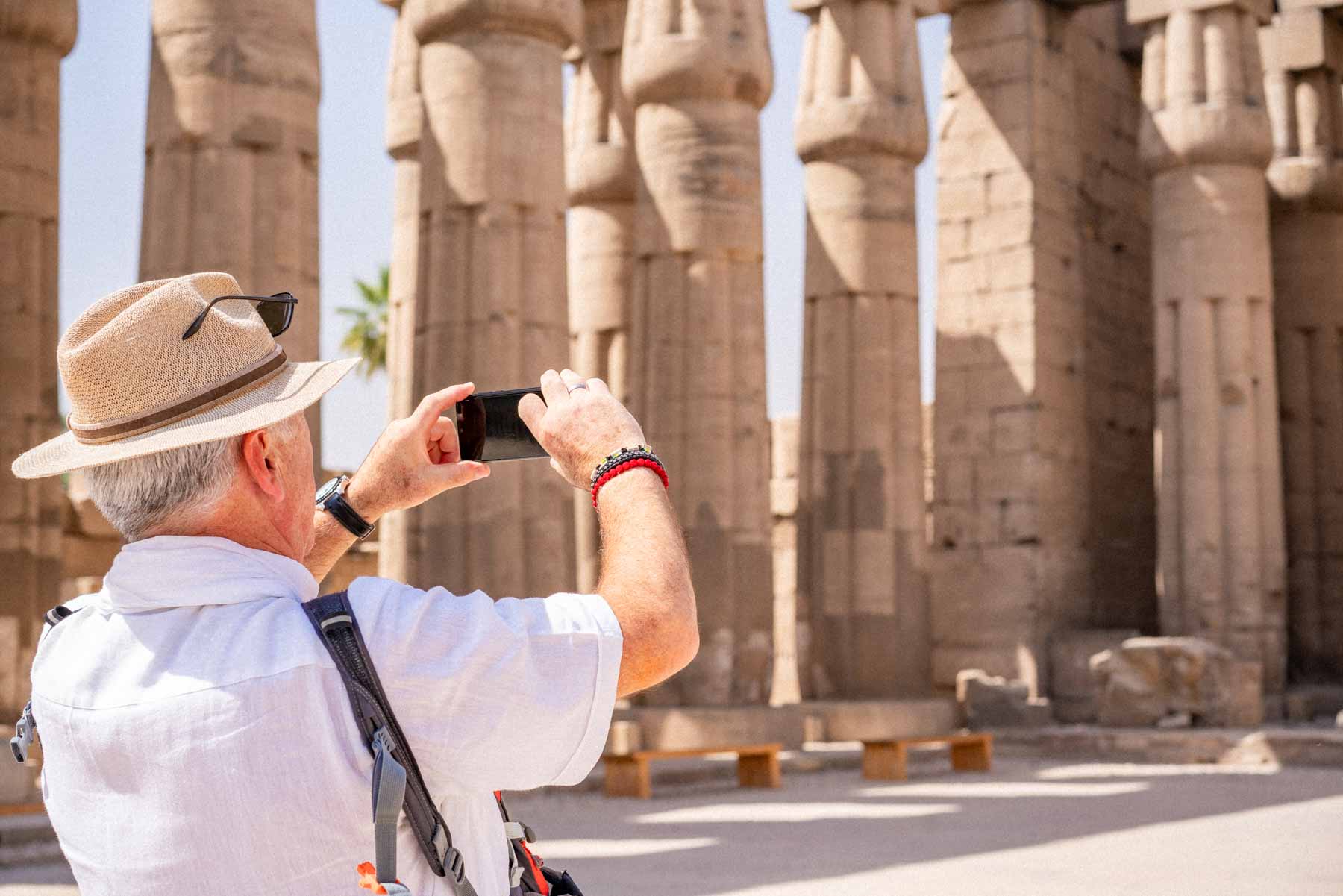
What We’d Do Differently If We Visited Egypt Again
Book everything through reputable tour companies
I cannot stress this enough. Book everything — and I mean everything — through a reputable tour company or your hotel. Do not, under any circumstances, hire a guide off the street. We learned this the hard way when our “Egyptologist” turned out to be more interested in commission from souvenir shops than, you know, actual Egyptology.
Here’s the thing about Egypt that makes it different from every other country we’ve visited. You need a guide not because the sites are complicated, but because the guide serves as a human shield between you and everyone trying to sell you something. And I know how that sounds, but I promise you it’s not an exaggeration.
We gladly paid $100 each for half-day tours just to have someone who could serve as a buffer between us and the touts. That’s not normal travel behavior for us — we’ve NEVER hired guides before Egypt. But it was the only way to actually see the sites without losing our minds.
What we’d do differently: Research tour companies before arriving. Look for companies with recent reviews on TripAdvisor or Viator, not just Google reviews (which can be bought). Ask your hotel for their recommended guides and get the price in writing before committing. Specifically ask: does the price include entrance fees? Tips? Will there be stops at souvenir shops? Because I can almost guarantee there will be stops at souvenir shops unless you address it upfront.

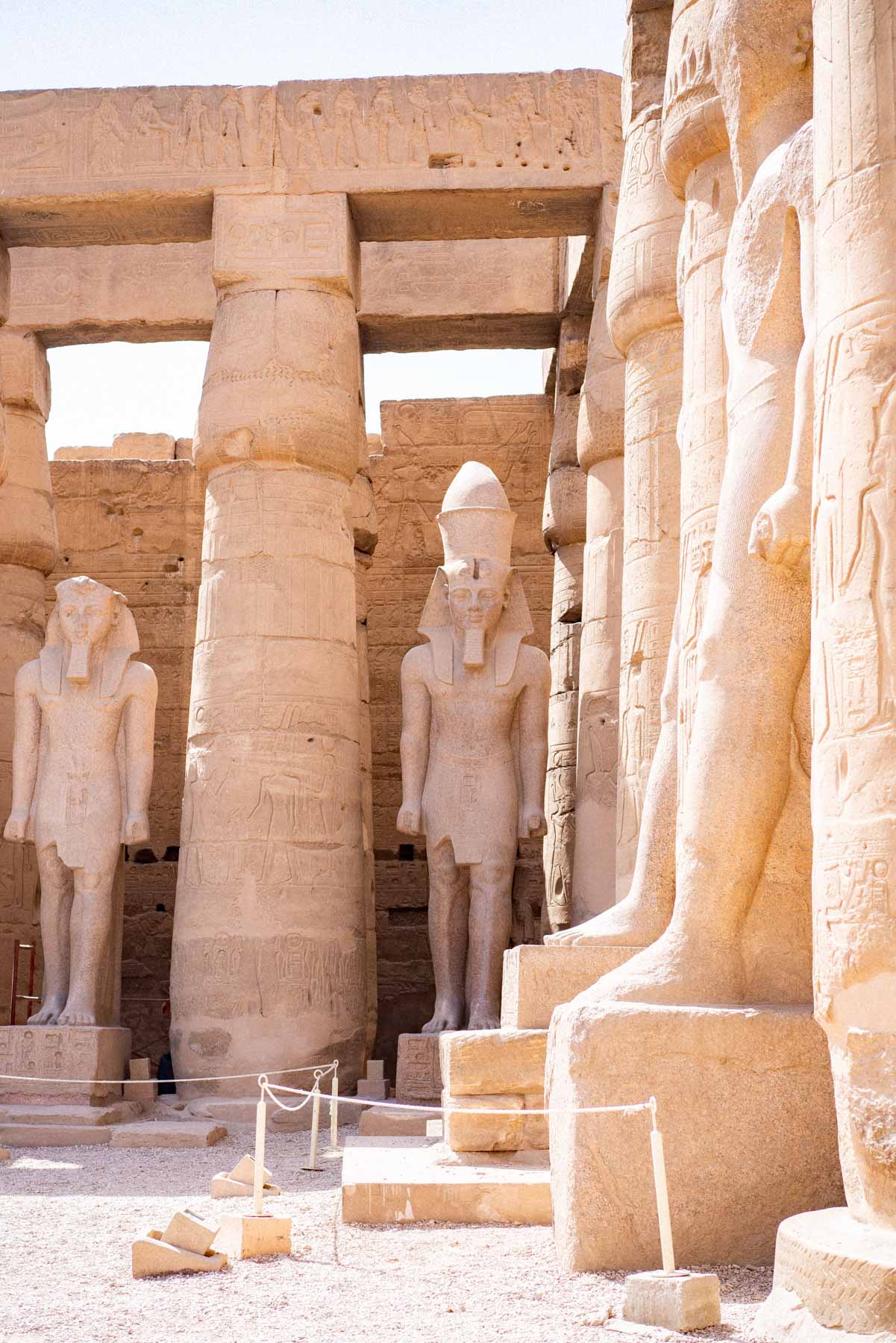
Learn “la shukran” and master the art of disengagement
“La shukran” means “no thanks” in Arabic and you’ll be saying it approximately 400 times a day. I’m not being dramatic. From the second you step out of your hotel until the second you return, you will be approached by someone selling something, and “la shukran” is your best friend.
Here’s what we didn’t know going in: making eye contact and saying “no, thank you” in English is perceived as engagement. It’s an invitation to keep talking, follow you, and get more aggressive with the pitch. We figured this out around day two, after being followed for several blocks by a man who would not take no for an answer.
“La shukran,” paired with zero eye contact and continuous walking, is the only combination that works. And even then, it doesn’t always work. But it’s lightyears better than the alternative, which is being trailed by six different vendors for the duration of your visit to Karnak Temple.
One of the biggest lessons we learned while visiting Egypt is that “no” doesn’t mean “no.” No is a form of engagement, and once you’ve engaged, all bets are off. The faster you internalize this, the better your trip will go.
Negotiate everything in advance (and get it in writing)
Every single transaction in Egypt needs to be negotiated before you agree to anything. And I mean everything — taxi fares, tour prices, camel rides, the works. If a price isn’t agreed upon in advance, you will be ripped off. Not might be. Will be.
We got burned at the pyramids when we agreed to a camel ride for 200 Egyptian pounds per person. When we returned, they demanded three times more and physically blocked us from leaving. My husband and I literally had to argue our way out of the situation while being surrounded. The whole experience was so heated that we ended up leaving the Pyramids of Giza after just 90 minutes — a place we had traveled thousands of miles to see.
What we’d do differently: Get every price agreed upon before the service begins. For tours, ask for an itemized breakdown. For taxis, show them the Careem or Uber fare estimate and negotiate from there. For camel rides at the pyramids, frankly, I’d skip them entirely. The animals are in rough shape and the operators are aggressive. If you must ride a camel, book it through your hotel’s tour company, not from the men at the gate.
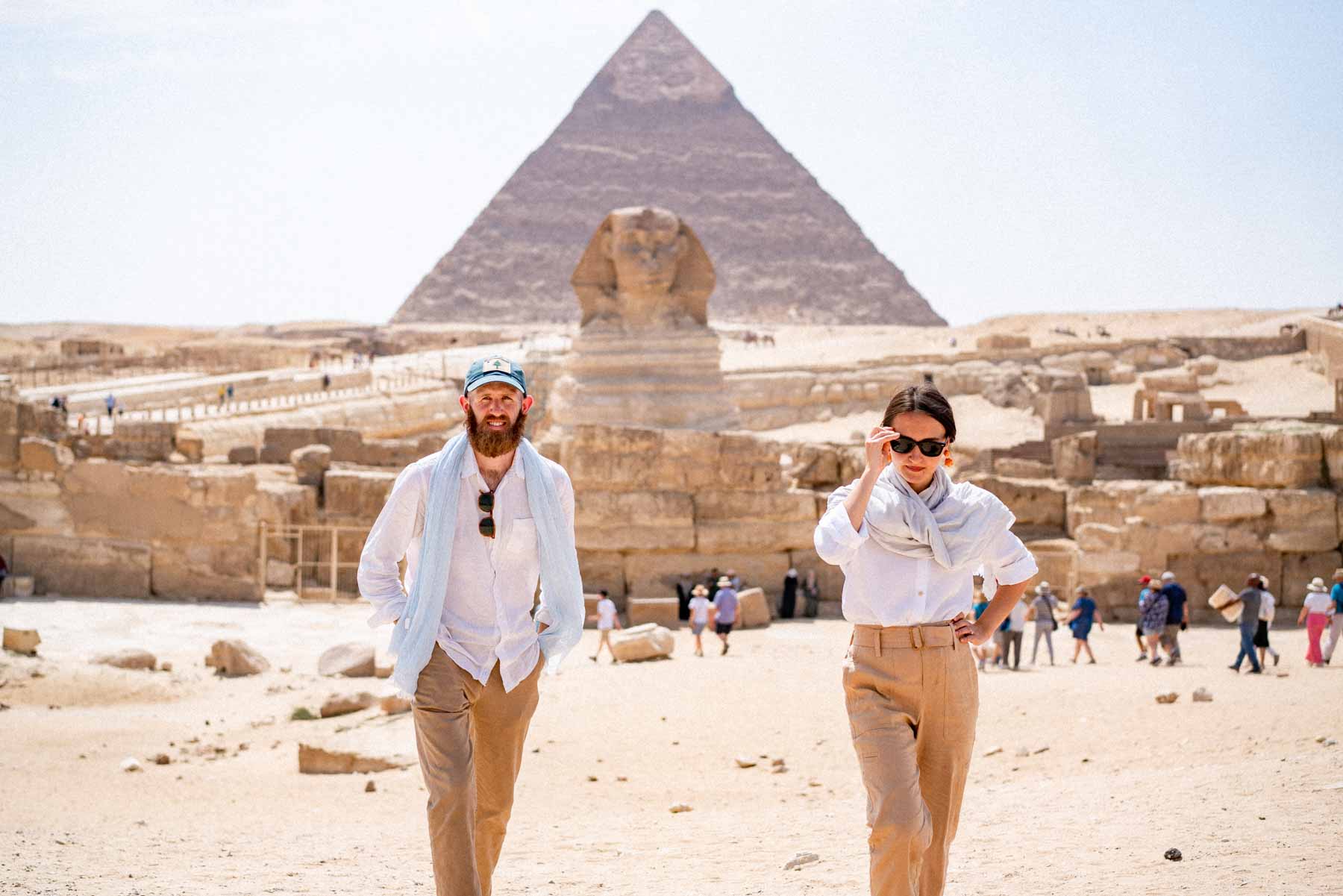
Keep your cash organized (this is more important than you think)
One of the smartest things we eventually figured out was keeping small bills in a separate pocket. In Egypt, everyone wants a tip — the bathroom attendant, the guard at the temple, the man who pointed at a wall you were already looking at and then motioned for money. Having small bills (10-20 Egyptian pounds, roughly 20-40 cents USD) ready means you’re not pulling out your wallet every five minutes.
And for the love of all things holy, do not pull out large bills in public. We made that mistake exactly once. The second anyone sees a 500 or 1,000 pound note, the dynamic changes entirely. Keep the big bills tucked away and only use them at your hotel or established restaurants.
Another tip: bring a mix of both Egyptian pounds and small US dollar bills. Many guides, drivers, and hotels accept USD and actually prefer it. Having singles and fives on hand gives you flexibility without advertising your budget to every person nearby.
Book all your transportation through your hotel
Do not use random taxis. Just don’t. We had a Careem driver (Careem is Egypt’s version of Uber, which Uber actually owns) cancel the app ride mid-trip, claim our destination was “further than he thought” (there’s one Hilton in Luxor, sir), and demand double the fare while we were trapped in his car fleeing a corrupt police officer. So there’s that.
The airport taxi situation is somehow worse. When we landed in Aswan, the Careem app couldn’t find a driver, so we were at the mercy of six taxi drivers who encircled us shouting different prices — the lowest of which was nearly three times the app’s estimated fare. One man got visibly angry when I told him no, and I’m fairly certain it was because a woman said “no” to him. My husband had to intervene.
What we’d do differently: Book all airport transfers through your hotel before arrival. Ask your hotel to arrange a driver for every outing. Yes, it costs more than hailing a cab. No, you don’t care. The peace of mind of knowing your driver, the price, and that your hotel has accountability is worth every extra pound. We’d also download the Careem app as a backup and use it only in Cairo, where it works reliably.
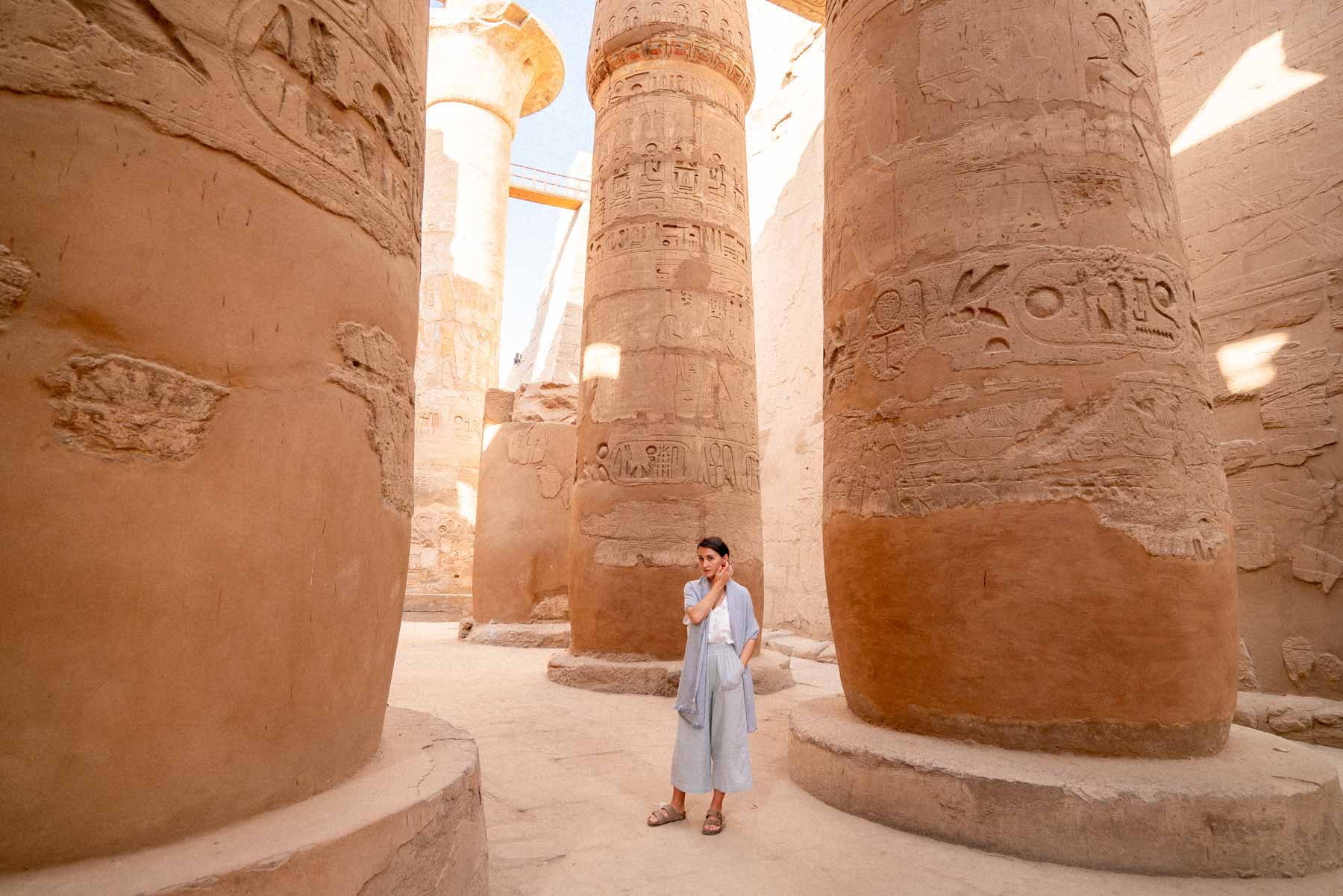
Your hotel is your refuge (book a good one)
I know this sounds dramatic, but your hotel is your safe space in Egypt. By day three, we were mostly hotel-bound because the constant harassment outside was so mentally exhausting that we needed somewhere to decompress between excursions. Book a hotel with a good restaurant, a pool, and ideally a view of the Nile if you can swing it. You’ll spend more time there than you’re expecting.
We stayed at the Hilton in Luxor and it was one of the only parts of the trip that felt normal. Walking through the lobby and not being shouted at? Revolutionary. Having a meal without swatting flies or worrying about food hygiene? Bliss. The hotel became our decompression chamber and honestly, it saved the trip from being a total loss.
Splurge on the hotel. This is not the trip to budget on accommodations. A good hotel in Egypt isn’t a luxury, it’s a necessity. It’s the one place where you’ll feel like a normal human being instead of a walking ATM.
Don’t plan more than two sites per day
You’ll think you can bang out four or five sites in a day. You can’t. Not in Egypt. Every single outing requires mental armor — you need to steel yourself for the harassment, the scams, the aggressive touts, the heat (which is absolutely punishing), and the general sensory overload that is Egypt on a Tuesday.
Two sites per day, max, with hotel time in between. I know it sounds lazy, especially if you’ve flown halfway around the world, but hear me out. By the end of a morning at Karnak Temple, you’ll have said “la shukran” roughly 200 times, been offered 14 camel rides, had your bag grabbed by someone “helping” you through security, and fended off at least three men selling postcards. You will be tired.
Give yourself permission to retreat to the hotel, have a swim, eat a proper meal, and recharge before the afternoon excursion. Your sanity will thank you.
Cover up more than you think you need to
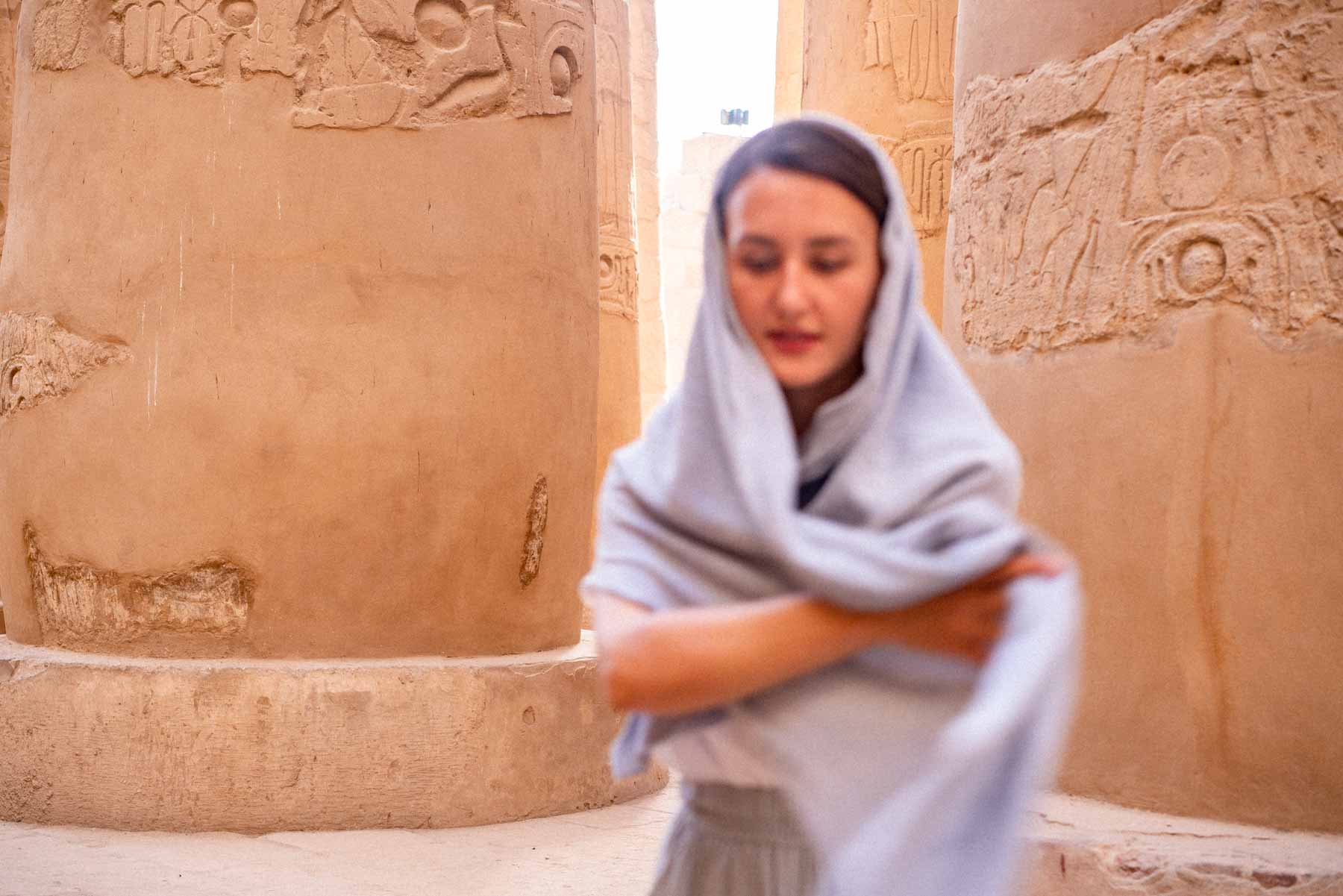
I covered my hair, wore loose fitting clothing, and did my absolute best not to expose skin — even with temperatures breaching 100 degrees every single day. And I still found myself shifting uncomfortably from wandering eyes. By the end of the trip it became clear to me that there’s nothing I could have done to fully prevent the unwanted attention, but covering up as much as possible at least shows respect for the culture.
Long sleeves, long pants or skirts, nothing fitted, and a scarf for your hair when entering mosques or conservative areas. If you’re planning on visiting Egypt, check out our full Egypt outfit and packing guide for specific recommendations on what to wear.
And gents, you’re not off the hook either. My husband wore lightweight pants and button-downs for the entire trip. Shorts and tank tops in Egypt, even for men, read as disrespectful in many areas.
Bring your own supplies (seriously)
Carry your own toilet paper. I know, I know — weird travel tip. But most public restrooms near tourist sites don’t stock toilet paper, and the attendant will give you about three sheets for a tip. We’re talking three sheets. Wet wipes, hand sanitizer, and your own water bottle are also non-negotiable.
We stuck to hotel food and bottled water only and still ended up with stomach issues by day three. The hygiene standards at restaurants near tourist sites were questionable at best — flies everywhere, stray dogs walking around, and a bar of soap in one restaurant bathroom that was literally down to half an inch. The thought of the servers using that bathroom made me nauseous, and I say that as someone who is not precious about these things.
Pack these: Toilet paper (a small travel roll), wet wipes, hand sanitizer, Imodium, Pepto-Bismol, electrolyte packets, and a reusable water bottle you can refill at your hotel. Do NOT drink tap water in Egypt. Do not even brush your teeth with it. Stick to sealed bottled water and you’ll save yourself a world of discomfort.
Set realistic expectations (this one’s important)
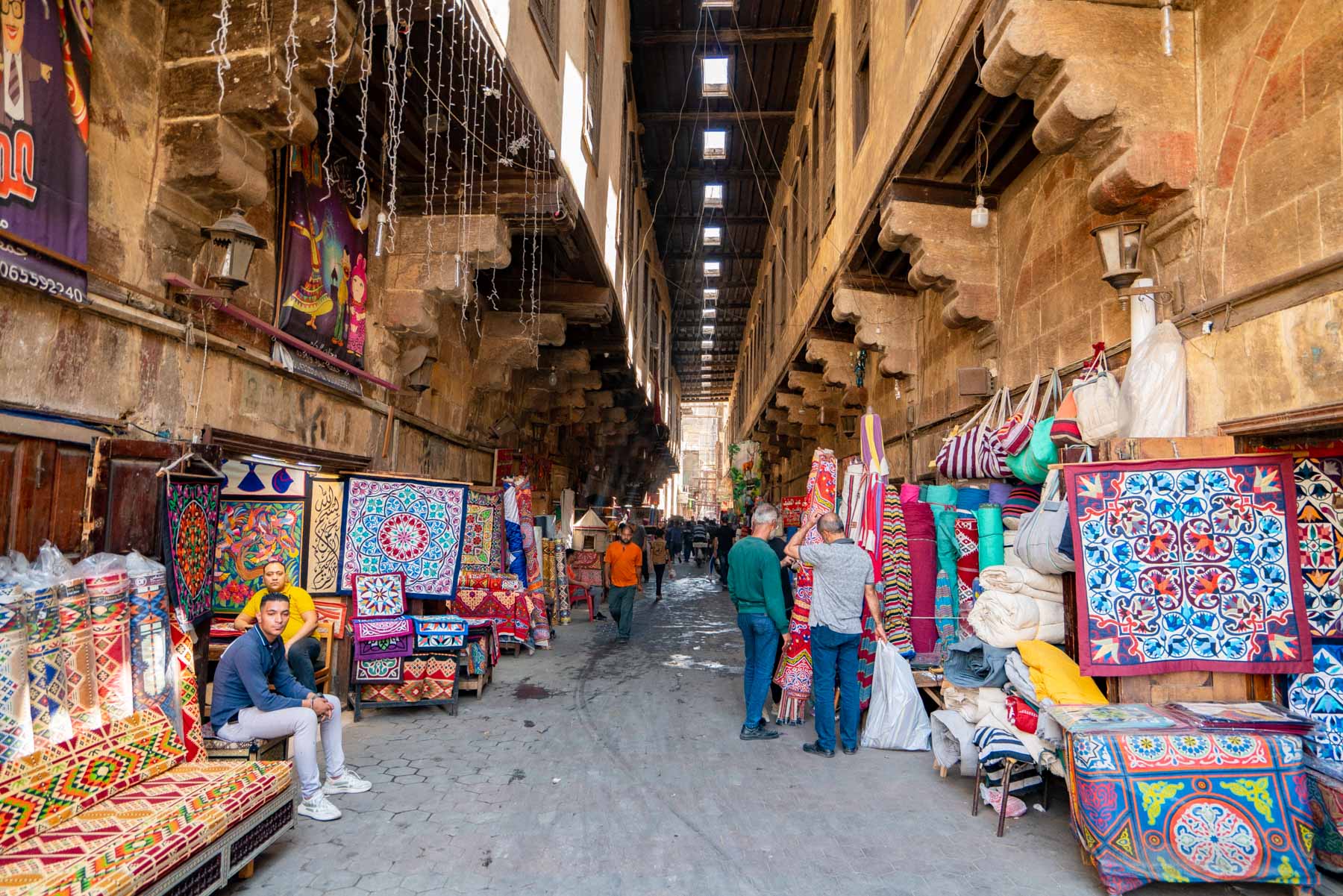
Here’s the hardest advice I can give you, and it’s the advice I wish someone had given me. Egypt is not going to be a relaxing vacation. It’s going to be intense, overwhelming, and at times genuinely upsetting. The ancient sites are jaw-dropping — truly, nothing compares — but the experience of getting to and around those sites will test you in ways no other country has tested us.
If you go in expecting a tropical paradise with incredible ruins, you’ll be devastated. If you go in expecting a challenging but rewarding adventure that requires constant vigilance, you’ll fare much better. Adjust your expectations accordingly and you’ll save yourself a lot of heartache.
Egypt is an impoverished country. Roughly 12% of the population depends on tourism for their livelihood, and after the Arab Spring, COVID, and years of political instability, people are desperate. The harassment and scams aren’t personal — they’re survival. Understanding that context won’t make the experience easier, but it might help you extend some grace when you’re at your wit’s end.
The Bottom Line
Look, I’ll be real with you. If you’ve read all of this and you’re still planning on visiting Egypt, I genuinely respect that. The ancient sites are among the most incredible things I’ve ever seen in my life, and I understand the pull. I just wish someone had given me this list before we went, because we walked in blind and it absolutely showed.
Will I go back? Not a chance. But if you’re going, go prepared, go with a reputable guide, and go with realistic expectations. And for what it’s worth, our full honest review of the trip is right here — read it before you book anything.
I hope this helps, Antonina
More Egypt Guides
Frequently Asked Questions
Yes, and I say that as someone who has never hired guides anywhere else in the world. In Egypt, the guide serves as a buffer between you and the relentless touts and vendors. Without one, you will spend more time fending off aggressive sellers than actually enjoying the ancient sites. Book through your hotel or a reputable company with recent reviews on TripAdvisor.
With guides, a decent hotel, and meals, plan for around $150-200 per person per day. This accounts for guided half-day tours (around $100 per person), hotel ($60-100 per night), meals, entrance fees, and the inevitable tips that every interaction in Egypt seems to require. Keep small bills (10-20 Egyptian pounds) in a separate pocket for tips.
October through March, when temperatures are manageable. We visited during warmer months and the combination of 100+ degree heat and constant harassment was absolutely brutal. Cooler temperatures at least remove one layer of discomfort from an already intense experience. December and January are peak tourist season, so expect higher prices but slightly better-organized services at popular sites.


