


Everywhere you look, plastic is a part of modern life. From packaging to clothing, it’s almost inescapable. However, what you might not realize is that plastic is not just around you; it’s increasingly accumulating inside you. Microscopic plastic particles, known as microplastics and nanoplastics, are now globally recognized as a pervasive environmental pollutant, contaminating air, water and food sources.
The rising levels of microplastic pollution are triggering significant concerns about their impact on human health. Scientists are beginning to understand just how deeply these tiny particles penetrate our bodies and what effects they may have.
In fact, research now suggests that microplastics are not only reaching your brain but, at least in animal studies, may also interfere with its function. These findings point to a growing concern for brain health — and the encouraging news is that there are practical, proactive steps you can take to minimize your exposure to microplastic pollution.
Micron-Sized Plastics Clog Tiny Brain Blood Vessels in Mice
A 2025 study published in Science Advances explored a mechanism by which microplastics may affect brain function — not by penetrating brain tissue directly. Instead, it is done indirectly, by interfering with blood flow.1
The study used advanced imaging techniques to observe, in real-time, the effects of microplastics on the brains of mice. Findings show that microplastics were found within the brain’s blood vessels, and they disrupted normal brain function in the mice by physically blocking blood flow within the brain’s delicate network of vessels.
• Investigating the effects of microplastics in the living brain — To understand how microplastics behave in the brain, the researchers used a sophisticated technique called miniature two-photon microscopy. This allowed them to peer into the brains of awake mice and visualize blood vessels at a depth that was previously unattainable.
Researchers injected 5-micrometer fluorescent polystyrene microplastic particles directly into the bloodstream of the mice and then tracked their movement within the cerebral cortex, which is the outer layer of the brain responsible for higher-level functions like thought and voluntary movement. The dose was chosen with reference to microplastic levels reported in human blood, although the resulting blood concentration in the mice was roughly four times higher.
• Microplastics caused obstructions in the mouse brain — The images captured through the microscopy revealed that microplastics, once in the bloodstream, are quickly engulfed by immune cells, mainly neutrophils and macrophages. These immune cells, designed to protect the body by engulfing foreign invaders, inadvertently become carriers of the plastic pollutants. The research team termed these plastic-filled immune cells microplastic-labeled cells, or MPL-Cells.
Researchers revealed that MPL-Cells, laden with microplastics, became trapped within the narrow capillaries of the brain’s cortex, causing physical obstructions that directly impeded blood flow.
• The size of the plastic particles played a role in this obstruction — The researchers further noted that larger 5-micrometer microplastics were far more likely to cause these blockages compared to smaller 2-micrometer and especially tiny 0.08-micrometer particles.
• The consequences of these microplastic-induced blockages were significant in the mice — The reduced blood flow in the brain was linked to a range of neurological changes. The study used laser speckle contrast imaging to confirm that blood perfusion — the flow of blood through the brain tissue — was indeed reduced in areas where MPL-Cells were obstructing vessels.
• Poor blood flow was linked to neurological and cognitive effects — The researchers suggest this diminished blood supply deprives brain tissue of essential resources, and the mice showed a range of neurobehavioral abnormalities, affecting everything from movement to memory.
To assess these neurological impacts, the researchers put the microplastic-treated mice through a series of behavioral tests. In open-field tests, which measure exploratory behavior and anxiety, mice exposed to microplastics moved significantly less and at slower speeds compared to control groups, although they showed no difference in the standard anxiety measure, which is how often they entered the center of the arena.
Further, in Y-maze tests designed to evaluate spatial memory and working memory, the microplastic-treated mice showed a marked reduction in spatial memory. Even simple motor coordination was affected, indicating impaired balance and endurance. These behavioral changes, the researchers noted, mirrored depressive states often associated with disrupted cerebral blood flow.
It’s important to keep the results of this featured study in perspective. The effects in the mice were largely temporary — the behavioral deficits returned to baseline within about four weeks, as the blockages largely, though not completely, cleared. The researchers also cautioned that it is premature to apply this mechanism directly to humans, whose much larger blood vessels and different immune and circulatory systems may reduce the degree of obstruction.
That said, they noted that the narrowest human capillaries are similar in size to the vessels involved in mice, so the question warrants further study.
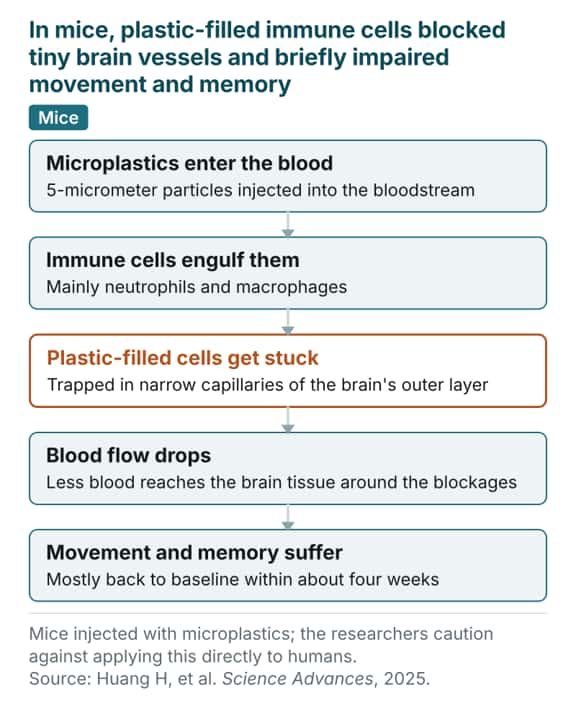
Figure 1. In mice, immune cells that engulfed injected microplastics got stuck in tiny brain blood vessels, reducing blood flow and temporarily impairing movement and memory.
Human Brains Hold More Microplastics Than Other Organs
A 2025 study published in Nature Medicine also revealed concerning findings about the extent of microplastic contamination within our bodies.2 The researchers analyzed samples of liver, kidney and brain (frontal cortex) tissue collected at autopsy from deceased individuals in New Mexico, comparing microplastic levels across these different tissues. The brain turned out to be a significant collection point for microplastics, accumulating far more of these pollutants than the liver or kidneys.
• Brain tissue contains dramatically higher microplastic concentrations — Across the board, brain samples contained substantially higher concentrations of total microplastics compared to both liver and kidney tissues. In fact, normal brain samples harbored seven to 30 times more microplastics than the liver and kidney samples examined.
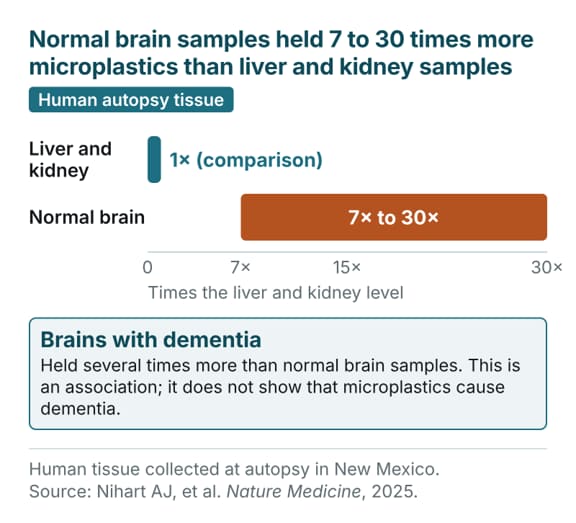
Figure 2. Normal human brain samples contained 7 to 30 times more microplastics than liver and kidney samples, and brains with dementia held even more.
When looking at the types of plastic polymers present, polyethylene emerged as the most prevalent in all tissues. Polyethylene is one of the most common plastics produced globally, used extensively in packaging, films and various consumer products.
• Microplastic levels are increasing over time — By comparing tissue samples collected in 2016 to those from 2024, the researchers found a marked increase in microplastic concentrations in both liver and brain tissue over this relatively short eight-year period. This upward trajectory suggests that as environmental microplastic pollution worsens, our internal body burden also escalates.
• Dementia-affected brains contained even higher microplastic concentrations — Notably, when analyzing brain tissue from 12 individuals with diagnosed dementia, including Alzheimer’s disease and vascular dementia, researchers found higher concentrations of microplastics compared to brain tissues from individuals without dementia.
In fact, microplastic levels in dementia brains were several times greater than even the already elevated levels found in “normal” brain samples.
The difference in microplastic burden in dementia brains raises important questions about the role of these pollutants in neurodegenerative conditions. However, the researchers caution that their data is associative and do not establish cause and effect. Brain shrinkage, a weakened blood-brain barrier, and impaired clearance — all hallmarks of dementia — could themselves allow more plastic to accumulate, so the dementia may help explain the higher levels rather than the other way around.
Microscopic examination of the brain tissue provided further visual evidence of plastic contamination — the researchers observed shard-like nanoplastic fragments within the brain parenchyma, the functional tissue of the brain.
In brains with dementia, these fragments were notably concentrated in areas with inflammatory cells and along the walls of blood vessels.
Nasal Passages May Offer a Direct Route for Microplastics to Your Brain
Adding to the growing evidence that microplastics can reach the brain, a 2024 case series published in JAMA Network Open points to a possible direct pathway for these pollutants to reach your brain: your nose.3 This research specifically investigated the olfactory bulb, the region of your brain directly connected to your nasal passages and responsible for your sense of smell.
• Researchers examined the olfactory bulbs of deceased people — The 15 individuals included in this study had lived in São Paulo, Brazil, for at least five years. They analyzed both tissue samples and digested tissue filtrates from these olfactory bulbs. This dual approach was designed to detect microplastics both on the surface and embedded within the tissue, although the equipment could not detect particles smaller than about 3 micrometers, so nanoplastics were not captured.
• Microplastics were detected in the olfactory bulbs of over half — eight out of 15 — of the individuals studied — In total, 16 distinct synthetic polymer particles and fibers were identified within these brain tissues. The majority, 75%, were particles, with the remainder being fibers.
Among the particles, fragments were more common than spheres. The size of these microplastics was also notable, ranging from 5.5 to 26.4 micrometers for particles, and with fiber lengths averaging 21.4 micrometers.
• Their small size may allow inhalation — The researchers hypothesized that the smallest airborne microplastics can be inhaled and penetrate deep into the nasal passages, reaching the delicate olfactory bulb at the base of your brain. Breaking down the types of plastic, polypropylene was the most prevalent polymer found, accounting for 43.8% of the identified microplastics.4
This is particularly relevant because polypropylene is one of the most widely produced plastics globally, used extensively in packaging, textiles and consumer goods.
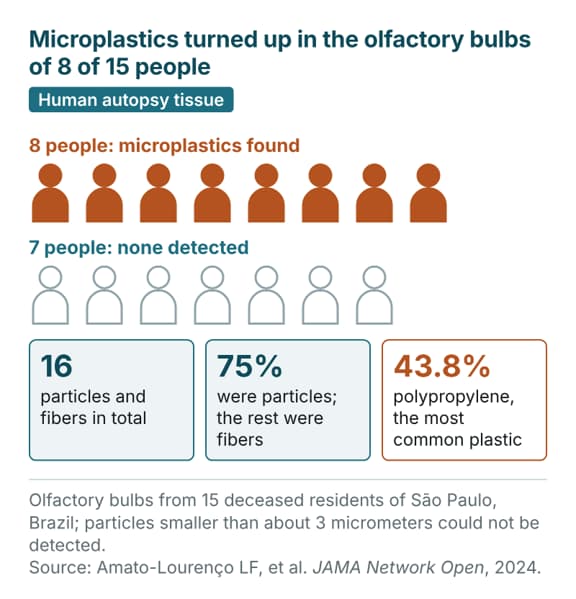
Figure 3. Microplastics were found in the olfactory bulbs of eight of 15 deceased people, and polypropylene was the most common plastic identified.
• Everyday exposures may contribute to microplastic buildup — The presence of polypropylene, along with other common plastics like polyamide (nylon), polyethylene vinyl acetate, and polyethylene, suggests that everyday exposure to these materials in indoor and outdoor environments may be contributing to their accumulation in the olfactory bulb. In addition, the researchers point to indoor environments as a major source of inhaled microplastics.
• The researchers propose a likely anatomical pathway for this entry — They highlight the cribriform plate, a porous bone at the base of the skull that separates the nasal cavity from the brain, as a probable gateway. Olfactory neurons, responsible for your sense of smell, extend from your nasal cavity, through tiny perforations in the cribriform plate, directly into the olfactory bulb.
• This direct connection may bypass the blood-brain barrier — This is the body’s usual defense against bloodborne pathogens and other harmful substances, so this pathway could offer a uniquely vulnerable route for inhaled microplastics to enter brain tissue. The researchers acknowledge, however, that they cannot rule out other routes, such as microplastics reaching the olfactory bulb through the bloodstream or via the trigeminal nerve.
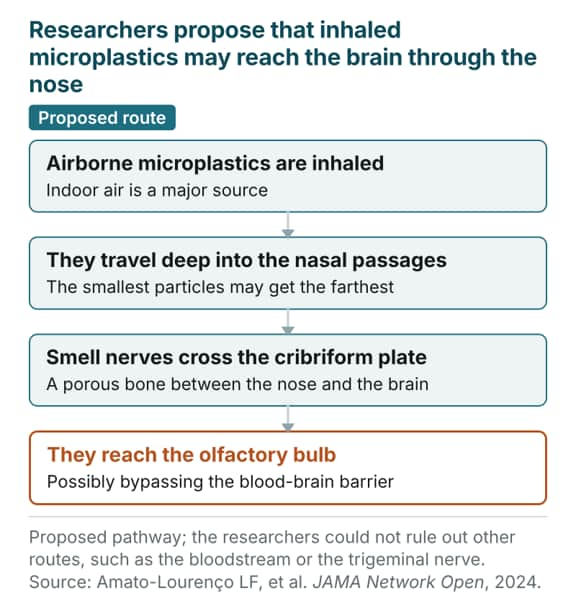
Figure 4. The researchers propose that inhaled microplastics may travel through the nose and the cribriform plate to the olfactory bulb, possibly bypassing the blood-brain barrier.
Furthermore, the study points out that cerebrospinal fluid, which surrounds and cushions your brain, also drains partly through lymphatic vessels along these olfactory axons toward the nasal mucosa — a connection that may also provide a channel for particles between the nose and the brain.
Previous research has already shown that black carbon particles, another common air pollutant, accumulate in the olfactory bulb, and epidemiological studies have linked exposure to fine particulate matter (PM2.5) air pollution, which can include microplastics, to neurological and psychiatric disorders, including dementia.5
The featured JAMA Network Open findings suggest a plausible, physical mechanism for how this might be happening, supporting the idea that the olfactory pathway is not just a route for odors, but also a potential entry point for microplastic pollution to reach your brain.
Take Action Now to Reduce Your Microplastic Exposure
Given the emerging evidence on how microplastics may affect your brain and overall health, it’s important to take proactive steps to minimize your exposure. While the scale of environmental plastic pollution is immense, there are significant changes you can make in your daily life to reduce your personal burden of these potentially harmful particles.
1. Upgrade your water filtration and ditch plastic bottles — Since microplastics are commonly found in tap water, filtering your drinking water is one of the most practical steps you can take. Consider a high-quality water filtration system designed to remove microplastics, and check that it has been independently tested or certified to do so. If you must buy bottled water, opt for glass bottles instead of plastic.
Further, if you have hard tap water, boiling it before use may substantially reduce microplastics. In a laboratory study, boiling hard tap water removed at least 80% of the nano- and microplastics tested, which became trapped in the mineral deposits (limescale) that form as the water heats.6
The researchers recommend pouring the boiled water through a fine filter, such as a stainless steel tea strainer, to catch those deposits, and using a nonplastic kettle. This is a simple, yet powerful action to reduce your microplastics exposure with every cup of tea or when preparing meals.

Figure 5. In a laboratory study, boiling hard tap water trapped at least 80% of the tested nano- and microplastics in limescale, which a fine strainer can catch.
2. Make smart food packaging choices — Plastic packaging is a major source of microplastic contamination in your food. Become a label detective and choose products packaged in glass whenever possible. When storing food at home, swap out plastic wrap and plastic containers for safer non-plastic alternatives.
By making these conscious choices, you can meaningfully reduce the amount of plastic that comes into direct contact with the food you and your family consume. Further, make it a firm rule in your home to never microwave food in plastic containers. Heat can cause plastics to leach more chemicals into your food.
3. Re-evaluate your kitchen essentials — Small changes in your kitchen can lead to big reductions in plastic exposure. One easy swap is to replace plastic cutting boards with wooden or glass alternatives. Plastic cutting boards can degrade over time, shedding microplastics into your food as you chop and prepare meals.
Switching to wood or glass not only minimizes this plastic shedding but also provides more durable and often more hygienic surfaces. If you are still using plastic utensils, consider replacing them with stainless steel options.
4. Choose natural fibers and conscious clothing care — The clothes you wear are another source of microplastic exposure, especially if you frequently wear synthetic fabrics like polyester. Whenever you can, choose clothing and home textiles made from natural fibers such as organic cotton, wool and linen. For the synthetic clothes you already own, wash them less frequently.
When you do wash synthetic items, consider using a microfiber filter in your washing machine. These filters are designed to trap the microfibers that synthetic fabrics release during washing, preventing them from flowing into the water system, back into your environment and, ultimately, your body.
5. Consider progesterone for estrogen balance — It’s important to understand that many plastics have estrogenic effects, as they can contain or release xenoestrogens — a type of endocrine-disrupting chemical — that disrupt your hormonal balance by mimicking estrogen in your body.
This is a significant concern, as estrogen dominance, fueled by exposure to these plastic-derived chemicals and other estrogenic compounds, can negatively affect your cellular health and mitochondrial function.
While reducing plastic exposure is paramount, if you’re concerned about estrogen dominance, natural progesterone — used under the guidance of your physician — may offer a helpful countermeasure. Natural progesterone acts as an estrogen antagonist, and I believe it may help mitigate some of the adverse effects of excessive estrogen exposure, including from environmental plastics.
Frequently Asked Questions (FAQs) About Microplastics in Your Brain
Q: How do microplastics get into the brain?
A: In mouse research, microplastics carried in the bloodstream became trapped inside tiny brain blood vessels. Another possible direct route is through inhalation via the nose, where they may bypass the blood-brain barrier and reach the brain through the olfactory system.
Q: What health effects do microplastics have on the brain?
A: In mice injected with microplastics, the particles blocked blood flow in brain vessels, which was linked to memory problems and reduced movement and motor coordination; these effects resolved within about four weeks. In humans, higher levels of microplastics have been found in brains affected by dementia, although researchers stress that this association does not show microplastics cause dementia.
Q: Which types of plastics are most commonly found in the brain?
A: The answer depends on the study that was conducted. In the Nature Medicine study of brain tissue, for example, polyethylene was the most common plastic found. In the JAMA Open Network study, polypropylene — used in packaging and consumer goods — was most common, followed by nylon (polyamide) and other polymers, including polyethylene. These plastics are thought to come from everyday exposure to packaging, clothing and environmental pollution.
Q: Why does the brain accumulate more microplastics than other organs?
A: One study found that human brain tissue contained 7 to 30 times more microplastics than the liver or kidneys. Researchers don’t yet know why. In the mouse study, plastic-laden immune cells lodged inside brain blood vessels rather than entering brain tissue, and the nasal route remains a proposed rather than proven pathway, so neither fully explains the difference.
Q: How can I reduce my exposure to microplastics?
A: Practical steps include filtering drinking water, avoiding plastic food packaging, switching to glass or wood kitchen tools, choosing natural fiber clothing, using microfiber filters in washing machines and, if needed, talking with your physician about whether natural progesterone could help address estrogenic effects from plastics.
This article is for informational purposes only and does not constitute medical advice. Consult a qualified health care provider before making changes to your health regimen.