



Bone is living tissue. They are constantly being broken down and rebuilt throughout our lives. But for many women, especially after menopause, this balance changes. Bones break down faster than the body can rebuild them.
Over time, bones become increasingly weaker, a condition called osteoporosis, which increases the risk of fractures in the spine, hips, and wrists. A less severe stage called osteopenia means that bone density is already lower than normal and, if nothing changes, can progress to osteoporosis.
Osteoporosis is very common. In the United States, more than 10 million adults suffer from this condition, about 4 out of 5 of whom are women. Another 40 million people have osteopenia, putting them at risk of developing the disease later in life.
Hormonal changes play a big role. When estrogen levels drop during menopause, bone loss accelerates dramatically. Women can lose up to 20% of their bone density after menopause.
Even though osteoporosis is a common disease, it is often called a “silent disease.” Many people don’t know they have this disease until they break a bone.
Even though testing can detect bone loss early, many women do not get tested. Experts recommend routine screening starting at age 65 for women or earlier for those with risk factors, but screening rates remain low.
The current standard test is called a DEXA scan or DXA scan (short for dual-energy x-ray absorptiometry). This is a quick, low-dose imaging test that measures bone density, usually in the hips and spine, to determine whether you have normal bone density, osteopenia, or osteoporosis.
However, DEXA scans require a separate appointment at a specialized imaging center, and many women do not realize they need the test or do not receive a referral in time.
That’s why better tools for screening, diagnosis and treatment are so important. New technology companies are working to change how we detect and manage bone health.
Here are five innovations that are helping to push bone care into the future.
AI helps healthcare providers detect fractures faster
Artificial intelligence is improving the way healthcare providers (HCPs) interpret medical images. BoneView, developed by medical imaging company Gleamer, acts as a second set of eyes for radiologists reviewing X-rays.
AI software analyzes trauma x-rays in seconds and highlights possible fractures for HCPs to review.
This is important because people with osteoporosis or osteopenia may develop small or subtle fractures that can be easily missed on x-rays, especially in the wrists, spine, ribs, or hips. Rapid detection of these fractures may help HCPs recognize underlying bone loss earlier and initiate treatment to prevent future fractures.
BoneView does not test for osteoporosis, but it can help clinicians identify patients who need a formal bone health evaluation, such as a DEXA scan, after a fracture is detected.
Studies have shown that the software can reduce missed fractures by approximately 30%, reduce read times by 36%, and accurately rule out fractures 99.5% of the time.
For patients, this means faster diagnosis and fewer missed injuries. And for some women, this may be the first clue that their bones are weakening.
Turn routine CT scans into bone health checks
A CT scan (short for computed tomography) is an imaging test that uses x-rays to create detailed pictures of the inside of the body. HCPs often order a CT scan to check the lungs, heart, abdomen, or other organs.
AutoBMD AI is software that can analyze CT scans and estimate bone density at the same time. This means that referral for tests such as chest pain or abdominal pain may also reveal whether you have osteopenia or osteoporosis.
The software looks at the scanned spine and calculates bone density. The HCP then generates the same type of score that a traditional bone density test would use to determine whether bone loss is present.
Because the analysis uses scans the patient is already receiving, healthcare professionals can check for bone loss without having to schedule a separate bone density test. This type of screening is often called “opportunistic screening” because it utilizes medical images that already exist.
Early detection is important. Many women don’t know they have osteoporosis until they have a fracture. Therefore, having tools to identify bone loss sooner may help prevent future fractures.
How to measure bone density without using radiation
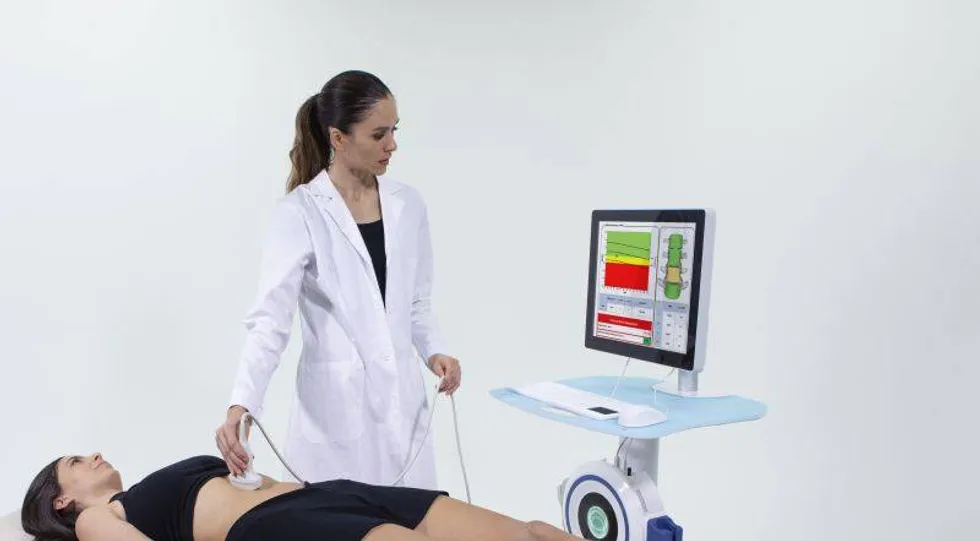

(Photo/provided by Echolight)
For decades, the standard test for bone density has been the DEXA scan, which uses low-dose X-rays to measure bone density.
But a company called Echolight is introducing a new option. This technology uses RadioFrequency Echographic Multi Spectrometry (REMS), a type of ultrasound, to assess bone density and fracture risk.
Unlike traditional bone scans, the REMS technique can be performed in minutes without the use of radiation, operates in a regular examination room, and uses portable equipment.
This means that bone density testing could eventually expand beyond radiology departments and into primary care clinics, wellness centers and ambulatory health departments.
A simple test could help increase screening rates, especially for women who may be able to skip a professional imaging appointment.
Targeted medicines specifically designed for bone

(Photo/provided by: Skeletalis)
While many innovations focus on detection, scientists are also developing new treatments for osteoporosis.
A biotech company called Skeletalis is developing a targeted drug platform called the Osteoclast-Activated Skeletal Intervention System (OASIS).
Today’s osteoporosis medications can slow bone loss, but some treatments have side effects that limit their long-term use or continuation.
The basic concept of OASIS is to deliver medicine directly to areas of active bone loss while preserving the body’s natural bone remodeling process.
Rather than affecting the entire body, this treatment is designed to focus its effects on the skeleton, potentially increasing effectiveness while reducing side effects.
The company recently raised $8 million in funding to advance development of its first osteoporosis treatment candidate. Although still in their infancy, technologies like this represent a shift toward precision medicine for bone health.
Wearable device designed to slow bone loss
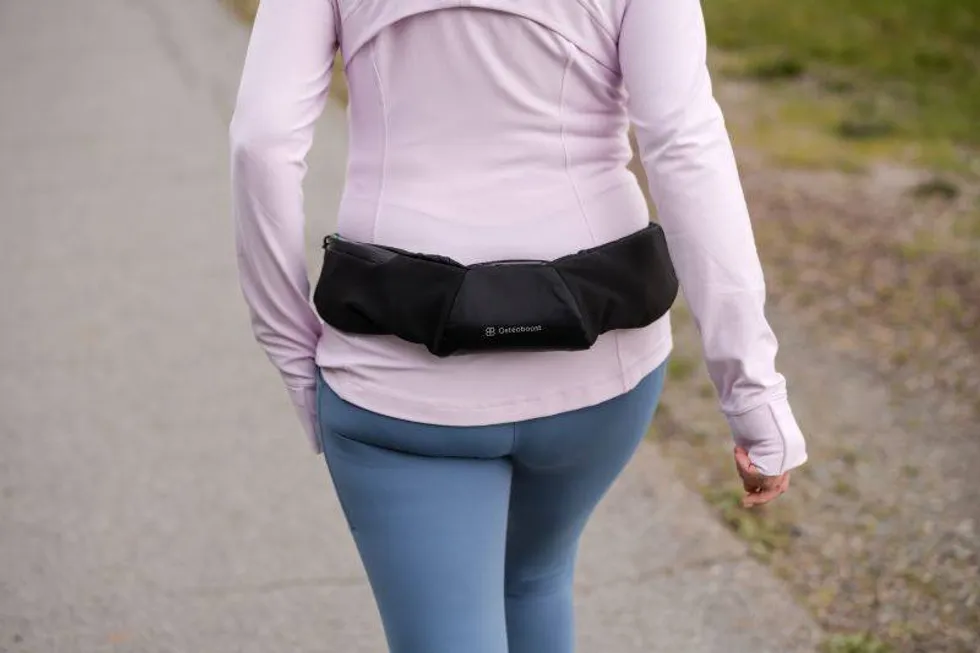

(Photo/provided by: Osteoboost)
One of the newest treatment approaches does not involve medication at all.
Osteoboost is a wearable belt that delivers precision vibration therapy to the body to treat osteopenia. The device was inspired by research originally developed by NASA to help astronauts maintain bone strength during long-duration space missions.
When worn for about 30 minutes a day, the belt gently vibrates and sends small mechanical signals through the skeleton. These signals stimulate bone cells and help slow bone loss.
In a 12-month clinical trial, women who used Osteoboost at least three times per week experienced an 85% reduction in spine bone mineral density loss, an 83% reduction in bone strength loss, and a 55% reduction in hip bone mineral density loss compared to the control group.
The FDA approved Osteoboost as a drug-free prescription treatment for osteopenia in postmenopausal women, and it was named one of Time magazine’s Best Inventions of 2025.
Osteoboost is currently a prescription device that patients must pay for out of pocket. The device costs about $995 and is eligible for HSA or FSA reimbursement, but is not yet covered by insurance. Women will need a prescription from their healthcare provider, but once their prescription is approved, they can order the device online.
The Future of Bone Health
For many women, bone health only becomes a concern after menopause, but experts say prevention and early detection should start much sooner.
Innovations emerging today demonstrate how technology could transform bone care in the future, including wearable devices that help maintain bone strength, AI tools to detect fractures and osteoporosis early, portable scans that make screening easier, and targeted medicines designed specifically for bone biology.
These advances could help more women protect their bones and prevent fractures, which can have a major impact on mobility, independence and quality of life. When it comes to bone health, the best treatment is often to identify problems before breaks occur.
Dr. Brittany Barreto is a podcaster, entrepreneur, and molecular and human geneticist. (That said, she’s really smart.) Read her column here each month to find out what’s happening in the world of technology and innovation in women’s health.
From your site article
Related articles on the web


