



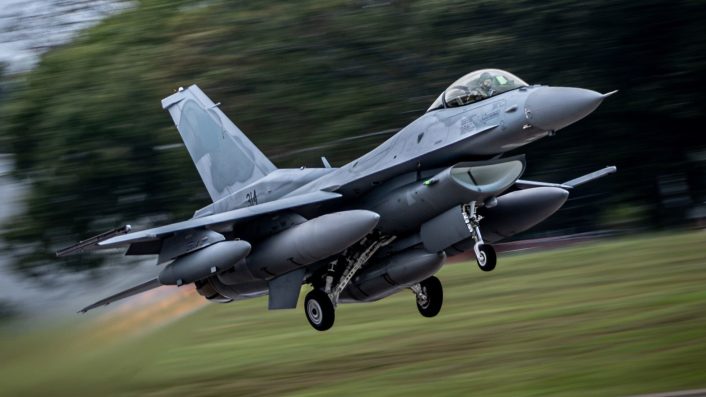
Peru appears to have already committed funds to acquire 12 F-16 Block 70 fighter jets, despite calls from the government to delay the acquisition and the resignation of two ministers.
Peru has selected the F-16 Block 70 as its next multirole fighter aircraft, representing a significant step in the modernization of the Fuerza Aérea del Perú (FAP). However, the acquisition sparked a political crisis and tensions within the government.
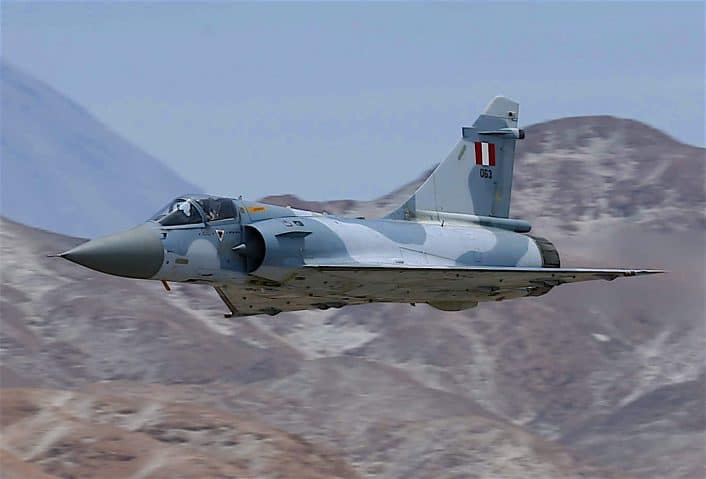
Lockheed Martin confirmed that Peru plans to procure an initial batch of 12 aircraft on April 23, 2026. The selection concludes a long-running competition to replace Peru’s current Mirage 2000 and MiG-29 aircraft, which includes the F-16 Block 70, Saab Gripen E and Dassault Rafale.
select
The competition began in 2024, followed a year later by a request from the Swedish government for approval to sell the Gripen and a U.S. Foreign Military Sales (FMS) approval to sell the U.S. F-16 Block 70. The latter could be worth up to $3.42 billion, according to the Defense Security Cooperation Agency (DSCA).
“Peru’s selection of the F-16 highlights the aircraft’s unparalleled operational performance and combat record, as well as its ability to meet the most pressing defense requirements,” said Mike Shoemaker, vice president of Lockheed Martin Integrated Fighter Group. “We are proud that the most advanced F-16 ever produced will help protect Peru’s national sovereignty while strengthening the ongoing partnership between our two countries.”
Initial reports suggested the timing of the acquisition was uncertain, but the U.S. Embassy in Peru provided more information about the deal on April 22. According to the statement, the Peruvian government asked U.S. officials and Lockheed Martin representatives not to speak publicly at any point about the acquisition process, and the only official statements were made after the selection was confirmed.
However, there were some additional issues that caused further delays.
“On April 14, Lockheed Martin was informed in writing that the technical signing was scheduled for 7 a.m. and the ceremonial signing was scheduled for April 17 at 5 p.m. A U.S. team of government officials and senior Lockheed Martin executives was ready to report to Las Palmas Air Force Base and the Presidential Palace upon request. The United States learned on national radio that the signing had been postponed. There is a right way to do serious and trustworthy business. 2026 On April 20, an authorized party arose with the full knowledge of the highest levels of the Peruvian government.”
political crisis
According to ReutersThe April 17 signing was reportedly canceled by interim President Jose Balcazar, citing concerns about tying the incoming government to key defense commitments. Therefore, he has publicly stated that financial commitments related to the deal should be deferred to the next administration, which is expected to take office later this year.
As a result, Defense Minister Carlos Diaz and Foreign Minister Hugo de Zella resigned, citing Balcazar’s handling of the deal as one of the reasons. “Strategic decisions have been made in the area of national security with which I fundamentally disagree,” Diaz said in his resignation letter.
U.S. officials were perplexed by the situation. Perhaps referring to the canceled signature on April 17, US Ambassador Bernie Navarro posted on If the parties “negotiate with the United States in bad faith and undermine American interests,” he posted on behalf of U.S. President Donald Trump, “we will use all available tools to protect and promote American prosperity and security.”
If you do business with the United States in bad faith and undermine American interests, please rest assured. @Potters President Trump and his administration will use every tool available to protect and promote the prosperity and security of the United States and our region.
— Ambassador Navarro (@USAmbPeru) April 17, 2026
The embassy also warned of further delays.
“The F-16 Block 70 packs state-of-the-art avionics, radar, weapons systems and flight controls into a single, highly agile platform, making it one of the most technologically advanced and complex fighter jets ever built. For Peru’s F-16 Block 70 jets, the United States proposed to include two weapons systems that had never been deployed on an F-16 to meet Peru’s specific requirements. The argument for delaying the decision: As manufacturers plan to deliver the product, Peru will require hundreds of personnel to make it possible. Stakeholders, supply chain considerations and detailed work are being done, with each delay resulting in the same package becoming unavailable for months or even weeks, as costs increase and supplier costs increase, given the dynamic nature of the global world we now live in.
First payment and program
Peru’s Ministry of Economy and Finance and Ambassador Navarro later confirmed that the country had transferred $462 million to Lockheed Martin as the first payment for the new fighter jets. Navarro also said the first aircraft is expected to be delivered between 2029 and 2030.
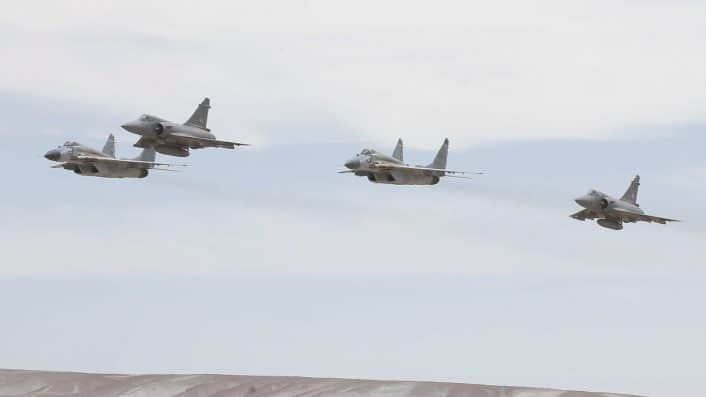
The 12 aircraft appear to be only in the early stages of acquisition. In fact, reports suggest that Peru plans to acquire up to 24 aircraft to completely replace its MiG-29s and Mirage 2000s.
So far, only the initial batch appears to have been approved. It is unclear whether discussions are already underway on the remaining 12 fighters or whether they have been postponed to the new government.
According to the DSCA notice, the transaction includes 10 single-seat F-16Cs and two two-seat F-16Ds equipped with F110-GE-129 engines, making them Block 70 eligible. In fact, the Block 72 aircraft is equipped with the F100-PW-229 engine.
The deal also includes AIM-120C-8 AMRAAM and AIM-9X Block II Sidewinder air-to-air missiles, AN/ALQ-254 Viper Shield electronic warfare system, AN/AAQ-28 Litening targeting pod and Joint Helmet Mounted Cueing System II (JHMCS II) helmet-mounted display. The DSCA notice also mentions an unspecified infrared search and track system, and the U.S. Embassy said the contract also includes two unspecified weapons “that have never been deployed on an F-16.”







