



As the USAF confirms its intention to purchase more F-15EX Eagle IIs, Senators Budd and Shaheen announced three new bills designed to expand America’s fighter aircraft inventory and retain skilled pilots.
The U.S. Air Force’s new plan to increase its F-15EX Eagle II fighter jet order by up to 267 fighter jets may not be the last we hear about the program’s expansion, at least if some members of the U.S. Senate achieve their goal.
Shortly after the Pentagon announced its largest-ever budget request of $1.5 trillion for fiscal 2027, U.S. Senators Ted Byrd (Republican of North Carolina) and Jeanne Shaheen (Democrat of New Hampshire), both members of the Senate Armed Services Committee, led the introduction of three bills “focused on increasing and maintaining the dominance of U.S. air power in modern warfare.”
thank you @SenTedBuddNC and @Senator Shaheen To introduce bipartisan legislation to support our Air Force and the future of American air power.
This three-bill package addresses key priorities:⁰✅ Multi-year procurement authority⁰✅ Authorization for 200 new F-15EXes⁰✅ Aircrew… https://t.co/T1LaIOsl9i
— Office of the Secretary of the Air Force (@SecAFOfficial) April 23, 2026
First, the Air Power Acceleration Act is intended to legally allow the United States to expand its procurement of both the F-35 Lightning II and the F-15EX Eagle II. The increase in Eagle II orders is necessary, seeing the planned fleet expand to up to 329 aircraft with additional units to replace the F-15E Strike Eagle in the 2030s.
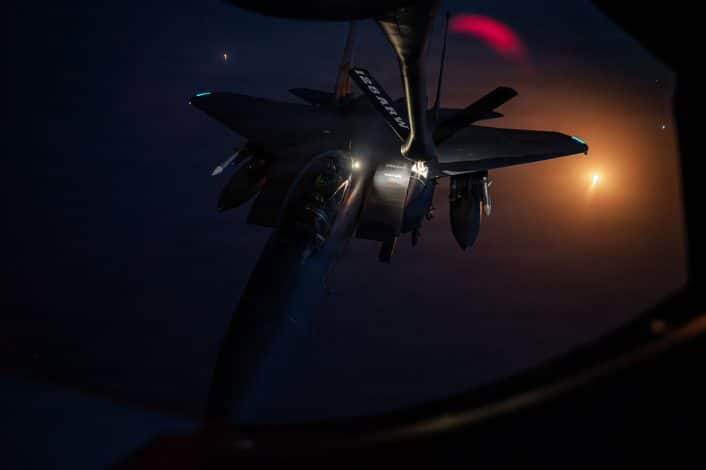
The bill provides for a 10% increase in the number of combat aircraft operated by the U.S. Air Force from 2030 to 2035 (to a total of 1,369), and a 20% increase starting in 2035 (to a total of 1,558). Mandatory minimum inventory figures for military equipment are typically the domain of the executive branch, but Congress has previously stepped into the loop with a legal requirement that the U.S. Navy deploy at least 11 aircraft carriers and 31 amphibious assault ships.
Although no specific numbers are mandated for F-35 procurement, it is important to note that the Air Force has already requested procurement of all variants of the F-35 in FY2027.
The F-15EX Eagle II’s rise up the order has long been advocated by many seasoned commentators who note the value it could bring to a mixed fighter package led by hard-to-observe types like the F-22 Raptor, F-35 Lightning II, and ultimately the Boeing F-47.
Next is #F15EX Eagle II was armed with twelve AIM-120 AMRAAMs and two AGM-158 JASSMs. Note the pylon with the IRST-21 mounted on it.
(📹USAF) pic.twitter.com/dbRduL3e8G
— Global Defense Insights (@Defense_Talks) August 10, 2022
The F-15 can follow beyond detection range and use its superior payload to bring additional munitions into the fight. Remarkably, the F-15EX can carry up to 12 AIM-120 AMRAAM missiles into combat and simultaneously carry two AGM-158 JASSM standoff cruise missiles.
crew maintenance
The second bill in the legislative package aims to maintain trained and experienced aircrews within the U.S. Air Force. The Enhanced Retention of Tactical Aircrews Initiative (RETAIN) Act mandates that non-monetary incentives be provided to active-duty aircrews ‘to the maximum extent practicable’ to make their service as attractive and easy as possible throughout their careers.
These include providing more personal choice in terms of assignment to mission locations, allowing remote work for non-flight missions, and providing the option to transition to non-combat career paths within the military.
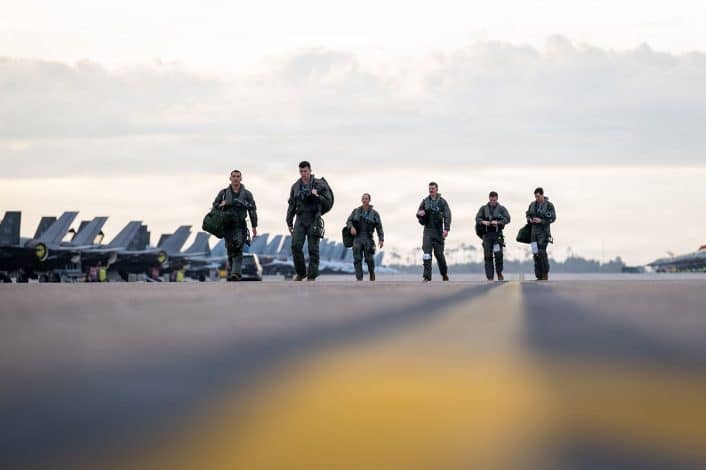
Aviation Incentive Pay (AVIP) for officers with at least eight years of service will be fixed at the maximum allowable level, and bonuses and contract terms offered to active-duty aircrew must be equal to or greater than those offered to aircrew serving in the reserves.
Finally, the Fighter Aircrew Career Flexibility Act increases the one-time career leave period allowed for fighter aircrew members from four months to one year.
Senator Budd said of the proposed legislation, “The future of America’s military superiority depends on maintaining air superiority, and the path forward is clear: rebuilding our defense industrial base by restoring combat aircraft power and retaining skilled aviators.”
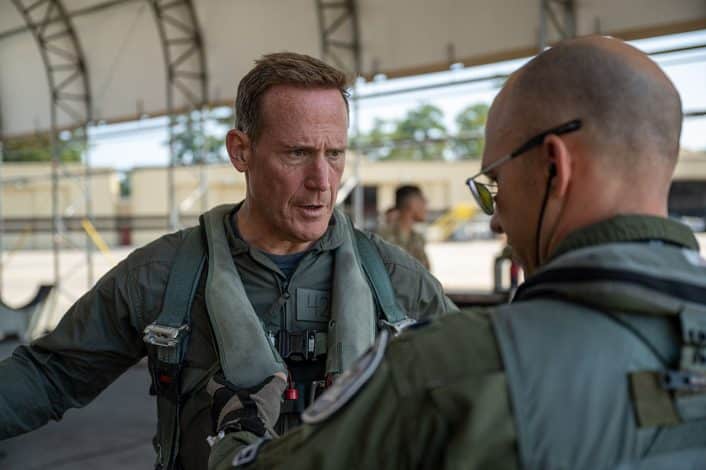
“We cannot afford to fall behind China, which is why Senator Shaheen and I have presented a strong, bipartisan legislative package that gives America a fighting chance to retain our nation’s most elite pilots while preserving our air power to be the most lethal fighting force in modern warfare,” he added.
Senator Shaheen, a Democrat, called on the Trump administration to follow through on its pledge to strengthen the U.S. military’s combat capabilities, saying, “If the administration truly sees China as a challenge that will slow our country down, we must get serious about curbing China’s growing global influence, including its air dominance. Our common-sense, multi-pronged approach will overinvest in America’s warfighting capabilities to ensure America remains competitive for future generations.”
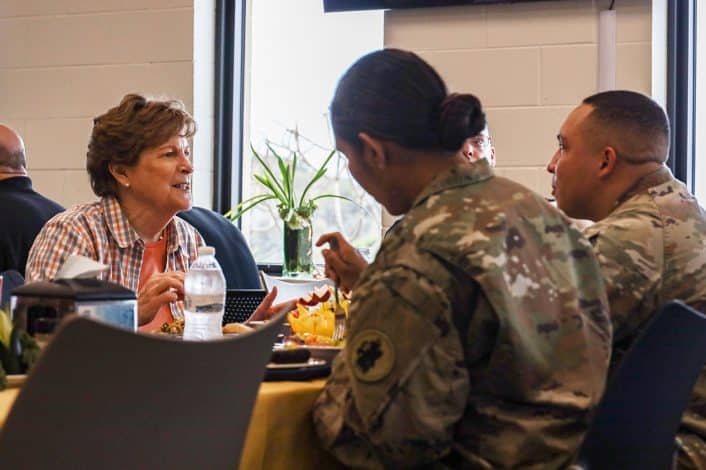
Authored by senators from both major political parties and with broad cross-party support, including 2016 Democratic vice presidential candidate Tim Kaine, who co-sponsored two bills in the package focused on crew retention, it’s possible the bill will make solid progress on Capitol Hill.







