



michael lacebusiness reporter



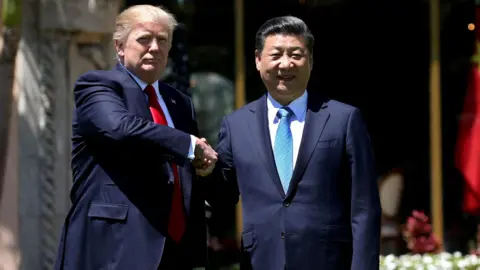
The United States and China have agreed on a framework for a potential trade deal to be discussed when their respective leaders meet later this week, the U.S. Treasury secretary said.
Scott Bessent told the BBC’s US news partner CBS that this includes a “final deal” for TikTok’s US operations and a delay in China’s tightened rare earth minerals controls.
He also said that while he did not expect the 100% tariffs on Chinese goods threatened by U.S. President Donald Trump to go into effect, China would resume purchasing significant soybeans from the United States.
Both countries are trying to avoid further escalation of the trade war between the world’s two largest economies.
President Trump and Chinese President Xi Jinping are scheduled to meet in South Korea on Thursday.
Bessent met with senior Chinese trade officials on the sidelines of the Association of Southeast Asian Nations (ASEAN) summit in Malaysia, which President Trump is attending as part of his Asia tour. Beijing said it had held “constructive” discussions.
Bessent said the two countries “have reached a practical framework for the two leaders,” adding that “tariffs will be avoided.”
The Chinese government said in a statement that the two negotiating teams had reached a basic agreement on measures to address their respective concerns.
He added, “Both sides agreed to further confirm specific details.”
Trump’s Tariff Tactics
Since re-entering the White House, President Trump has threatened to impose sweeping tariffs on foreign imports from several countries, arguing that the policy will help boost U.S. manufacturing and jobs. The introduction of tariffs has led many countries, including the UK, to agree new deals with the US.
But the highest levy he threatened was on China. China hit back with its own measures, but the two agreed to delay imposing the levy while they pursue a trade deal.
But earlier this month, President Trump said he would impose an additional 100% tariff on Chinese products starting in November in response to China’s tightening restrictions on exports of rare earths, a material essential for the production of many electronic products. The US president accused China of becoming “very hostile” and trying to hold the world “captive”.
China processes about 90% of the world’s rare earths, which are used in everything from solar panels to smartphones, and supplying them to U.S. manufacturers is a key bargaining chip.
The last time China tightened export controls after President Trump raised tariffs on Chinese products earlier this year, there were protests from many American companies that rely on the raw materials.
China will delay it for a year while it reconsiders, Bessent told This Week, another news show, on Sunday.
Another issue of contention concerns soybeans, of which China is the world’s largest buyer. As the trade war began to intensify, China halted all orders, hurting American farmers.
Bessent hinted that the boycott would end soon, but declined to give further details.
He said this week, “I’m actually a soybean farmer myself, so I’ve felt this pain. I think we’ve solved the farmers’ concerns well.”
“I believe once the announcement of the deal with China is made public, our soybean farmers will feel really good about what’s going to happen this season and over the next few years.”
Is the TikTok deal over?
Bessent also said a deal for the U.S. arm of video-sharing platform TikTok had been agreed upon and that Trump and Xi had left “on Thursday to complete the deal.”
The United States has sought to prioritize the app’s U.S. operations from Chinese parent company ByteDance, citing national security concerns.
TikTok has previously been told it must sell its U.S. operations or risk closure, but Trump has delayed implementation of the ban four times to facilitate negotiations and extended the deadline again to December.
The White House announced last month that a U.S. company would control TikTok’s algorithms and that Americans would hold six of the seven seats on the app’s U.S. operating board.
Trump initially called for TikTok to be banned during his first term, but has since changed tack. He chose the wildly popular platform to drum up support among young Americans during his successful 2024 presidential campaign.
On Sunday, Washington also announced that trade deals had been reached with Malaysia and Cambodia and that frameworks had been agreed with Thailand and Vietnam.


